


A 19-year-old Italian woman who nearly developed full-blown type 1 diabetes after a routine course of steroid tablets for a dental abscess has become the subject of one of the most granular metabolic portraits yet published of a patient receiving teplizumab, the first drug approved to delay progression of early-stage type 1 diabetes. In a case report published in Frontiers in Endocrinology, clinicians at the University of Catania and Garibaldi-Nesima Hospital describe how they tracked her glucose tolerance, insulin-producing beta-cell function and day-to-day glycemic behavior continuously before, during and after a standard 14-day treatment course, offering a rare integrated view of how the body responds in the critical window before clinical diabetes declares itself.
The story began with an unexpected metabolic crisis. The woman had been prescribed oral betamethasone at 2 mg per day for five days to treat a dental abscess. One day after stopping the corticosteroid, her capillary blood glucose measured 467 mg/dL, and she presented to the emergency department, where a small dose of rapid-acting insulin brought her plasma glucose down to 121 mg/dL. She had no history of excessive thirst, frequent urination, weight loss or diabetic ketoacidosis, and her glycated hemoglobin, HbA1c, was a seemingly reassuring 5.5 percent. Her family history included a maternal grandfather who developed diabetes in his thirties and required insulin, but no known autoimmune disease.
Rather than dismissing the episode as a simple side effect of steroids, the clinical team investigated further. Corticosteroids are known to induce insulin resistance and can raise blood sugar, but the timing and pattern here suggested something deeper. The first oral glucose tolerance test, performed roughly eight weeks after the steroid course had ended, when any acute glucocorticoid effect would no longer be expected to persist, showed fasting, 60-minute and 120-minute plasma glucose values of 102, 186 and 121 mg/dL. Six weeks later, a repeat test demonstrated clear deterioration: fasting glucose had risen to 116 mg/dL, the one-hour value to 245 mg/dL and the two-hour value to 165 mg/dL, meeting criteria for both impaired fasting glucose and impaired glucose tolerance. Over the same period, her fasting C-peptide, a marker of endogenous insulin secretion, fell from 2.20 to 1.45 ng/mL.
Immunological testing sealed the diagnosis. The patient tested positive for three islet autoantibodies, directed against glutamic acid decarboxylase (GADA), islet antigen-2 (IA-2A) and zinc transporter 8 (ZnT8A), while insulin autoantibodies were negative. The combination of dysglycemia with multiple islet autoantibodies, in the absence of clinical diabetes, fulfilled the criteria for stage 2 type 1 diabetes, a presymptomatic phase in which the immune system is progressively destroying pancreatic beta cells but glucose levels have not yet crossed the threshold of overt disease. This stage represents the therapeutic window in which teplizumab, a humanized anti-CD3 monoclonal antibody that does not bind Fc receptors, has been shown in randomized trials to delay progression to clinical diabetes.
Because teplizumab had been authorized by the European Medicines Agency but was not yet available in Italy through the national medicines agency, the team obtained the drug through compassionate use. Treatment began on 23 February 2026, delivered as a daily intravenous infusion for 14 consecutive days according to the approved body-surface-area dosing schedule, escalating from 65 micrograms per square meter on day one to 1,030 micrograms per square meter on days five through fourteen. A midline catheter was inserted to support the infusion protocol, and the full course was completed without dose reductions, delays or interruptions.
The safety profile matched what previous trials and real-world studies had established. The patient developed transient lymphopenia between treatment days four and five, with her absolute lymphocyte count falling to a nadir of 600 cells per microliter before recovering completely on its own, an expected pharmacodynamic effect of anti-CD3 therapy. She also experienced mild, self-limiting thrombocytopenia that never fell below the normal range, transient fluctuations of liver enzymes within normal limits, and mild bilateral zygomatic erythema without pain or itching. All events resolved spontaneously, and there were no serious adverse events, no cytokine release syndrome and no need to discontinue treatment.
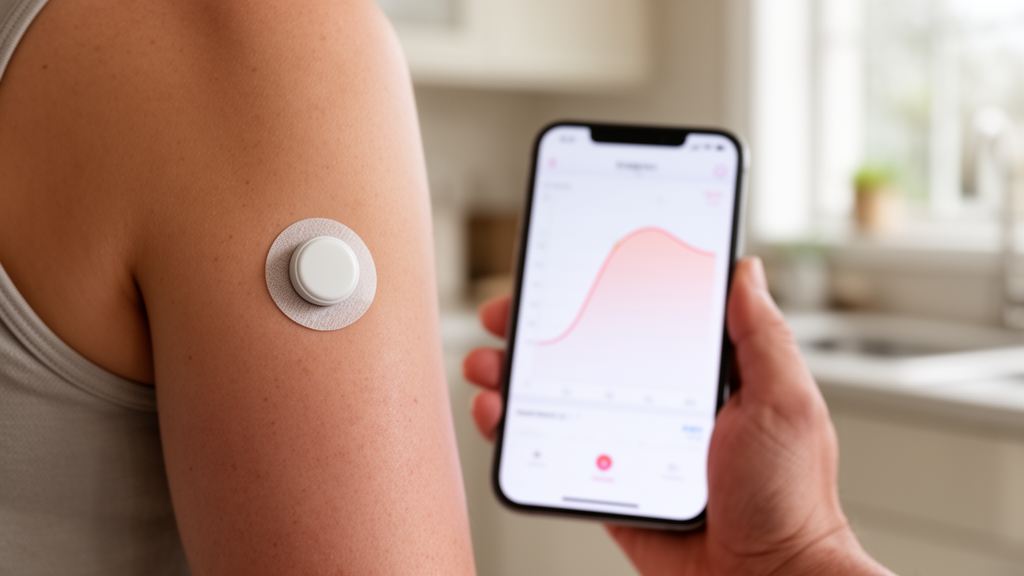
What distinguishes this report is the density of metabolic surveillance surrounding the treatment. Continuous glucose monitoring using the FreeStyle Libre 2 Plus sensor was initiated four weeks before teplizumab and maintained throughout the infusion course and for 24 weeks afterward. Twelve weeks after treatment, the team performed a comprehensive reassessment combining a repeat oral glucose tolerance test with a mixed-meal tolerance test, in which the patient drank a standardized liquid meal providing 150 kcal per 100 mL at 6 mL per kilogram of body weight, allowing the researchers to measure stimulated C-peptide secretion under physiological nutrient challenge.
The results were striking. Twelve weeks after treatment, the oral glucose tolerance test had normalized, with fasting, 60-minute and 120-minute glucose values of 77, 124 and 116 mg/dL. The mixed-meal test showed preserved stimulated beta-cell function, with C-peptide rising from 1.53 ng/mL at baseline to a peak of 8.34 ng/mL at 60 minutes. Fasting C-peptide, which had declined to 1.45 ng/mL before treatment, climbed progressively during the infusion itself, from 1.63 ng/mL on day five to 2.33 ng/mL on day fourteen, and reached 2.84 ng/mL at twelve weeks. Meanwhile, HbA1c barely moved, from 5.5 percent to 5.3 percent, a finding the authors highlight as evidence of the limited sensitivity of HbA1c for detecting early metabolic change in stage 2 disease.
Continuous glucose monitoring added a third, complementary dimension. Both the standard time-in-range metric of 70 to 180 mg/dL and the more stringent 70 to 140 mg/dL range improved during treatment and the first twelve weeks of follow-up. At week 24, mean glucose was 99 mg/dL, the glucose management indicator was 5.7 percent, and time in range stood at 86 percent for the standard threshold and 78 percent for the stricter one, although the coefficient of variation had risen to 30.5 percent. One cautionary note emerged: sensor-derived time below range, under 70 mg/dL, reached 12 percent at week 24 despite the patient reporting no hypoglycemic symptoms and taking no glucose-lowering therapy. The authors point to previous reports of reduced FreeStyle Libre 2 accuracy in the low-glucose range and note that these readings were not confirmed by capillary or plasma measurements, so sensor-related measurement variability may have contributed.
The authors are careful about what this single, uncontrolled case can and cannot show. Spontaneous fluctuations in glucose tolerance and beta-cell function occur during the natural history of stage 2 type 1 diabetes, so a transient spontaneous improvement cannot be excluded, and the contribution of teplizumab cannot be separated from natural disease variability in one patient. No pre-treatment mixed-meal test was available, preventing direct comparison of stimulated beta-cell function before and after therapy, and longer follow-up is needed to determine whether progression to stage 3 diabetes is actually delayed. Notably, the favorable metabolic evolution was not mirrored by a uniform decline in autoimmunity: GADA titers fell sharply, but IA-2A and ZnT8A remained persistently elevated, consistent with teplizumab’s primary action on autoreactive T cells rather than antibody production. The authors conclude that OGTT, mixed-meal testing and continuous glucose monitoring capture distinct, non-interchangeable aspects of glucose regulation, and that whether their integrated use improves post-treatment monitoring must now be tested in larger prospective cohorts.
Subject of Research: Integrated longitudinal metabolic monitoring before, during and after teplizumab in an adult with stage 2 type 1 diabetes
Article Title: Integrated longitudinal metabolic monitoring before, during and after teplizumab in an adult with stage 2 type 1 diabetes: a case report
Article References: Milluzzo, A., Ballirò, T., Di Giacomo Barbagallo, F., Bosco, G., Di Marco, M., Frazzetto, G., & Frittitta, L. (2026). Integrated longitudinal metabolic monitoring before, during and after teplizumab in an adult with stage 2 type 1 diabetes: a case report. Frontiers in Endocrinology, 17, 1985205. https://doi.org/10.3389/fendo.2026.1985205
Image Credits: AI Generated
DOI: 10.3389/fendo.2026.1985205
Keywords: teplizumab, stage 2 type 1 diabetes, continuous glucose monitoring, oral glucose tolerance test, C-peptide, islet autoantibodies, case report, beta-cell function, autoimmune diabetes, disease-modifying therapy, Integrated, longitudinal
Cite Scienmag News
Ophelia Keating. (October 26, 2026). Continuous Glucose Monitoring Tracks Early Metabolic Shifts After Teplizumab in One Adult. Scienmag. https://scienmag.com/continuous-glucose-monitoring-tracks-early-metabolic-shifts-after-teplizumab-in-one-adult/
Ophelia Keating. "Continuous Glucose Monitoring Tracks Early Metabolic Shifts After Teplizumab in One Adult." Scienmag, 26 October 2026, https://scienmag.com/continuous-glucose-monitoring-tracks-early-metabolic-shifts-after-teplizumab-in-one-adult/. Accessed 26 October 2026.
Ophelia Keating. "Continuous Glucose Monitoring Tracks Early Metabolic Shifts After Teplizumab in One Adult." Scienmag. October 26, 2026. https://scienmag.com/continuous-glucose-monitoring-tracks-early-metabolic-shifts-after-teplizumab-in-one-adult/


