

Sunday, October 25, 2026
Science
No Result
View All Result
  • Login
  • HOME
  • SCIENCE NEWS
  • CONTACT US
  • HOME
  • SCIENCE NEWS
  • CONTACT US
No Result
View All Result
Scienmag
No Result
View All Result
Home Science News Medicine

Social activities linked to better cognition across 24 countries

October 25, 2026
in Medicine
Glenn Wilkins
By Glenn Wilkins Scienmag Editorial Profile - Clinical Psychology
Reading Time: 3 mins read
0
Social activities linked to better cognition across 24 countries

Social activities linked to better cognition across 24 countries

65
SHARES
587
VIEWS
Share on FacebookShare on Twitter
ADVERTISEMENT

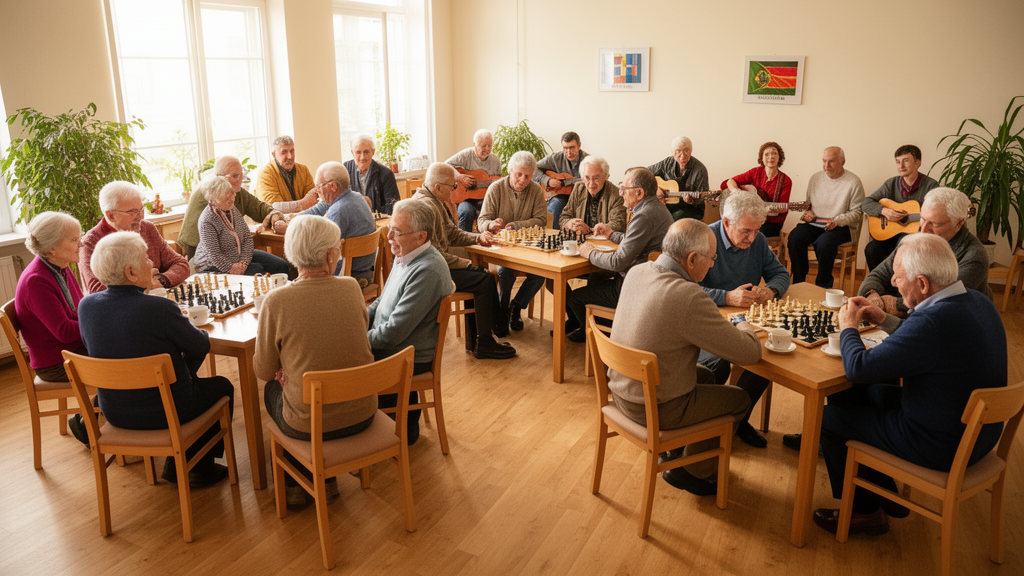
People who regularly participated in three or more social activities showed higher cognitive performance and lower risks of decline in memory and executive function in a large observational study spanning 24 countries. The analysis pooled longitudinal data from five nationally representative surveys, including 57,793 participants whose average age ranged from 57 to 73 and who were followed for an average of six years. Participants who engaged in social activities consistently had higher global cognitive scores than those who did not, with scores tending to rise as the number of activities increased.

The findings, published online on 20 October 2026 in the Journal of Epidemiology & Community Health, drew on the US Health and Retirement Study, the English Longitudinal Study of Ageing, the China Health and Retirement Longitudinal Study, the Mexican Health and Ageing Study and the Survey of Health, Ageing and Retirement in Europe. Survey waves ranged from 2008 to 2021, depending on the cohort. At each wave, participants reported the types and number of social activities they engaged in, and researchers assessed memory and executive function. Test results were combined into a global cognitive-function z score, for which higher values indicated better cognitive performance.

Participants reporting at least three activities had the greatest apparent protection against impairments in memory and executive function, with higher year-by-year cognitive scores during follow-up than those reporting no activities. Volunteering and sports-club membership were associated with a lower risk of cognitive decline across all five survey groups. Attending training courses and caring for children were significantly associated with higher cognitive scores from one year to the next. Active involvement in political, community, church and religious groups, however, was not consistently associated with cognitive enhancement, indicating that the observed relationships differed among types of social participation.

Additional analysis suggested that associations between social activities and cognitive function were stronger among women, participants aged 60 or older, people with higher education, those without depression, people living alone, those of normal weight, rural residents, and people who smoked or drank alcohol. The investigators offered several possible explanations but did not directly test them. Under the “use it or lose it” hypothesis, sustained engagement in cognitively stimulating activities may enhance neural plasticity and strengthen synaptic connections. Higher education may support neural efficiency and compensatory capacity, potentially increasing resilience to age-related neuropathological changes. Meaningful participation may also promote psychological wellbeing, modulate neuroendocrine function and lessen the effects of chronic stress on the hippocampus.

The research was observational and therefore cannot establish that participation in social activities caused better cognitive outcomes. The authors also identified limitations including the lack of standardisation across the five surveys, only partial adjustment for potentially influential factors, and the focus on the quantity of activities rather than their quality, motivation or experience. The results support an association between diverse, sustained social engagement and better cognitive trajectories among older adults, but they do not demonstrate that a particular activity prevents dementia. The investigators described social activities as a possible multidimensional protective factor and said the findings underscore the importance of targeted approaches to promoting diverse and sustained social engagement among older adults.

Subject of Research: Associations between social participation and cognitive trajectories in older adults

Article Title: Diverse and sustained social activities may boost cognition in older age

Article References: Diverse and sustained social activities may boost cognition in older age. Original publication (Bibliographic details unavailable.)

Image Credits: AI Generated

DOI: Not provided

Keywords: social activity, cognitive performance, older adults, cognitive decline, longitudinal cohorts, volunteering, sports clubs, memory, executive function, dementia, Diverse, sustained

Cite Scienmag News

Glenn Wilkins. (October 25, 2026). Social activities linked to better cognition across 24 countries. Scienmag. https://scienmag.com/social-activities-linked-to-better-cognition-across-24-countries/

Glenn Wilkins. "Social activities linked to better cognition across 24 countries." Scienmag, 25 October 2026, https://scienmag.com/social-activities-linked-to-better-cognition-across-24-countries/. Accessed 25 October 2026.

Glenn Wilkins. "Social activities linked to better cognition across 24 countries." Scienmag. October 25, 2026. https://scienmag.com/social-activities-linked-to-better-cognition-across-24-countries/


Tags: aging and executive functioncognitive declinecognitive performancecross-national aging studiesdementiadiverseeffects of social interactions on mental healthelderly social participation benefitsExecutive functionglobal cognitive function assessmentimpact of social activities on memory declineinternational health surveys on cognitive aginglongitudinal analysis of cognitive performancelongitudinal cohortsmemoryobservational study of aging populationsolder adultsprotective factors against cognitive declinesocial activitysocial activity frequency and cognitive scoressocial engagement and cognitive healthsports clubssustainedvolunteering
Share26Tweet16
Previous Post

CAR T cells shrink lymphoma everywhere, but survival depends on location

Next Post

Northern India dry-seeded rice trial links genotype and nitrogen splitting to yield

Related Posts

Kurarinol A inhibits activated stellate cells through MyD88 in preclinical study
Medicine

Kurarinol A inhibits activated stellate cells through MyD88 in preclinical study

October 25, 2026
Expert analysis of LLM hantavirus outbreak responses finds 11.1% potentially misleading
Medicine

Expert analysis of LLM hantavirus outbreak responses finds 11.1% potentially misleading

October 25, 2026
Low-dose prednisolone eases long-COVID symptoms modestly, but B vitamins fail in phase 3 trial
Medicine

Low-dose prednisolone eases long-COVID symptoms modestly, but B vitamins fail in phase 3 trial

October 25, 2026
Photodynamic therapy shows promising HPV results in real-world CIN1 cohort
Medicine

Photodynamic therapy shows promising HPV results in real-world CIN1 cohort

October 25, 2026
Competing-risk analysis of tuberculosis outcomes in Liangshan
Medicine

Competing-risk analysis of tuberculosis outcomes in Liangshan

October 25, 2026
Thermally provoked itch in atopic dermatitis: current evidence, knowledge gaps, and digital approaches to nocturnal scratching
Medicine

Thermally provoked itch in atopic dermatitis: current evidence, knowledge gaps, and digital approaches to nocturnal scratching

October 25, 2026
Next Post
Northern India dry-seeded rice trial links genotype and nitrogen splitting to yield

Northern India dry-seeded rice trial links genotype and nitrogen splitting to yield

  • Mothers who receive childcare support from maternal grandparents show more optimized

    Mothers who receive childcare support from maternal grandparents show more parental warmth, finds NTU Singapore study

    27656 shares
    Share 11059 Tweet 6912
  • University of Seville Breaks 120-Year-Old Mystery, Revises a Key Einstein Concept

    1061 shares
    Share 424 Tweet 265
  • Bee body mass, pathogens and local climate influence heat tolerance

    682 shares
    Share 273 Tweet 171
  • Researchers record first-ever images and data of a shark experiencing a boat strike

    546 shares
    Share 218 Tweet 137
  • Groundbreaking Clinical Trial Reveals Lubiprostone Enhances Kidney Function

    531 shares
    Share 212 Tweet 133
Science

Embark on a thrilling journey of discovery with Scienmag.com—your ultimate source for cutting-edge breakthroughs. Immerse yourself in a world where curiosity knows no limits and tomorrow’s possibilities become today’s reality!

RECENT NEWS

  • Concrete Autoencoder Framework Sharpens Intrusion Detection for SDN-IoT Networks
  • HPV E6/E7 proteins linked to aggressive features in Sudanese prostate cancer
  • Northern India dry-seeded rice trial links genotype and nitrogen splitting to yield
  • Social activities linked to better cognition across 24 countries

Categories

  • Agriculture
  • Anthropology
  • Archaeology
  • Athmospheric
  • Biology
  • Biotechnology
  • Blog
  • Bussines
  • Cancer
  • Chemistry
  • Climate
  • Earth Science
  • Editorial Policy
  • Marine
  • Mathematics
  • Medicine
  • Pediatry
  • Policy
  • Psychology & Psychiatry
  • Science Education
  • Science News
  • Social Science
  • Space
  • Technology and Engineering

Subscribe to Blog via Email

Enter your email address to subscribe to this blog and receive notifications of new posts by email.

Join 5,151 other subscribers

© 2025 Scienmag - Science Magazine

Welcome Back!

Login to your account below

Forgotten Password?

Retrieve your password

Please enter your username or email address to reset your password.

Log In
No Result
View All Result
  • HOME
  • SCIENCE NEWS
  • CONTACT US

© 2025 Scienmag - Science Magazine

Discover more from Science

Subscribe now to keep reading and get access to the full archive.

Continue reading