

Sunday, October 25, 2026
Science
No Result
View All Result
  • Login
  • HOME
  • SCIENCE NEWS
  • CONTACT US
  • HOME
  • SCIENCE NEWS
  • CONTACT US
No Result
View All Result
Scienmag
No Result
View All Result
Home Science News Medicine

Matched study links three factors with trachomatous trichiasis in Ethiopian women

October 25, 2026
in Medicine
Phoebe Ingram
By Phoebe Ingram Scienmag Editorial Profile - Epidemiology
Reading Time: 3 mins read
0
Matched study links three factors with trachomatous trichiasis in Ethiopian women

Matched study links three factors with trachomatous trichiasis in Ethiopian women

65
SHARES
587
VIEWS
Share on FacebookShare on Twitter
ADVERTISEMENT

Women who could not read and write, washed their faces irregularly or lacked access to a latrine had higher adjusted odds of trachomatous trichiasis in a community-based matched case-control study conducted in Bora district, East Shoa zone, Oromia, Ethiopia. The study, conducted from February 27 to April 12, 2023, found adjusted odds ratios of 5.98 for inability to read and write, 5.03 for irregular face washing and 5.80 for lack of an available latrine. The corresponding 95% confidence intervals were 1.82–19.65, 1.97–12.88 and 2.49–13.52, respectively.

Trachomatous trichiasis is an eye disease caused by repeated infection with the bacterium Chlamydia trachomatis . The researchers investigated determinants of the condition among women because evidence on this topic was limited. The research analyzed associations in this defined population rather than testing whether any of the identified factors directly caused the disease.

The study included 380 women: 76 cases and 304 controls. Investigators identified cases and controls through community-based screening during a trachomatous trichiasis screening campaign and enrolled participants consecutively until the desired sample size was reached. Each case was matched with four controls by age and by the kebele in which the participant lived.

This observational design examined the odds of trachomatous trichiasis in the selected sample; it did not follow new cases over time or measure changes in incidence or prevalence. Researchers entered the collected data into Epi Info version 7.2 and exported them to STATA version 17 for analysis. They used bi-variable and multivariable binary conditional logistic regression to evaluate the matched case-control data.

The final analysis treated variables with adjusted odds ratios, 95% confidence intervals and P values below 0.05 as statistically significant determinants. Specifically, irregular face washing was associated with an adjusted odds ratio of 5.03, with a 95% confidence interval of 1.97 to 12.88. Women without access to a latrine had an adjusted odds ratio of 5.80, with a 95% confidence interval of 2.49 to 13.52.

For women who could not read and write, the adjusted odds ratio was 5.98 and the 95% confidence interval extended from 1.82 to 19.65. These wide confidence intervals, particularly for educational status, indicate substantial uncertainty around the estimated magnitudes even though each reported association met the study’s statistical threshold. The authors concluded that improved educational status, regular face washing and construction of latrines may decrease the likelihood of trachomatous trichiasis.

The findings identify these characteristics as potentially important considerations for prevention strategies in Bora district, but the matched case-control evidence does not demonstrate that changing them will prevent the condition. The analysis also cannot establish whether the associations reflect causal relationships, and it did not evaluate a prevention intervention. Because the sample comprised women aged 15 years and older in selected kebeles of one district, the results should not automatically be extended to men, younger people, other regions or communities with different living conditions.

Subject of Research: Determinants of trachomatous trichiasis among women in Bora district, Ethiopia

Article Title: Determinants of trachomatous trichiasis among women in Bora district, East Shoa zone, Oromia, Ethiopia: community-based matched case-control study

Article References: Alemu, T. N., Charkos, T. G., & Girsha, W. D. (2026). Determinants of trachomatous trichiasis among women in Bora district, East Shoa zone, Oromia, Ethiopia: community-based matched case-control study. BMC Infectious Diseases. https://doi.org/10.1186/s12879-026-14409-w

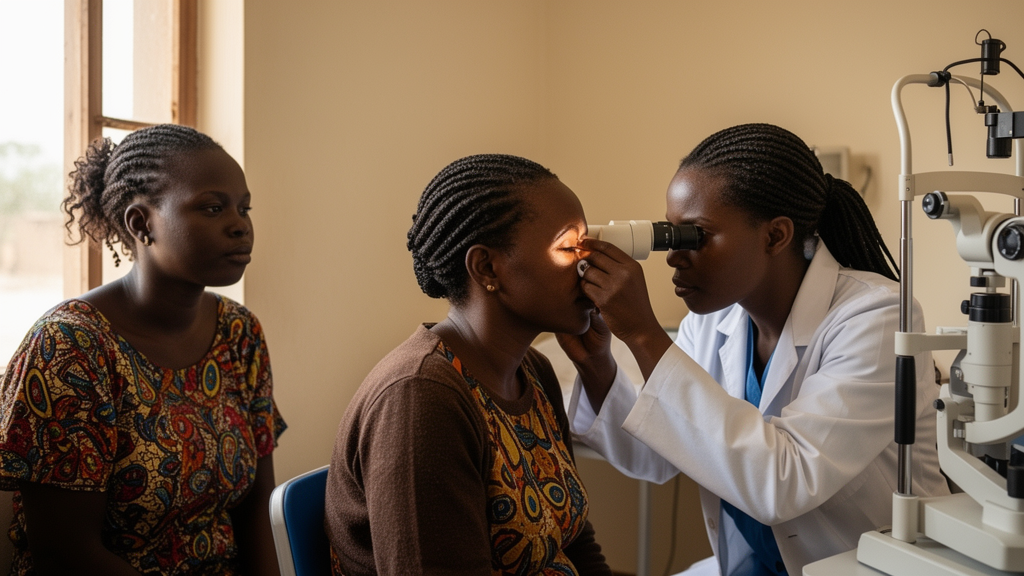
Image Credits: AI Generated

DOI: 10.1186/s12879-026-14409-w

Keywords: trachomatous trichiasis, Ethiopia, women's health, case-control study, facial hygiene, sanitation, latrine access, education, public health, Determinants, trachomatous, trichiasis

Cite Scienmag News

Phoebe Ingram. (October 25, 2026). Matched study links three factors with trachomatous trichiasis in Ethiopian women. Scienmag. https://scienmag.com/matched-study-links-three-factors-with-trachomatous-trichiasis-in-ethiopian-women/


Phoebe Ingram. "Matched study links three factors with trachomatous trichiasis in Ethiopian women." Scienmag, 25 October 2026, https://scienmag.com/matched-study-links-three-factors-with-trachomatous-trichiasis-in-ethiopian-women/. Accessed 25 October 2026.

Phoebe Ingram. "Matched study links three factors with trachomatous trichiasis in Ethiopian women." Scienmag. October 25, 2026. https://scienmag.com/matched-study-links-three-factors-with-trachomatous-trichiasis-in-ethiopian-women/

Tags: access to sanitation and trachoma preventioncase-control studies on trachomacase-control studycommunity-based case-control studydeterminantsdeterminants of trachomatous trichiasis in OromiaEducationepidemiology of Chlamydia trachomatis-related eye infectionsEthiopiafacial hygieneimpact of literacy on eye healthimportance of face washing habitslatrine accessPublic healthrole of hygiene practices in eye diseasesanitationsocial determinants of eye healthtrachomatoustrachomatous trichiasisTrachomatous trichiasis risk factors in Ethiopian womentrichiasisWomen’s healthwomen’s health and sanitation in Ethiopia
Share26Tweet16
Previous Post

860 °C solution treatment optimizes aging response in Ti–5Cu alloy

Next Post

Circadian control of tryptophan metabolism links immunity, brain function and metabolism

Related Posts

Circadian control of tryptophan metabolism links immunity, brain function and metabolism
Medicine

Circadian control of tryptophan metabolism links immunity, brain function and metabolism

October 25, 2026
Haptic Design and Material Choice Steer Performance of Dual-Optic Accommodative Lenses
Medicine

Haptic Design and Material Choice Steer Performance of Dual-Optic Accommodative Lenses

October 25, 2026
Research report: Case Report: Superficial spreading squamous cell carcinoma of the cervix: a retrospective single-center case series and review of the literature
Medicine

Research report: Case Report: Superficial spreading squamous cell carcinoma of the cervix: a retrospective single-center case series and review of the literature

October 25, 2026
Malaria’s anemia link is strongest in older Tanzanian children
Medicine

Malaria’s anemia link is strongest in older Tanzanian children

October 25, 2026
Twenty-Year Groin Abscesses Traced to a Rare Appendiceal Fistula
Medicine

Twenty-Year Groin Abscesses Traced to a Rare Appendiceal Fistula

October 25, 2026
US vaping became more frequent and widespread from 2013 to 2023
Medicine

US vaping became more frequent and widespread from 2013 to 2023

October 25, 2026
Next Post
Circadian control of tryptophan metabolism links immunity, brain function and metabolism

Circadian control of tryptophan metabolism links immunity, brain function and metabolism

  • Mothers who receive childcare support from maternal grandparents show more optimized

    Mothers who receive childcare support from maternal grandparents show more parental warmth, finds NTU Singapore study

    27656 shares
    Share 11059 Tweet 6912
  • University of Seville Breaks 120-Year-Old Mystery, Revises a Key Einstein Concept

    1061 shares
    Share 424 Tweet 265
  • Bee body mass, pathogens and local climate influence heat tolerance

    682 shares
    Share 273 Tweet 171
  • Researchers record first-ever images and data of a shark experiencing a boat strike

    546 shares
    Share 218 Tweet 137
  • Groundbreaking Clinical Trial Reveals Lubiprostone Enhances Kidney Function

    531 shares
    Share 212 Tweet 133
Science

Embark on a thrilling journey of discovery with Scienmag.com—your ultimate source for cutting-edge breakthroughs. Immerse yourself in a world where curiosity knows no limits and tomorrow’s possibilities become today’s reality!

RECENT NEWS

  • Iron–Tea Polyphenol Coatings Tune Biodegradable Membranes That Keep Cherries Fresh
  • Victorian survey links injury barriers to unequal social sport participation
  • Circadian control of tryptophan metabolism links immunity, brain function and metabolism
  • Matched study links three factors with trachomatous trichiasis in Ethiopian women

Categories

  • Agriculture
  • Anthropology
  • Archaeology
  • Athmospheric
  • Biology
  • Biotechnology
  • Blog
  • Bussines
  • Cancer
  • Chemistry
  • Climate
  • Earth Science
  • Editorial Policy
  • Marine
  • Mathematics
  • Medicine
  • Pediatry
  • Policy
  • Psychology & Psychiatry
  • Science Education
  • Science News
  • Social Science
  • Space
  • Technology and Engineering

Subscribe to Blog via Email

Enter your email address to subscribe to this blog and receive notifications of new posts by email.

Join 5,151 other subscribers

© 2025 Scienmag - Science Magazine

Welcome Back!

Login to your account below

Forgotten Password?

Retrieve your password

Please enter your username or email address to reset your password.

Log In
No Result
View All Result
  • HOME
  • SCIENCE NEWS
  • CONTACT US

© 2025 Scienmag - Science Magazine

Discover more from Science

Subscribe now to keep reading and get access to the full archive.

Continue reading