


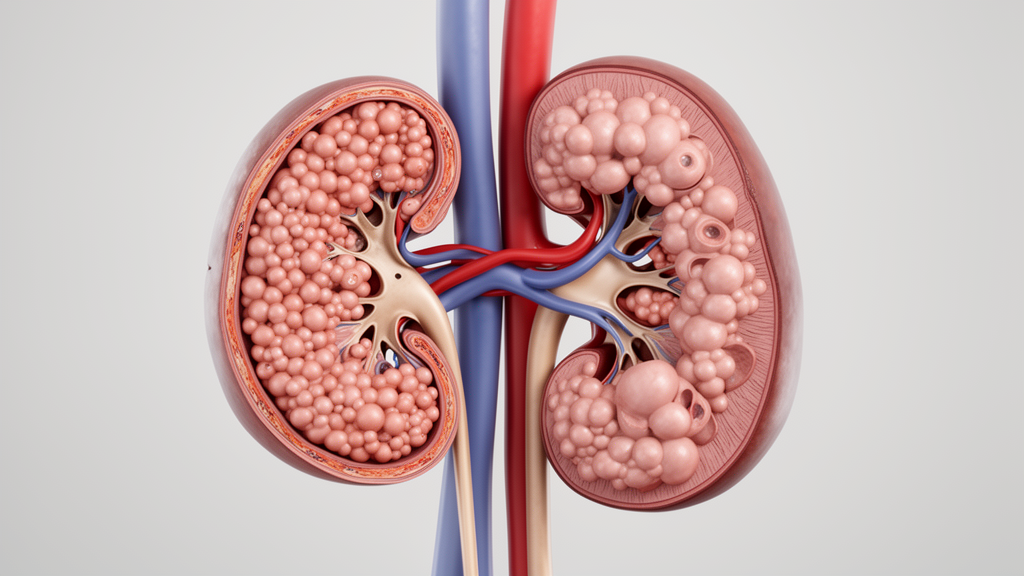
A critical narrative review finds that the fat surrounding a kidney is not one uniform phenomenon, but a collection of anatomically and biologically distinct compartments that may carry different information about renal health. Perirenal adipose tissue, which surrounds the kidney outside its capsule; renal sinus adipose tissue, located in the confined space containing renal vessels, lymphatics and collecting structures; and lipid stored within kidney tissue each showed associations with measures such as albuminuria, filtration, intrarenal blood flow and chronic kidney disease status. Some relationships remained after statistical adjustment for body mass index or visceral fat. Treatment studies also showed that selected kidney-associated fat compartments can change with weight loss, glucose-lowering therapy or surgery. However, no human evidence yet shows that changing these depots causes the kidney benefits observed in major outcome trials.
That distinction matters because body mass index cannot show where fat is stored or what state it is in. Two people with the same BMI may differ markedly in visceral adiposity, insulin resistance, blood pressure, albuminuria and kidney-function trajectory. In chronic kidney disease, fluid retention, loss of muscle, ageing and the high prevalence of diabetes and cardiovascular disease further weaken BMI as an individual-level description. The review organises kidney fat into several layers: systemic adiposity as metabolic background; anatomical burden in perirenal, renal-sinus and intrarenal compartments; tissue characteristics that may indicate inflammation or altered metabolism; and renal outcomes that show whether an exposure is biologically relevant. These are research dimensions rather than a proposed clinical classification.
The strongest evidence that anatomical labels reflect real biological differences comes from paired tissue obtained from healthy kidney donors. Researchers comparing perirenal and renal-sinus fat within the same individuals found distinct metabolic and immune programmes. Perirenal tissue showed stronger thermogenic and oxidative signatures and greater insulin-stimulated glucose uptake, whereas renal-sinus tissue was relatively enriched for macrophage and inflammatory pathways. The finding cautions against treating every form of “fat around the kidney” as uniformly harmful or assuming that a larger perirenal layer necessarily reflects more local inflammation. It also means imaging measurements should not be merged without qualification: an ultrasound thickness, an MRI-derived sinus-fat volume and a Dixon-based renal fat fraction sample different structures and may relate differently to renal function. The donor study was conducted in healthy people, however, so its findings cannot establish how these depots behave in obesity-associated kidney disease.
Kidney fat can be measured by several techniques, but none is yet ready for routine thresholds. Ultrasound offers accessible, radiation-free and repeatable assessment of perirenal fat, yet results depend on the operator, renal level, imaging plane and whether adjacent pararenal layers are included. CT can distinguish perirenal from renal-sinus fat and provide attenuation information that may hint at tissue composition, but acquisition, contrast phase, segmentation and normalisation affect the measurements. MRI offers the most flexible research approach, combining compartment anatomy, fat fraction and physiological sequences without ionising radiation, although cost and segmentation burden limit large-scale use. Deep-learning systems have shown technical feasibility for automated segmentation, but that does not establish CKD-specific validity. No accepted denominator converts these measurements into a universal renal-risk quantity, and factors including sex, age, ethnicity, diabetes status, kidney size and CKD stage may affect their meaning.
Human studies support a real association with renal markers, although much of the evidence remains observational and heavily influenced by diabetes. In the Framingham Heart Study, renal sinus fat measured by CT was associated with CKD and hypertension after adjustment for BMI and visceral fat. Ultrasound studies in type 2 diabetes linked greater para- or perirenal fat with CKD and renal resistance indices, while biopsy-based CKD cohorts associated renal sinus fat with abnormal intrarenal haemodynamics independently of visceral fat. Prospective findings are more limited: in 190 people with type 2 diabetes but no CKD at baseline, 29 developed CKD over two years, and each standard-deviation increase in perirenal fat thickness was associated with a reported hazard ratio of 1.67. A separate study of 56 patients with CKD linked greater renal-sinus fat accumulation to later severe eGFR decline. These temporal signals are promising, but the small event counts, selected samples and lack of external validation prevent their use as clinical predictors.
The decisive clinical test is not whether kidney fat is statistically associated with CKD, but whether measuring it adds useful information beyond established risk markers. Nephrologists already use eGFR, albuminuria, diabetes status, blood pressure, age and validated CKD prediction models. A new imaging marker would need to improve discrimination, calibration, risk classification or treatment decisions after those variables—and systemic adiposity—have been considered. A 2025 meta-analysis found a consistent association between perirenal fat and CKD but included only eight studies and 2,576 participants. More recently, a CT study of 404 people with type 2 diabetes found that perirenal adipose-tissue attenuation was associated with rapid diabetic kidney disease progression in the 125 participants with kidney-function follow-up. That result offers proof of concept, not proof of utility: the sample was diabetes-specific, the longitudinal subset was limited, and there was no external decision-impact validation.
Several mechanisms could connect kidney-associated fat with renal dysfunction, but plausibility must not be confused with causation. Expansion within the confined renal sinus might affect low-pressure vessels, lymphatics and interstitial pressure. Perirenal tissue could expose the kidney to fatty acids, adipokines, cytokines and neurohumoral signals, while intrarenal lipid may reflect an imbalance between lipid uptake, oxidation and export. Human physiology provides some support. In 51 people with type 2 diabetes, MRI-measured renal sinus fat was associated with lower measured GFR, lower effective renal plasma flow and greater renal vascular resistance, with several relationships surviving adjustment for general adiposity. Another observational study of 91 people with type 2 diabetes associated perirenal fat with afferent arteriolar resistance and estimated GFR, and statistical mediation suggested that haemodynamic variables explained part of the relationship. Because the mediator was model-derived and the data were not experimental, the analysis supports haemodynamic plausibility rather than establishing a causal pathway.
Intervention evidence shows that kidney-associated fat is modifiable, but it also exposes the gap between remodeling and renal benefit. In an 18-month randomised lifestyle trial involving 278 participants, renal sinus fat fell by about 9%, while renal parenchymal fat changed little; the depot change was not associated with improved renal function or blood pressure. Small randomised studies of canagliflozin and dapagliflozin reported reductions in MRI-derived renal fat fraction or ultrasound-measured perirenal fat. In the observational ADIPO-CKD cohort of 189 patients with CKD stages 1–4, perirenal thickness decreased among 50 SGLT2 inhibitor users over eight months but not in the non-user group, including after adjustment for BMI and visceral-fat change. Metabolic-surgery imaging similarly suggests renal-sinus-fat remodeling. By contrast, major outcome trials of SGLT2 inhibitors and semaglutide established kidney benefits without measuring these compartments. Their coexistence with smaller imaging studies does not demonstrate that depot reduction mediates protection; that requires serial measurements, temporal ordering and prespecified causal mediation within the same trial.
The evidence base also has important limits. Most positive human studies come from diabetes-enriched populations, where hyperglycaemia, insulin resistance, hyperfiltration, visceral adiposity and medication effects are closely intertwined. They are clinically relevant but cannot represent every form of obesity-associated CKD, particularly non-diabetic disease. Healthy donor studies provide clean tissue comparisons but limited information about progression, while established CKD can itself alter activity, appetite, metabolism, inflammation and body composition, making reverse causation difficult. Nomenclature also varies: perirenal, perinephric, para-perirenal, renal-sinus and generic “renal fat” measures are not always anatomically equivalent. Progress therefore depends on shared definitions and reporting standards, multicentre validation across diverse populations, and prospective studies that compare new measures with established risk models. Automated imaging will only become useful if scanners, protocols, segmentation errors and clinical thresholds are validated in CKD populations. The planned TRANSCEND-CKD phase 2b trial, which combines MRI kidney measures with iohexol-measured GFR, could help bridge this gap, although its current publication reports design and baseline information rather than efficacy.
For now, compartment-resolved kidney adiposity is best treated as a research strategy, not a diagnosis or treatment-selection score. Imaging has established that kidney-associated fat can be measured, that some measures retain renal information beyond BMI, and that lifestyle or drug therapy can alter selected depots. What remains unproven is equally important: no universal threshold, no validated clinical classification, and no established evidence that changing kidney fat mediates the renal benefits of SGLT2 inhibitors, semaglutide, weight-loss interventions or metabolic surgery. The next decisive advances will come from anatomically standardised imaging linked prospectively to filtration, albuminuria and clinical outcomes, paired tissue studies in obesity and CKD, and trials designed specifically to test the depot-to-kidney pathway.
Subject of Research: Human evidence on kidney-associated adiposity in obesity and chronic kidney disease
Article Title: Kidney adiposity in obesity and chronic kidney disease: mechanisms, measurement, and clinical implications
Article References: Zhang, Y. (2026). Kidney adiposity in obesity and chronic kidney disease: mechanisms, measurement, and clinical implications. Frontiers in Medicine, 13, Article 1967640. https://doi.org/10.3389/fmed.2026.1967640
Image Credits: AI Generated
DOI: 10.3389/fmed.2026.1967640
Keywords: kidney adiposity, perirenal fat, renal sinus fat, intraternal lipid, chronic kidney disease, obesity, medical imaging, renal physiology, adipose biology, treatment remodeling, Kidney, adiposity
Cite Scienmag News
Ophelia Keating. (October 25, 2026). Review: Kidney fat compartments show distinct biology and treatment-linked remodeling. Scienmag. https://scienmag.com/review-kidney-fat-compartments-show-distinct-biology-and-treatment-linked-remodeling/
Ophelia Keating. "Review: Kidney fat compartments show distinct biology and treatment-linked remodeling." Scienmag, 25 October 2026, https://scienmag.com/review-kidney-fat-compartments-show-distinct-biology-and-treatment-linked-remodeling/. Accessed 25 October 2026.
Ophelia Keating. "Review: Kidney fat compartments show distinct biology and treatment-linked remodeling." Scienmag. October 25, 2026. https://scienmag.com/review-kidney-fat-compartments-show-distinct-biology-and-treatment-linked-remodeling/


