


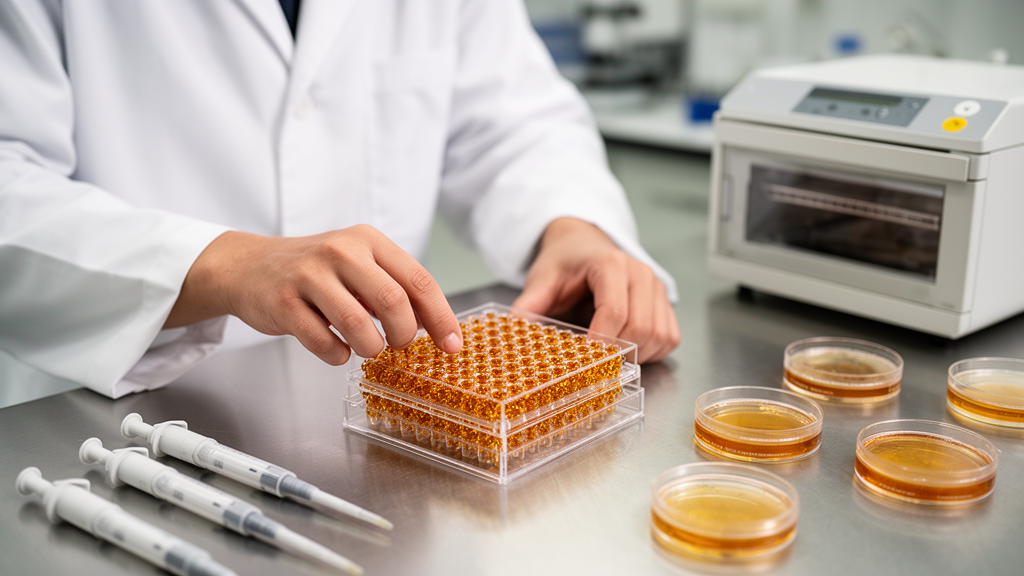
A 2026 review concludes that human induced pluripotent stem cell-derived retinal pigment epithelium, or iPSC-RPE, can support mechanism-based testing for drug-induced retinal toxicity when its use is tied to a clearly defined purpose. The authors argue that current evidence is stronger for biological plausibility and mechanistic concordance than for prospective prediction of clinical toxicity. The model remains a developing component of new approach methodologies, or NAMs, rather than a qualified stand-alone replacement for animal studies or established human RPE assays.
The retinal pigment epithelium is a polarized layer between the neural retina and the choroid. It forms part of the outer blood-retinal barrier and performs functions including tight-junction maintenance, directional transport, phagocytosis of photoreceptor outer segments, retinoid recycling and trophic-factor secretion. These functions also make the cells vulnerable to drugs that disturb lysosomal activity, mitochondrial metabolism, oxidative balance or epithelial polarity. The review argues that an RPE model used for safety assessment should therefore be judged by functional performance, not simply by morphology or expression of lineage markers.
Compared with the widely used ARPE-19 cell line, functionally mature iPSC-RPE can show stronger barrier integrity, polarized secretion and phagocytic activity, although results depend on the cell line, differentiation method, culture surface, medium, maturation time and passage history. ARPE-19 often has incomplete pigmentation, reduced polarization, low transepithelial electrical resistance and variable expression of proteins such as RPE65, bestrophin-1, PEDF and VEGF. Primary human RPE cells can more closely resemble native tissue, but donor variability, limited expansion and poor scalability restrict standardized screening. Mature iPSC-RPE occupies a potentially useful middle ground, yet the authors caution that it cannot be assumed to outperform every conventional model without assay-specific comparison.
Manufacturing is itself a toxicological variable. Directed protocols that manipulate Wnt, BMP and TGF-β/Nodal signaling can improve purity and reproducibility, while newer manufacturing-oriented methods use chemically defined media, xeno-free conditions, shortened timelines and scalable monolayers. Yet two preparations may express similar RPE markers while differing in pigmentation, polarity, lysosomal competence or drug accumulation. The proposed qualification framework therefore requires researchers to report the differentiation route, donor and iPSC line, substrate, medium, maturation period, passage or cryopreservation history, and baseline functional performance. A single marker, elapsed culture time or universal electrical-resistance cutoff is not sufficient to define maturity.
For each intended use, the review proposes a set of critical quality attributes linking model biology to the toxicological decision. Core requirements include a stable polarized monolayer, continuous junctional structures, measurable barrier function, apical PEDF secretion, basal VEGF secretion and competent uptake and degradation of photoreceptor outer segments. Mechanism-specific measures can add lysosomal pH, cathepsin activity, autophagic flux, mitochondrial respiration, ATP production, membrane potential and spare respiratory capacity. Functional qualification is presented as a hierarchy: biological plausibility, mechanistic relevance, reproducible assay performance and, ultimately, regulatory validation. The review addresses the first three levels and describes a roadmap rather than evidence that formal qualification has been achieved.
Disease models supply additional evidence that relevant RPE functions can be reproduced in human cells. Patient-derived models of ABCA4-associated Stargardt disease reproduce features including impaired outer-segment processing, altered lipid homeostasis, reduced lysosomal enzyme activity and accumulation of autofluorescent material. BEST1-mutant models show impaired chloride conductance, altered calcium signaling, changed phagocytosis and disturbed epithelial homeostasis. Models carrying complement factor H variants, along with cells exposed to oxidative stress, cigarette-smoke constituents or lipid-peroxidation products, reproduce selected features relevant to age-related macular degeneration. These systems support endpoint selection, but each captures only part of retinal pathology and is not a surrogate for an entire human disease.
Chloroquine and hydroxychloroquine provide the clearest mechanism-anchored examples. These drugs accumulate in pigmented RPE, interfere with lysosomal acidification and autophagic flux, and can cause phospholipidosis and impaired photoreceptor outer-segment degradation. iPSC-RPE studies have detected lysosomal alkalinization, reduced cathepsin activity, phospholipid accumulation and changes in outer-segment processing. The appropriate assay panel consequently extends beyond viability to measure lysosomal pH, LC3-II and p62, degradation kinetics, autofluorescent material and, where needed, lamellar inclusions by electron microscopy. These results demonstrate responsiveness and mechanistic consistency, but they have not established prospective sensitivity, specificity or predictive accuracy across chemically diverse compounds.
MEK inhibitors illustrate a different, often reversible form of retinal injury. Clinically, MEK inhibitor-associated retinopathy can involve transient subretinal fluid and visual disturbance that improves after dose reduction or withdrawal, rather than prominent RPE cell death. Preclinical studies of selumetinib in iPSC-RPE have reported altered photoreceptor outer-segment internalization and changes in AQP1 and other genes involved in ion and fluid transport while epithelial integrity remained comparatively preserved. A small patient-specific study subsequently reported different responses in two individuals, one of whom developed the condition. These findings make dynamic transport and recovery assays particularly relevant, but the available studies are small and, as the review notes, were available as preprints.
Other applications remain exploratory. Long-term VEGF suppression could be studied through polarized VEGF and PEDF secretion, barrier stability, mitochondrial capacity and inflammatory or complement signaling, ideally with endothelial co-culture and repeated dosing, but iPSC-RPE has not yet been validated for this context. Nor is every recognized retinal toxicant suitable as an RPE benchmark: vigabatrin toxicity partly involves photoreceptors, while tamoxifen produces a heterogeneous retinal phenotype. Compounds that mainly affect neurons, glia, vascular cells or neurovascular interactions will require retinal organoids, co-cultures or blood-retinal-barrier-on-chip systems. Ultimately, qualification will require blinded positive and negative compound panels, clinically anchored exposure conditions, within-run and between-run reproducibility, inter-laboratory studies and formal estimates of sensitivity, specificity and predictive values.
Subject of Research: Context-specific use of iPSC-derived retinal pigment epithelium for drug-induced retinal toxicity testing
Article Title: iPSC-derived RPE as a context-of-use defined NAM framework for RPE-centered drug-induced retinal toxicity assessment
Article References: Ding, W., Gu, L., Dong, T., Xiong, M., Wang, C., Ji, C., Lv, J., Zhang, X., & Gong, X. (2026). iPSC-derived RPE as a context-of-use defined NAM framework for RPE-centered drug-induced retinal toxicity assessment. Frontiers in Pharmacology, 17, Article 1933218. https://doi.org/10.3389/fphar.2026.1933218
Image Credits: AI Generated
DOI: 10.3389/fphar.2026.1933218
Keywords: iPSC-RPE, retinal toxicity, predictive toxicology, new approach methodologies, retinal pigment epithelium, lysosomal toxicity, MEK inhibitors, ocular safety, context of use, human-relevant models, iPSC-derived, context-of-use
Cite Scienmag News
Ophelia Keating. (October 25, 2026). iPSC retinal pigment epithelium advances context-specific toxicity testing. Scienmag. https://scienmag.com/ipsc-retinal-pigment-epithelium-advances-context-specific-toxicity-testing/
Ophelia Keating. "iPSC retinal pigment epithelium advances context-specific toxicity testing." Scienmag, 25 October 2026, https://scienmag.com/ipsc-retinal-pigment-epithelium-advances-context-specific-toxicity-testing/. Accessed 25 October 2026.
Ophelia Keating. "iPSC retinal pigment epithelium advances context-specific toxicity testing." Scienmag. October 25, 2026. https://scienmag.com/ipsc-retinal-pigment-epithelium-advances-context-specific-toxicity-testing/


