

Sunday, October 25, 2026
Science
No Result
View All Result
  • Login
  • HOME
  • SCIENCE NEWS
  • CONTACT US
  • HOME
  • SCIENCE NEWS
  • CONTACT US
No Result
View All Result
Scienmag
No Result
View All Result
Home Science News

Exploratory OCTA study probes macular vessel density in lens dislocation

October 25, 2026
in Science News
Juliet Wilcox
By Juliet Wilcox Scienmag Editorial Profile - Human Genetics
Reading Time: 2 mins read
0
Exploratory OCTA study probes macular vessel density in lens dislocation

Exploratory OCTA study probes macular vessel density in lens dislocation

65
SHARES
587
VIEWS
Share on FacebookShare on Twitter
ADVERTISEMENT

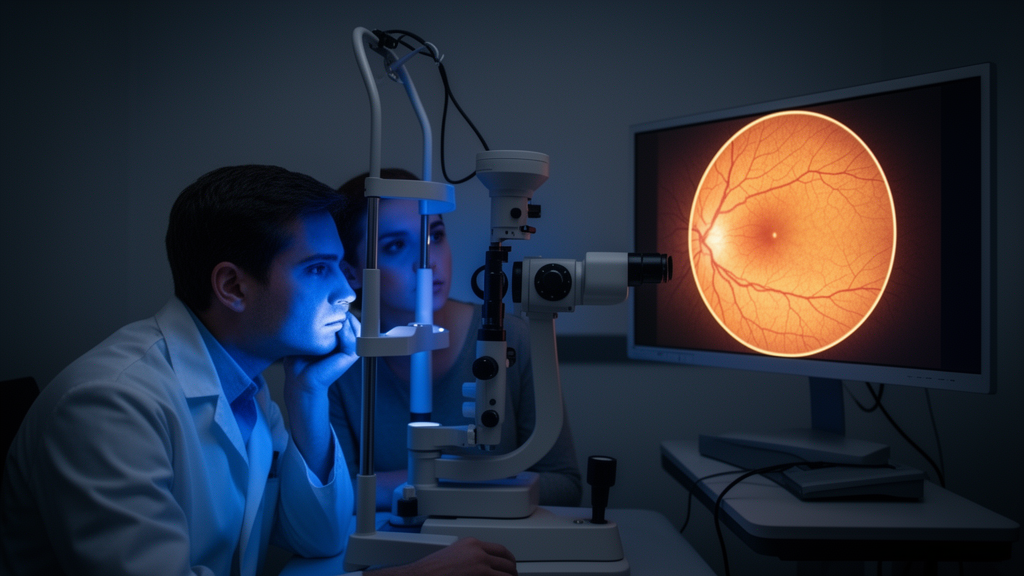
An exploratory phenotype-first study has examined whether lens dislocation, a recognized anterior-segment manifestation of fibrillinopathy, is accompanied by measurable differences in macular microvasculature. Researchers compared optical coherence tomography angiography (OCTA) parameters between participants with and without documented lens dislocation, and descriptively reviewed archived clinical FBN1 reports. The retrospective, availability-based study included 16 participants classified by verified current or historical lens-dislocation status.

Participant-level superficial capillary plexus (SCP) vessel density was calculated by averaging valid bilateral measurements or, where only one eye had usable data, using the single valid eye. Five OCTA endpoints were compared using two-sided Mann–Whitney U tests, with Benjamini–Hochberg q values applied as a multiplicity sensitivity analysis. Seven archived clinical FBN1 reports from lens-dislocation-positive participants were summarized without any variant reclassification, and no genotype–OCTA association was assessed.

The cohort comprised 7 lens-dislocation-positive (LD+) and 9 lens-dislocation-negative (LD−) participants; 15 participants, 6 LD+ and 9 LD−, contributed quantitative OCTA data. Foveal SCP vessel density was lower in the LD+ group, with a median of 19.38% (interquartile range 18.68–20.04) compared with 30.20% (29.20–31.85) in LD− participants, yielding an unadjusted p value of 0.036. However, the finding was not retained after multiplicity sensitivity analysis, with a q value of 0.180.

The remaining endpoints showed no significant between-group differences. Whole-image, parafoveal, and perifoveal vessel-density comparisons produced p values of 0.328, 0.272, and 0.238 respectively, each with a q value of 0.410. Foveal avascular zone area, measured in one eye per participant in a subset of 14 participants, also did not differ between groups (p = 0.606; q = 0.606).

The genetic review yielded limited but consistent documentation. Six of the seven archived clinical FBN1 reports from LD+ participants documented an FBN1 variant, while one report was negative within the scope of its assay. Because the reports were routine-care documents of heterogeneous origin, the authors summarized them descriptively rather than reclassifying any variants.

The study’s conclusions are deliberately cautious. The unadjusted foveal signal did not survive multiplicity correction, and none of the other OCTA endpoints differed significantly between groups. The authors highlight several constraints on interpretation: marked between-group differences in spherical equivalent and axial length, the small sample size, and the heterogeneous nature of the routine-care genetic reports.

Accordingly, the findings are characterized as hypothesis-generating. They do not establish OCTA as a diagnostic or prognostic test for lens dislocation in fibrillinopathy, nor do they demonstrate an individual-level genotype–OCTA association. The study instead provides a methodological template—verified dislocation status, participant-level averaging of bilateral measurements, and prespecified multiplicity sensitivity analysis—that future, larger studies could follow when testing whether macular microvascular changes accompany ectopia lentis.

Subject of Research: Lens dislocation, OCTA, and archived FBN1 reports: An exploratory study

Article Title: Lens dislocation, OCTA, and archived FBN1 reports: An exploratory study

Article References: Çevik, M. Ö., Simsek, M., Cevik, S. G., & Perente, I. (2026). Lens dislocation, OCTA, and archived FBN1 reports: An exploratory study. PLOS One, 21(10), e0361193. https://doi.org/10.1371/journal.pone.0361193

Image Credits: AI Generated

DOI: 10.1371/journal.pone.0361193

Keywords: Lens, dislocation, OCTA, archived, FBN1, reports, exploratory, scientific research

Cite Scienmag News

Juliet Wilcox. (October 25, 2026). Exploratory OCTA study probes macular vessel density in lens dislocation. Scienmag. https://scienmag.com/exploratory-octa-study-probes-macular-vessel-density-in-lens-dislocation/

Juliet Wilcox. "Exploratory OCTA study probes macular vessel density in lens dislocation." Scienmag, 25 October 2026, https://scienmag.com/exploratory-octa-study-probes-macular-vessel-density-in-lens-dislocation/. Accessed 25 October 2026.

Juliet Wilcox. "Exploratory OCTA study probes macular vessel density in lens dislocation." Scienmag. October 25, 2026. https://scienmag.com/exploratory-octa-study-probes-macular-vessel-density-in-lens-dislocation/


Tags: archiveddislocationexploratoryexploratory ophthalmic imaging studiesFBN1FBN1 gene reportsfibrillinopathy ocular manifestationsgenotype-phenotype correlation in ocular disorderslenslens dislocation and microvasculatureMacular vessel density in lens dislocationmicrovascular differences in eye diseasesOCTAOCTA microvasculature analysisoptical coherence tomography angiographyposterior segment vascular assessmentreportsretinal microvascular changesScientific Researchsuperficial capillary plexus
Share26Tweet16
Previous Post

Subtle cognitive deficits emerge before ALS symptoms appear, study finds

Next Post

New 19-Item Scale Measures What Nurses Know About Health Literacy Practice

Related Posts

New 19-Item Scale Measures What Nurses Know About Health Literacy Practice
Medicine

New 19-Item Scale Measures What Nurses Know About Health Literacy Practice

October 25, 2026
Subtle cognitive deficits emerge before ALS symptoms appear, study finds
Medicine

Subtle cognitive deficits emerge before ALS symptoms appear, study finds

October 25, 2026
Turmeric-Pueraria-Coix Seed Formula Points to Coumestrol Targets in Rheumatoid Arthritis
Agriculture

Turmeric-Pueraria-Coix Seed Formula Points to Coumestrol Targets in Rheumatoid Arthritis

October 25, 2026
Polyethylene Eye Chamber Faces Adhesive Tape in Brazilian Pilot Trial Protocol for Surgical Corneal Protection
Medicine

Polyethylene Eye Chamber Faces Adhesive Tape in Brazilian Pilot Trial Protocol for Surgical Corneal Protection

October 25, 2026
Long-Read DNA Sequencing Uncovers Hidden Cancer Drivers Missed by Standard Tests
Cancer

Long-Read DNA Sequencing Uncovers Hidden Cancer Drivers Missed by Standard Tests

October 25, 2026
The Hidden RNA Layer That Controls Meat, Milk and Fertility in Livestock
Biology

The Hidden RNA Layer That Controls Meat, Milk and Fertility in Livestock

October 25, 2026
Next Post
New 19-Item Scale Measures What Nurses Know About Health Literacy Practice

New 19-Item Scale Measures What Nurses Know About Health Literacy Practice

  • Mothers who receive childcare support from maternal grandparents show more optimized

    Mothers who receive childcare support from maternal grandparents show more parental warmth, finds NTU Singapore study

    27656 shares
    Share 11059 Tweet 6912
  • University of Seville Breaks 120-Year-Old Mystery, Revises a Key Einstein Concept

    1061 shares
    Share 424 Tweet 265
  • Bee body mass, pathogens and local climate influence heat tolerance

    682 shares
    Share 273 Tweet 171
  • Researchers record first-ever images and data of a shark experiencing a boat strike

    546 shares
    Share 218 Tweet 137
  • Groundbreaking Clinical Trial Reveals Lubiprostone Enhances Kidney Function

    531 shares
    Share 212 Tweet 133
Science

Embark on a thrilling journey of discovery with Scienmag.com—your ultimate source for cutting-edge breakthroughs. Immerse yourself in a world where curiosity knows no limits and tomorrow’s possibilities become today’s reality!

RECENT NEWS

  • New 19-Item Scale Measures What Nurses Know About Health Literacy Practice
  • Exploratory OCTA study probes macular vessel density in lens dislocation
  • Subtle cognitive deficits emerge before ALS symptoms appear, study finds
  • Turmeric-Pueraria-Coix Seed Formula Points to Coumestrol Targets in Rheumatoid Arthritis

Categories

  • Agriculture
  • Anthropology
  • Archaeology
  • Athmospheric
  • Biology
  • Biotechnology
  • Blog
  • Bussines
  • Cancer
  • Chemistry
  • Climate
  • Earth Science
  • Editorial Policy
  • Marine
  • Mathematics
  • Medicine
  • Pediatry
  • Policy
  • Psychology & Psychiatry
  • Science Education
  • Science News
  • Social Science
  • Space
  • Technology and Engineering

Subscribe to Blog via Email

Enter your email address to subscribe to this blog and receive notifications of new posts by email.

Join 5,151 other subscribers

© 2025 Scienmag - Science Magazine

Welcome Back!

Login to your account below

Forgotten Password?

Retrieve your password

Please enter your username or email address to reset your password.

Log In
No Result
View All Result
  • HOME
  • SCIENCE NEWS
  • CONTACT US

© 2025 Scienmag - Science Magazine

Discover more from Science

Subscribe now to keep reading and get access to the full archive.

Continue reading