


Most dental staff working in primary care in Cumbria intend to change their working pattern within five years, according to a mixed methods study published in BMC Health Services Research. Of 136 survey respondents across staff groups, including 40 dentists, 70% said they planned such a change. Among dentists the figure was 85%, and 32% of dentists surveyed said they were planning to leave dentistry altogether.
The study invited staff working in primary care dentistry across Cumbria to complete a survey asking what had attracted them to the region and whether they intended to change their working pattern, leave dentistry, or leave the area. Of the respondents, 50 (38%) planned to reduce their working hours, 36 (26%) intended to change the balance between NHS and private work, and 41 (30%) planned to leave their current job for another post or further training within dentistry. Thirty-two percent of dentists, 15 individuals, were planning to exit the profession entirely.
Free-text survey responses pointed to two broad clusters of factors behind these plans. Personal influences included family considerations, quality of life and finances, while professional influences included career development and job satisfaction. The study notes that although difficulty attracting and retaining dental professionals in rural and coastal communities is well recognised, there has been relatively little research to guide meaningful interventions in under-served locations.
To explore solutions, the researchers held workshops at a regional symposium, involving 20 dentists, 10 nurses and practice managers, and 8 other stakeholders. The discussions identified themes relating to the rural community itself, to the educational systems that support entry into a dental career and enable career progression, and to profession-related systems with financial consequences at a local level.
Workshop participants also generated ideas for change. These included bespoke marketing strategies to promote the region, education and training initiatives designed to help local populations enter the dental profession, hosting undergraduate placements, and measures to promote career development once practitioners are established. The authors conclude that locally-led interventions should seek to capitalise on the strengths of the geography and create a positive learning experience that builds a community of practitioners.
The study’s conclusions also state that national solutions will require financial investment and educational reform to bring about effective change. The survey quantified the scale of intended change across staff groups, while the workshops captured systems-level explanations behind the numbers, indicating that the sustainability of the dental workforce in Cumbria is at risk.
The findings sit against the backdrop described in the study: patients are increasingly unable to access NHS dental care in the UK, and the problem is more marked in rural and coastal communities, where challenges of attracting and retaining dental professionals contribute to it. Cumbria, a remote and rural area of the UK, served as the study’s setting.
The survey and workshop data together suggest that the personal and professional factors driving staff plans are identifiable, and that potential interventions span marketing the region, building local educational pipelines into dentistry, supporting undergraduate placements, and addressing the financial systems that shape practice viability at a local level.
As a single-region study of primary care dental staff, the research describes the situation in Cumbria specifically; the authors present it as an examination of challenges to workforce sustainability in one remote and rural area and of opportunities to improve recruitment and retention there.
Subject of Research: Sustainability of the NHS dental workforce in rural Cumbria
Article Title: Improving the sustainability of the dental workforce in Cumbria: a mixed methods study
Article References: Vance, G., Asuni, A., Karanjkar, R., & Burford, B. (2026). Improving the sustainability of the dental workforce in Cumbria: a mixed methods study. BMC Health Services Research. https://doi.org/10.1186/s12913-026-15871-7
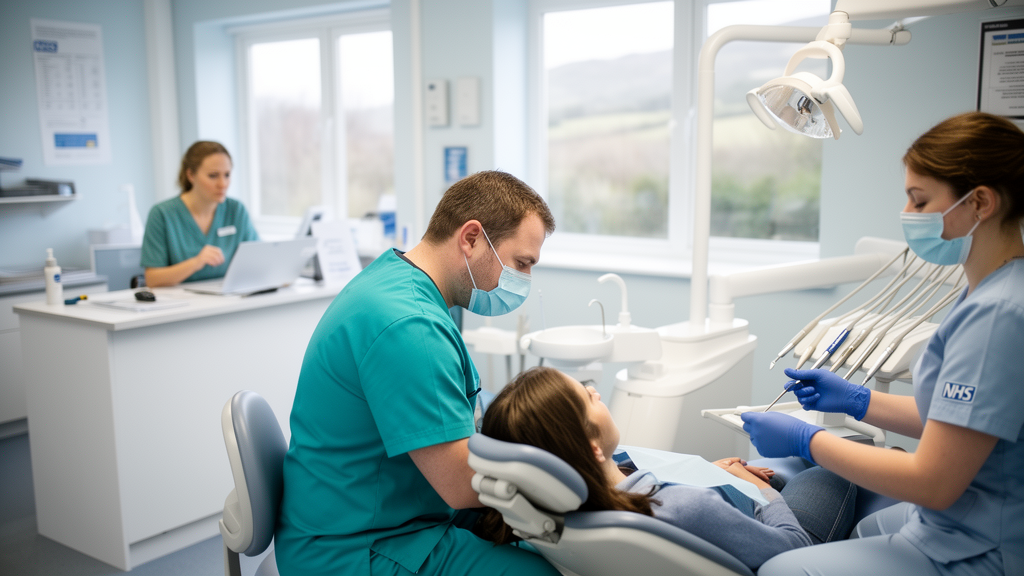
Image Credits: AI Generated
DOI: 10.1186/s12913-026-15871-7
Keywords: NHS dentistry, dental workforce, Cumbria, rural health, recruitment and retention, mixed methods, workforce sustainability, primary care, health services research, undergraduate placements, Improving, sustainability
Cite Scienmag News
Ophelia Keating. (October 25, 2026). Cumbria survey finds most NHS dental staff plan to change how they work. Scienmag. https://scienmag.com/cumbria-survey-finds-most-nhs-dental-staff-plan-to-change-how-they-work/
Ophelia Keating. "Cumbria survey finds most NHS dental staff plan to change how they work." Scienmag, 25 October 2026, https://scienmag.com/cumbria-survey-finds-most-nhs-dental-staff-plan-to-change-how-they-work/. Accessed 25 October 2026.
Ophelia Keating. "Cumbria survey finds most NHS dental staff plan to change how they work." Scienmag. October 25, 2026. https://scienmag.com/cumbria-survey-finds-most-nhs-dental-staff-plan-to-change-how-they-work/


