


Cancer-related fatigue (CRF) is one of the most common and disabling symptoms experienced during cancer treatment and survivorship, and it is stubbornly resistant to pharmacology. Unlike ordinary tiredness, it can persist despite rest and can affect physical activity, endurance, motivation, and cognitive and emotional engagement. A new narrative review published in Frontiers in Microbiology argues that the field has been treating the symptom too generically, listing inflammation, HPA-axis disruption, mitochondrial injury, sleep disturbance, anemia, and mood problems in parallel without connecting them into a testable mechanism. The authors, based at Heilongjiang University of Chinese Medicine and Dong’e Ejiao Co., propose instead a molecular framework built around the plant–microbiota–host axis, in which medicinal plant-derived compounds reshape gut microbes or are transformed by them into molecules the host can actually detect.
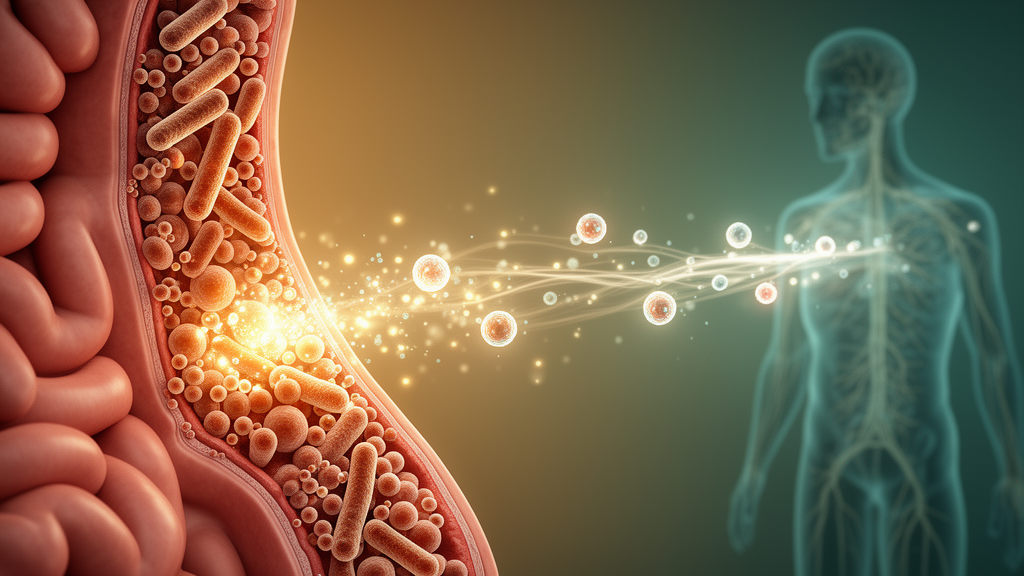
The review’s central organizing idea is the mediator–sensor module. Tumor- and treatment-associated injury of the intestinal mucosa alters epithelial renewal, barrier selectivity, and microbial metabolism, changing host exposure to microbial products. These changes generate molecular mediators—short-chain fatty acids (SCFAs), tryptophan-derived metabolites, bile acids, and microbe-associated molecular patterns (MAMPs)—that are detected by epithelial, immune, enteroendocrine, and neural sensors. Signals then travel to the brainstem through vagal, humoral, and immune–metabolic routes, potentially converging on brainstem and monoaminergic networks involved in activity, effort, and interoceptive malaise. Crucially, the authors insist that the field distinguish established biology from candidate mechanisms, because direct causal evidence in CRF remains incomplete.
A striking feature of the literature search, updated through September 2026, is how thin the direct evidence base is. Targeted PubMed searches retrieved hundreds of thousands of records on gut microbiota and barrier injury, but only 26 records addressed cancer-related fatigue together with gut microbiota or barrier injury, only 10 addressed CRF in relation to gut–brain signaling, and just one addressed CRF together with medicinal plant compounds or their microbial metabolism. Much of the mechanistic support discussed in the review therefore comes from adjacent fields: mucositis biology, non-cancer inflammatory models, and general gut–brain neuroscience. The authors weight direct CRF studies most heavily and treat anatomical or receptor-expression work as plausibility rather than proof.
The review also argues that fatigue itself must be disaggregated before mechanisms can be interpreted. Patient-reported fatigue includes physical, motivational, cognitive, affective, and sleep-related components, and these should not be treated as interchangeable. Gut-derived immune–metabolic signaling is most plausible for physical and motivational fatigue, both of which are tied to interoceptive malaise, inflammatory sensing, and activity suppression. Recent cancer-model work found that tumor burden and therapy reduced activity without a detectable motivational deficit, and that associative learning could maintain fatigue-like behavior after the initiating inflammatory signal had subsided. In clinical trials, a barrier-protective agent might improve physical fatigue when mucosal inflammation is active, but it is unlikely to improve attention if sleep fragmentation is the dominant driver.
Clinical microbiome studies have reported associations between fatigue severity and microbial diversity, butyrate-producing taxa, Enterobacteriaceae enrichment, or microbial functional potential in pelvic radiotherapy, advanced cancer, and lung cancer chemotherapy cohorts. Systematic reviews, however, find these associations heterogeneous, often cross-sectional, and confounded by tumor type, treatment, antibiotics, diet, opioids, proton-pump inhibitors, and performance status. The review stresses that taxonomy is only a hypothesis generator: depletion of butyrate producers such as Faecalibacterium or Roseburia suggests reduced fermentative capacity, but function cannot be inferred securely without metagenomic and metabolomic data. Timing matters too—a sample before chemotherapy may capture risk, one during mucositis may capture active signal generation, and one after treatment may capture recovery or persistence.
Medicinal plant-derived compounds enter this framework upstream, and the review applies a substrate-to-mediator logic to them. Polyphenols, polysaccharides, saponins, and alkaloids are often poorly absorbed in the upper gut and reach the colon largely intact, where resident microbes convert them into metabolites such as SCFAs, indole derivatives, and secondary bile acids. Ellagitannins are dehydroxylated to urolithins by a restricted set of species, producing individual urolithin metabotypes; only part of the population carries the bacteria that reduce daidzein to the more potent estrogenic metabolite equol; ginseng saponins are stepwise deglycosylated to compound K, the absorbed aglycone; and berberine, a nearly unabsorbable alkaloid, reaches the circulation through bacterial nitroreductase reduction to dihydroberberine followed by re-oxidation after uptake. These transformations are well documented in pharmacokinetic studies, but the authors emphasize that none of them yet constitutes direct evidence that a plant-derived compound improves CRF.
Among the candidate mediator modules, the kynurenine branch of tryptophan metabolism currently has the strongest clinical symptom evidence. Inflammation-induced tryptophan breakdown has been related to anemia, fatigue, and depression in cancer, and longitudinal data in colorectal cancer survivors link kynurenine-pathway metabolites with fatigue and quality of life, while breast cancer survivor data link tryptophan–kynurenine metabolites with psychoneurological symptom clusters. The kynurenine-to-tryptophan ratio can identify pathway activation, the review notes, but it cannot identify the optimal pharmacological node among IDO1, TDO, KMO, or KAT targets, all of which intersect with tumor immunity. Microbial indole biology requires equal caution: aryl hydrocarbon receptor activation can be protective or pathogenic depending on ligand, cell type, and tissue context, and untargeted metabolomics alone cannot resolve which program is being engaged.
SCFA biology is biologically plausible but incompletely tested in CRF. Acetate, propionate, and butyrate differ in concentration, receptor preference, and tissue distribution; butyrate is consumed avidly by colonocytes as a local epithelial fuel and immune regulator, and SCFAs signal through FFAR2 and FFAR3 and act on vagal afferents in experimental systems. A proof of concept exists outside oncology: the traditional formula Jiaotaiwan raised serum SCFAs and engaged a cAMP-PKA-CREB-BDNF pathway in a multicenter randomized study of depression, showing that a plant-derived intervention can move a defined SCFA readout—but the endpoint was antidepressant response, and CRF-specific replication is lacking. Fecal butyrate alone, the authors warn, is a weak endpoint because it reflects production, consumption, transit, diet, and sampling conditions rather than target engagement.
On the communication side, the review favors a route-dominance model over route exclusivity. Vagal afferents terminate in the nucleus tractus solitarius (NTS), and classic studies show vagotomy can attenuate selected behavioral responses to inflammatory challenge, while the area postrema provides a parallel humoral interface relevant in advanced cancer. In acute treatment-associated fatigue with mucositis, vagal and humoral routes may carry much of the signal; in advanced cancer with cachexia, systemic cytokines and muscle catabolism may dominate; in survivorship, central learning and sleep disruption may maintain fatigue after gut injury has healed. The dorsal raphe nucleus is fatigue-relevant because serotonin regulates arousal, movement, and perceived effort, but its neurons are heterogeneous, and the NTS-to-DRN connection remains at an early discovery stage. A serotonin-only model, the authors argue, is too narrow.
The practical upshot is a two-stage validation scheme. Stage 1 demonstrates pathway engagement in an enriched subgroup—a barrier intervention should lower translocation markers, a fermentation intervention should alter SCFA availability, a vagal intervention should change heart-rate variability—and Stage 2 tests whether clinical fatigue improves in the same biological subgroup. Failure at Stage 1 is a target-engagement failure; failure at Stage 2 is a clinical-translation failure. For plant-derived interventions, the administered compound and its microbially generated metabolites must both be matched to the fatigue domain, biological subgroup, and biomarker before efficacy is interpreted mechanistically. The authors acknowledge several limitations: direct causal evidence linking gut-derived signals to CRF remains limited, animal fatigue behavior incompletely reproduces the human symptom, and no peripheral biomarker alone proves a gut-to-brain causal route. Their conclusion is measured: SCFAs, kynurenines, bile acids, and vagal pathways are best viewed as candidate mediator–sensor modules rather than established CRF mechanisms, and the next step is not broader symptom-only trials but biomarker-matched studies that test target engagement before mechanistic claims are made.
Subject of Research: A narrative review of how plant-derived compounds, gut microbiota, and gut–brain signaling may relate to cancer-related fatigue
Article Title: Medicinal plant-derived bioactive compounds modulate gut microbiota–host signaling in cancer-related fatigue: a phenotype-to-target framework
Article References: Jiao, Y., Feng, Q., Ren, Y., Sun, J., Wu, R., Li, Q., Gao, J., Zhou, Z., Qiu, Q., Wang, Z., Shen, K., Zhang, N., Zheng, L., & Sun, H. (2026). Medicinal plant-derived bioactive compounds modulate gut microbiota–host signaling in cancer-related fatigue: a phenotype-to-target framework. Frontiers in Microbiology, 17, Article 1988968. https://doi.org/10.3389/fmicb.2026.1988968
Image Credits: AI Generated
DOI: 10.3389/fmicb.2026.1988968
Keywords: cancer-related fatigue, gut microbiota, gut-brain axis, short-chain fatty acids, tryptophan metabolism, kynurenine, medicinal plants, microbial biotransformation, vagus nerve, intestinal barrier, review, Medicinal
Cite Scienmag News
Nathaniel Bowman. (October 24, 2026). Gut Microbes May Turn Plant Compounds Into Signals Behind Cancer Fatigue. Scienmag. https://scienmag.com/gut-microbes-may-turn-plant-compounds-into-signals-behind-cancer-fatigue/
Nathaniel Bowman. "Gut Microbes May Turn Plant Compounds Into Signals Behind Cancer Fatigue." Scienmag, 24 October 2026, https://scienmag.com/gut-microbes-may-turn-plant-compounds-into-signals-behind-cancer-fatigue/. Accessed 24 October 2026.
Nathaniel Bowman. "Gut Microbes May Turn Plant Compounds Into Signals Behind Cancer Fatigue." Scienmag. October 24, 2026. https://scienmag.com/gut-microbes-may-turn-plant-compounds-into-signals-behind-cancer-fatigue/


