


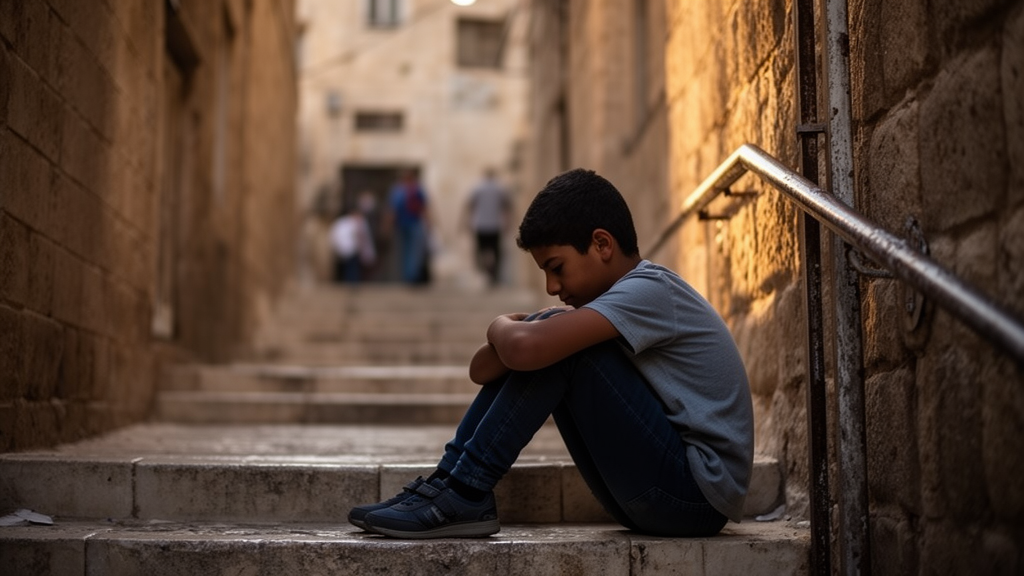
Nearly one in four Palestinian adolescents shows abnormal levels of psychological difficulties, according to a cross-sectional survey of 560 students aged 12 to 18 published in BMC Psychology. The study, conducted between February and August 2025 among students in grades 7 to 12 at 12 public and private schools across Palestine, aimed to assess mental health status and coping mechanisms in a population that the researchers note may also be exposed to socio-political stressors such as conflict, displacement, and economic hardship, which may further compromise psychological well-being. Using the validated Strengths and Difficulties Questionnaire (SDQ), the researchers classified 58.0 percent of participants as being in the normal range for total difficulties, 17.3 percent as borderline, and 24.6 percent as abnormal.
The questionnaire, developed through literature review and expert consultation and administered in Arabic with parental e-consent and student assent, also included a 28-item coping strategies scale adapted from prior Palestinian research. Problem-focused coping, which involves actively addressing the source of stress, was the most commonly used style, with a mean score of 2.8 (standard deviation 0.67). Emotion-focused coping, aimed at managing the emotional response to stress, followed at 2.48 (0.50), while avoidant coping, which entails disengaging from stressors, was the least used at 1.97 (0.48). Reported stress was widespread: 42.7 percent of students said they felt stressed sometimes, and 34.3 percent felt stressed frequently or most of the time. Notably, 88.2 percent of participants had never used mental health services, and most reported moderate socioeconomic status (84.8 percent).
The analysis revealed distinct demographic patterns in coping behavior. Female students reported significantly higher emotion-focused and avoidant coping scores than males (p ≤ 0.024), although problem-focused coping did not differ by gender. Age, smoking status, and socioeconomic status showed no significant associations with coping styles. Higher perceived stress was associated with greater use of all three coping styles (p < 0.05), a statistical pattern reported across the board rather than for any single approach.
The relationship between coping style and psychological well-being emerged as a central pattern in the data. Avoidant coping was higher among students who used mental health services, who reported a mental illness diagnosis, or who were classified as borderline or abnormal on SDQ domains. Problem-focused coping, by contrast, was higher among students in normal SDQ categories and among those with better prosocial behavior. The study also reported that avoidant coping clustered among students with lower paternal education, an association the authors highlight in their conclusions.
In hierarchical multivariable linear regression adjusted for sociodemographic factors, the associations held firm. Each unit increase in problem-focused coping was associated with a 3.29-point decrease in SDQ Total Difficulties (95% CI −4.11 to −2.47), whereas emotion-focused coping was associated with a 2.24-point increase (95% CI 1.04 to 3.45) and avoidant coping with a 4.46-point increase (95% CI 3.51 to 5.42). Because the study is cross-sectional, these associations cannot establish causation; it remains unclear whether avoidant coping contributes to psychological difficulties or whether adolescents with greater difficulties resort to avoidance more often.
The authors conclude that the findings highlight the need for school-based mental health promotion, early screening, and resilience-building interventions tailored to the Palestinian socio-political context. With nearly 90 percent of adolescents never having accessed mental health services despite substantial reported stress, the data point to a considerable gap between need and service use in this population. The study captured a single cross-sectional time point using a self-administered questionnaire, so the reported patterns describe associations at one moment rather than changes over time.
Subject of Research: Assessment of mental health and coping mechanisms among adolescents in Palestine: a cross-sectional study
Article Title: Assessment of mental health and coping mechanisms among adolescents in Palestine: a cross-sectional study
Article References: Hussien, A., Fasfoos, A., Jabareen, M., Alhroub, W., Abdallah, J., Qouqas, M. M., Abudaowd, S., & Maraqa, B. (2026). Assessment of mental health and coping mechanisms among adolescents in Palestine: a cross-sectional study. BMC Psychology. https://doi.org/10.1186/s40359-026-05851-1
Image Credits: AI Generated
DOI: 10.1186/s40359-026-05851-1
Keywords: Assessment, mental, health, coping, mechanisms, adolescents, Palestine, cross-sectional, scientific research
Cite Scienmag News
Glenn Wilkins. (October 24, 2026). Avoidant coping linked to psychological difficulties among Palestinian adolescents, survey finds. Scienmag. https://scienmag.com/avoidant-coping-linked-to-psychological-difficulties-among-palestinian-adolescents-survey-finds/
Glenn Wilkins. "Avoidant coping linked to psychological difficulties among Palestinian adolescents, survey finds." Scienmag, 24 October 2026, https://scienmag.com/avoidant-coping-linked-to-psychological-difficulties-among-palestinian-adolescents-survey-finds/. Accessed 24 October 2026.
Glenn Wilkins. "Avoidant coping linked to psychological difficulties among Palestinian adolescents, survey finds." Scienmag. October 24, 2026. https://scienmag.com/avoidant-coping-linked-to-psychological-difficulties-among-palestinian-adolescents-survey-finds/


