

Saturday, October 24, 2026
Science
No Result
View All Result
  • Login
  • HOME
  • SCIENCE NEWS
  • CONTACT US
  • HOME
  • SCIENCE NEWS
  • CONTACT US
No Result
View All Result
Scienmag
No Result
View All Result
Home Science News Technology and Engineering

Solid Waste Ceramsite Composite Boosts Photo-Fenton Phenol Degradation Tenfold

October 24, 2026
in Technology and Engineering
Denise Maddox
By Denise Maddox Scienmag Editorial Profile - Mechanical Engineering
Reading Time: 3 mins read
0
Solid Waste Ceramsite Composite Boosts Photo-Fenton Phenol Degradation Tenfold

Solid Waste Ceramsite Composite Boosts Photo-Fenton Phenol Degradation Tenfold

65
SHARES
587
VIEWS
Share on FacebookShare on Twitter
ADVERTISEMENT

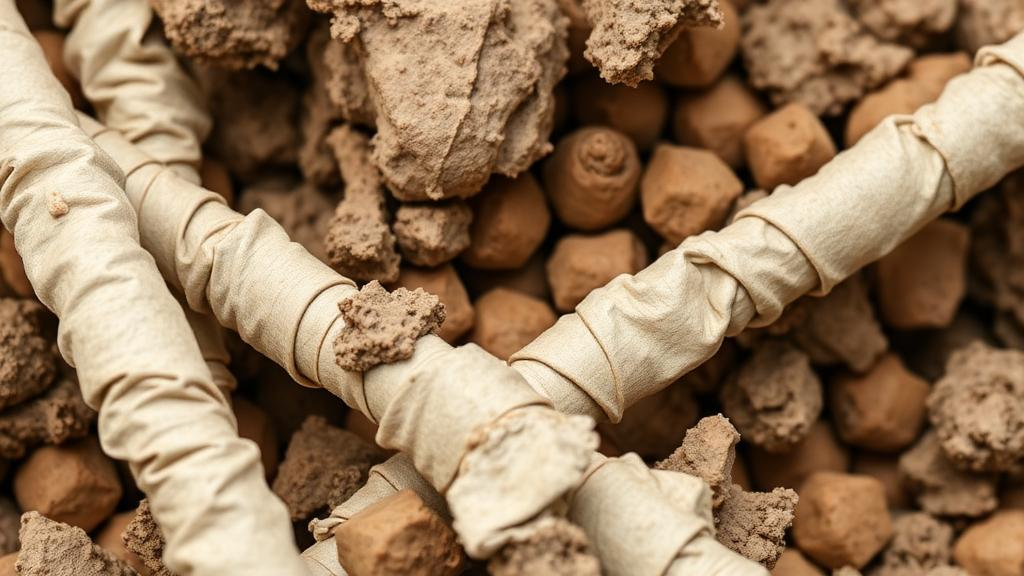
A composite built from industrial solid waste has shown markedly faster photo-Fenton degradation of phenol in a study published in the Journal of Materials Science. Researchers prepared CaTiO3-β zeolite/Fe2O3-modified porous ceramsite, abbreviated CTO-β/FTVI, through an impregnation-calcination route that adds catalytic phases to a porous ceramsite matrix derived from solid waste.

The study starts from a recognized limitation: the heterogeneous photo-Fenton degradation of higher-concentration phenol using solid waste-based porous ceramsite suffers from limited efficiency. The team tested whether layering CaTiO3-β zeolite and iron oxide phases onto the ceramsite support could lift that performance under defined reaction conditions.

Under the tested conditions, the optimal 3-CTO-β/FTVI catalyst achieved 85.4% UV-Vis-monitored apparent degradation of 40 mg/L phenol at pH 4 with 49.0 mM hydrogen peroxide. The reaction followed an apparent pseudo-first-order rate constant of 0.02644 min−1, roughly ten times higher than that of the unmodified ceramsite matrix, indicating that the added CaTiO3-β zeolite and iron oxide phases substantially accelerate the photo-Fenton process.

The authors are careful to describe the degradation figure as an apparent value rather than a selective determination of phenol. Because aromatic intermediates formed during breakdown may also absorb at the 270 nm monitoring wavelength, the UV-Vis signal can reflect parent phenol and breakdown products together, a caveat that matters for interpreting apparent degradation percentages in photo-Fenton studies.

Durability is a central concern for heterogeneous catalysts, and the composite maintained 70.5% of its initial apparent activity after four reuse cycles. The reported retention covers the four tested cycles; longer-term cycling data would be needed to establish sustained performance beyond that range.

Mechanistic probing through radical scavenging experiments and band structure analyses identified hydroxyl radicals (·OH) as the dominant reactive species, with superoxide radicals (·O2−) and photogenerated holes (h+) playing synergistic supporting roles. This radical hierarchy is consistent with a predominantly heterogeneous photo-Fenton mechanism operating at the catalyst surface.

The band structure results add one further element to the mechanism: photocatalysis may facilitate the surface Fe3+/Fe2+ redox cycle. The evidence links the observed radical hierarchy and band structure to this predominantly heterogeneous photo-Fenton pathway, in which the photocatalytic component and the surface iron redox chemistry operate together rather than as separate processes.

The authors frame the work as a feasible strategy for converting industrial solid wastes into efficient, stable heterogeneous photo-Fenton catalysts for phenolic wastewater treatment. Because the support itself originates from solid waste, the approach pairs a waste-derived catalyst support with phenol degradation. The results remain a laboratory demonstration under defined conditions of pH, peroxide dose and phenol concentration, but they establish a design route for waste-derived photo-Fenton composites that combine high apparent activity with cycle stability.

Subject of Research: CaTiO3-β zeolite modified porous ceramsite composites for enhanced photo-Fenton degradation of phenol

Article Title: CaTiO3-β zeolite modified porous ceramsite composites for enhanced photo-Fenton degradation of phenol

Article References: Zhang, Y., Lei, X.-F., Wang, C.-H., Yu, Q., Luo, S.-H., & Chen, H.-H. (2026). CaTiO3-β zeolite modified porous ceramsite composites for enhanced photo-Fenton degradation of phenol. Journal of Materials Science. https://doi.org/10.1007/s10853-026-13997-x

Image Credits: AI Generated

DOI: 10.1007/s10853-026-13997-x

Keywords: photo-Fenton, phenol degradation, porous ceramsite, CaTiO3, β zeolite, solid waste recycling, wastewater treatment, hydroxyl radicals, Journal of Materials Science, CaTiO3-, zeolite, modified

Cite Scienmag News

Denise Maddox. (October 24, 2026). Solid Waste Ceramsite Composite Boosts Photo-Fenton Phenol Degradation Tenfold. Scienmag. https://scienmag.com/solid-waste-ceramsite-composite-boosts-photo-fenton-phenol-degradation-tenfold/


Denise Maddox. "Solid Waste Ceramsite Composite Boosts Photo-Fenton Phenol Degradation Tenfold." Scienmag, 24 October 2026, https://scienmag.com/solid-waste-ceramsite-composite-boosts-photo-fenton-phenol-degradation-tenfold/. Accessed 24 October 2026.

Denise Maddox. "Solid Waste Ceramsite Composite Boosts Photo-Fenton Phenol Degradation Tenfold." Scienmag. October 24, 2026. https://scienmag.com/solid-waste-ceramsite-composite-boosts-photo-fenton-phenol-degradation-tenfold/

Tags: accelerated pollutant degradationCaTiO3CaTiO3-β zeolite modificationcomposite catalyst designenhanced degradation efficiencyenvironmental remediationheterogeneous photocatalysishydroxyl radicalsindustrial waste reuseiron oxide catalystJournal of Materials Sciencemodifiedphenol degradationphenol wastewater treatmentphoto-Fentonphoto-Fenton phenol degradationporous ceramsiteporous ceramsite supportsolid waste recyclingSolid waste-derived ceramsitewastewater treatmentzeoliteβ zeolite
Share26Tweet16
Previous Post

Spatial gene map reveals compartment-specific reprogramming in inflamed fatty livers

Next Post

Common Herbicide at ‘Safe’ Doses Damages Lizard Kidneys, Study Finds

Related Posts

Lightweight CNN-LSTM framework spots malicious traffic in encrypted networks
Technology and Engineering

Lightweight CNN-LSTM framework spots malicious traffic in encrypted networks

October 24, 2026
Volcanic cement blends face their toughest test in Algeria’s salt flats
Technology and Engineering

Volcanic cement blends face their toughest test in Algeria’s salt flats

October 24, 2026
Experts Rank Pavement Resistance as the Leading Factor in Road Quality
Technology and Engineering

Experts Rank Pavement Resistance as the Leading Factor in Road Quality

October 24, 2026
New AI Tool Searches a Billion Aurora Images in Milliseconds
Technology and Engineering

New AI Tool Searches a Billion Aurora Images in Milliseconds

October 24, 2026
Pre-shrunk fibers unlock crack-free large carbon aerogel composites
Technology and Engineering

Pre-shrunk fibers unlock crack-free large carbon aerogel composites

October 24, 2026
Improved Swarm Algorithm Targets Convergence and Solution Spread in Benchmarks
Technology and Engineering

Improved Swarm Algorithm Targets Convergence and Solution Spread in Benchmarks

October 24, 2026
Next Post
Common Herbicide at ‘Safe’ Doses Damages Lizard Kidneys, Study Finds

Common Herbicide at 'Safe' Doses Damages Lizard Kidneys, Study Finds

  • Mothers who receive childcare support from maternal grandparents show more optimized

    Mothers who receive childcare support from maternal grandparents show more parental warmth, finds NTU Singapore study

    27656 shares
    Share 11059 Tweet 6912
  • University of Seville Breaks 120-Year-Old Mystery, Revises a Key Einstein Concept

    1061 shares
    Share 424 Tweet 265
  • Bee body mass, pathogens and local climate influence heat tolerance

    682 shares
    Share 273 Tweet 171
  • Researchers record first-ever images and data of a shark experiencing a boat strike

    546 shares
    Share 218 Tweet 137
  • Groundbreaking Clinical Trial Reveals Lubiprostone Enhances Kidney Function

    531 shares
    Share 212 Tweet 133
Science

Embark on a thrilling journey of discovery with Scienmag.com—your ultimate source for cutting-edge breakthroughs. Immerse yourself in a world where curiosity knows no limits and tomorrow’s possibilities become today’s reality!

RECENT NEWS

  • Common Herbicide at ‘Safe’ Doses Damages Lizard Kidneys, Study Finds
  • Solid Waste Ceramsite Composite Boosts Photo-Fenton Phenol Degradation Tenfold
  • Spatial gene map reveals compartment-specific reprogramming in inflamed fatty livers
  • Denmark’s two-decade medication map shows the famous female-male drug gap is collapsing

Categories

  • Agriculture
  • Anthropology
  • Archaeology
  • Athmospheric
  • Biology
  • Biotechnology
  • Blog
  • Bussines
  • Cancer
  • Chemistry
  • Climate
  • Earth Science
  • Editorial Policy
  • Marine
  • Mathematics
  • Medicine
  • Pediatry
  • Policy
  • Psychology & Psychiatry
  • Science Education
  • Science News
  • Social Science
  • Space
  • Technology and Engineering

Subscribe to Blog via Email

Enter your email address to subscribe to this blog and receive notifications of new posts by email.

Join 5,152 other subscribers

© 2025 Scienmag - Science Magazine

Welcome Back!

Login to your account below

Forgotten Password?

Retrieve your password

Please enter your username or email address to reset your password.

Log In
No Result
View All Result
  • HOME
  • SCIENCE NEWS
  • CONTACT US

© 2025 Scienmag - Science Magazine

Discover more from Science

Subscribe now to keep reading and get access to the full archive.

Continue reading