


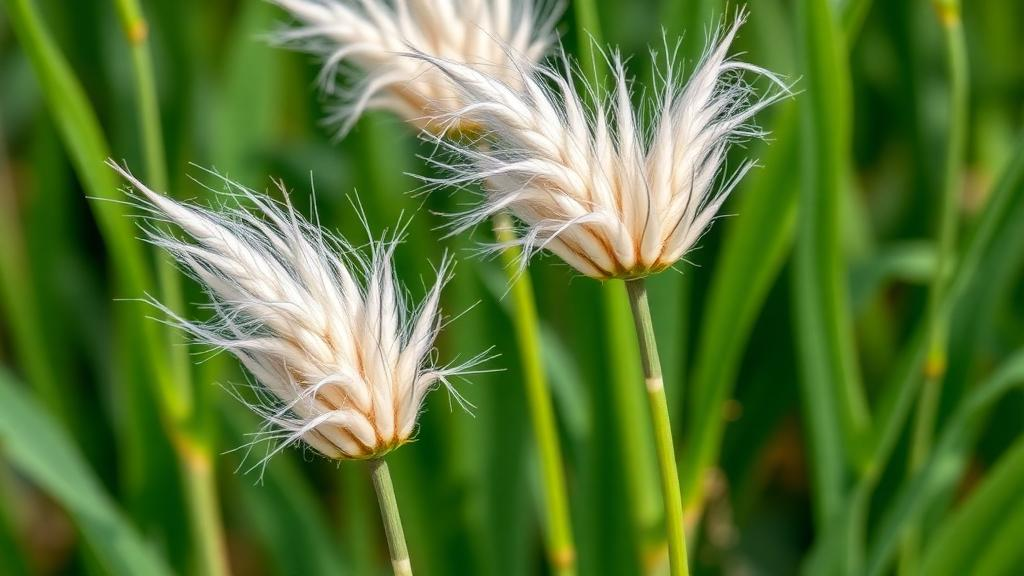
A genome-wide scan of white jute (Corchorus capsularis L.) held at the World Vegetable Center has revealed a collection with a strikingly narrow overall genetic base, yet with clear differentiation between two major genetic groups and two small genomic regions that stand out as candidates for further study. The open-access study, published in BMC Plant Biology on 22 October 2026 by Abdul J. Shango of the World Vegetable Center and Sokoine University of Agriculture together with colleagues from institutions including Benin’s University of Abomey-Calavi, Wageningen University and Research, and the World Vegetable Center, used DArTseq-derived SNP markers to characterize diversity, population structure, linkage disequilibrium, and candidate regions of differentiation across the center’s germplasm collection.
The team began with stringent quality control at both the marker and accession levels. From that filtering, 6,829 chromosome-anchored SNPs were retained across 94 accessions, with an overall genotype call rate of 96.65 percent. Principal component and ancestry analyses flagged two accessions, VI048152 and VI050629, as highly divergent from the rest of the collection. Once these two outliers were excluded, 2,026 SNPs remained polymorphic among the remaining 92 accessions, and independent clustering resolved two genetic groups: G1, containing 31 accessions, and G2, containing 61. Discriminant analysis of principal components clearly separated the two groups.
The diversity statistics point to a limited reservoir of variation. Overall expected heterozygosity was low, at He = 0.0215. An analysis of molecular variance attributed 18.44 percent of molecular variation to differences between the two groups and 81.56 percent to variation within groups, with a fixation index of Φ = 0.1844 (p < 0.001). Pairwise FST between G1 and G2 was 0.1421, confirming measurable but moderate differentiation between the clusters.
Linkage disequilibrium behaved in an unusual way across the genome. Rather than showing a consistent decline with physical distance, LD was highly variable and lacked a distance-dependent decay pattern, which prevented the authors from estimating a robust genome-wide LD half-decay distance. This irregularity matters for breeding applications, because the pace at which LD breaks down determines how finely association studies can map traits, and it suggests that marker density or recombination patterns in this collection warrant closer attention in future work.
To locate regions of differentiation, the researchers scanned 180 eligible 100-kilobase windows against empirical thresholds. Two windows exceeded the empirical 99th-percentile FST threshold: one on chromosome 6 at 35.4–35.5 Mb with FST = 0.907, and one on chromosome 2 at 44.1–44.2 Mb with FST = 0.301. However, neither window exceeded the empirical nucleotide-diversity-ratio thresholds, so the authors interpreted them as regions of elevated differentiation rather than confirmed selective sweeps. This distinction is important: elevated differentiation between groups does not by itself prove that natural or artificial selection has acted on these loci, and the team was careful not to overstate the evidence.
Within those two differentiated regions, the analysis identified 28 annotated genes and seven candidate SNPs, five of them intronic and two coding. These variants directly intersect five priority positional genes encoding proteins with diverse predicted functions: a pTAC5-like protein, a GBA2-type β-glucosidase, a UPL5-like E3 ubiquitin-protein ligase, an NTF2-like protein, and a SWIB/BAF60 domain-containing protein. The authors present these genes as testable targets for subsequent genomic and functional investigation rather than as validated determinants of any trait.
The practical implications follow from the combination of a narrow genetic base and substantial differentiation among accessions and groups. The two highly divergent accessions, VI048152 and VI050629, represent genetically distinctive germplasm that the authors say can be prioritized for further evaluation, potentially carrying alleles absent from the main clusters. Meanwhile, the two differentiated genomic regions and the five priority positional genes offer concrete starting points for breeders and geneticists interested in the evolutionary history and breeding value of white jute, one of the two cultivated jute species and a fiber crop of major economic importance in South Asia.
The authors are explicit about the limits of the current evidence. Denser genomic data, phenotypic evaluation, and functional validation will be required to establish the evolutionary and breeding significance of the differentiated regions and candidate genes. Until such validation is complete, the study’s contribution lies in mapping the structure of the collection, quantifying its limited diversity, and narrowing the search space for traits that could matter for jute improvement, from fiber quality to stress tolerance.
For germplasm curators, the findings also carry a curation message: a collection of 94 accessions with low expected heterozygosity may benefit from targeted acquisition of genetically distinct material, and the divergent accessions already in hand should be evaluated before new acquisitions are sought. For the wider plant-genomics community, the irregular linkage disequilibrium landscape and the chromosome-anchored SNP set provide a reference framework for association mapping in white jute, a crop whose genomic resources remain far less developed than those of major cereals. The study thus delivers both a caution about the crop’s narrow genetic foundation and a short list of genomic neighborhoods worth pursuing in the next round of research.
Subject of Research: Genetic diversity and population structure of white jute germplasm analyzed with DArTseq SNP markers
Article Title: Genetic diversity, population structure, and candidate regions of differentiation in Corchorus capsularis L. germplasm collection
Article References: Shango, A. J., Omondi, E. O., N’Danikou, S., Tchokponhoué, D. A., Ozimati, A. A., Schranz, M. E., Achigan-Dako, E. G., Venkataramana, P., Philipo, M. L., & van Zonneveld, M. (2026). Genetic diversity, population structure, and candidate regions of differentiation in Corchorus capsularis L. germplasm collection. BMC Plant Biology. https://doi.org/10.1186/s12870-026-10235-z
Image Credits: AI Generated
DOI: 10.1186/s12870-026-10235-z
Keywords: white jute, Corchorus capsularis, genetic diversity, population structure, SNP markers, linkage disequilibrium, germplasm, selective sweeps, BMC Plant Biology, World Vegetable Center, Genetic, diversity
Cite Scienmag News
Juliet Wilcox. (October 24, 2026). White Jute Germplasm Shows Narrow Genetic Base with Two Differentiated Genomic Regions. Scienmag. https://scienmag.com/white-jute-germplasm-shows-narrow-genetic-base-with-two-differentiated-genomic-regions/
Juliet Wilcox. "White Jute Germplasm Shows Narrow Genetic Base with Two Differentiated Genomic Regions." Scienmag, 24 October 2026, https://scienmag.com/white-jute-germplasm-shows-narrow-genetic-base-with-two-differentiated-genomic-regions/. Accessed 24 October 2026.
Juliet Wilcox. "White Jute Germplasm Shows Narrow Genetic Base with Two Differentiated Genomic Regions." Scienmag. October 24, 2026. https://scienmag.com/white-jute-germplasm-shows-narrow-genetic-base-with-two-differentiated-genomic-regions/


