

Saturday, October 24, 2026
Science
No Result
View All Result
  • Login
  • HOME
  • SCIENCE NEWS
  • CONTACT US
  • HOME
  • SCIENCE NEWS
  • CONTACT US
No Result
View All Result
Scienmag
No Result
View All Result
Home Science News Medicine

Risky Sexual Behavior Affects Nearly Four in Ten Young Tanzanian Women, Survey Finds

October 24, 2026
in Medicine, Policy
Courtney Benton
By Courtney Benton Scienmag Editorial Profile - Science and Technology Policy
Reading Time: 3 mins read
0
Risky Sexual Behavior Affects Nearly Four in Ten Young Tanzanian Women, Survey Finds

Risky Sexual Behavior Affects Nearly Four in Ten Young Tanzanian Women, Survey Finds

65
SHARES
587
VIEWS
Share on FacebookShare on Twitter
ADVERTISEMENT

Nearly four in ten sexually active adolescent girls and young women in Tanzania report risky sexual behavior, according to a secondary analysis of the 2022–2023 Tanzania HIV Impact Survey (THIS) published by researchers led by Magreth Thadei Mwakilasa. The study, which examined 3,669 sexually active respondents aged 15 to 24 years who answered PrEP-related questions, found a survey-weighted prevalence of risky sexual behaviors of 38.29 percent. The burden was sharply concentrated among the youngest participants: 61.57 percent of those aged 15 to 17 years reported risky behavior, compared with 35.63 percent of those aged 18 to 24 years.

The analysis used nationally representative survey data, applying survey-weighted descriptive statistics, chi-square tests, and multivariable logistic regression. Adjusted odds ratios with 95 percent confidence intervals were reported, with statistical significance set at p < 0.05. Risky sexual behavior contributes to HIV acquisition among adolescent girls and young women in Sub-Saharan Africa, including Tanzania, yet nationally representative evidence on its prevalence and associated factors had remained limited. The study was framed in the context of expanding provision of pre-exposure prophylaxis (PrEP), a biomedical HIV prevention intervention.

Not being in a union emerged as the strongest correlate in both age groups. Among participants aged 15 to 17 years, those not in a union had adjusted odds of risky sexual behavior of 8.72 (95 percent CI: 4.33–17.55; p < 0.001), while among those aged 18 to 24 years the adjusted odds ratio was 15.13 (95 percent CI: 11.40–20.08; p < 0.001). Alcohol use was also associated with increased odds in both groups: an adjusted odds ratio of 13.38 (95 percent CI: 1.53–116.64; p = 0.019) among 15- to 17-year-olds, and 2.47 (95 percent CI: 1.57–3.89; p < 0.001) among 18- to 24-year-olds. The very wide confidence interval for the youngest group reflects limited precision in that estimate.

Among young women aged 18 to 24 years, the pattern of associated factors was more differentiated. Health facility attendance, family planning use, and willingness to use PrEP were associated with higher odds of risky sexual behavior, whereas secondary or higher education, parent or guardian communication about sex or HIV, and prior HIV testing were associated with lower odds. The authors note that these associations suggest that young women in contact with health services may be those who recognize their own risk, while education, family communication, and prior testing appear protective in the statistical sense.

The researchers conclude that risky sexual behavior remains common among Tanzanian adolescent girls and young women, particularly those aged 15 to 17 years. They recommend age-responsive prevention programmes that integrate behavioral and biomedical interventions, prioritizing AGYW who are not in a union and who use alcohol or have limited access to PrEP. As a cross-sectional secondary analysis, the study identifies associations rather than causal effects, and the findings are limited to sexually active survey respondents who answered the PrEP-related questions. The authors report no efficacy claims for PrEP itself; the survey measured willingness to use PrEP as one of several factors associated with reported behavior.

Subject of Research: Prevalence and associated factors of risky sexual behavior among adolescent girls and young women aged 15–24 in Tanzania, analyzed from the 2022–2023 Tanzania HIV Impact Survey in the context of PrEP provision.

Article Title: Risky sexual behaviors and associated factors among adolescent girls and young women in the context of HIV prevention pre-exposure prophylaxis in Tanzania: Analysis of the Tanzania HIV Impact Survey 2022–2023

Article References: Mwakilasa, M. T., Kakoko, D., Gilmore, J., & Gilmore, B. (2026). Risky sexual behaviors and associated factors among adolescent girls and young women in the context of HIV prevention pre-exposure prophylaxis in Tanzania: Analysis of the Tanzania HIV Impact Survey 2022–2023. PLOS Global Public Health, 6(10), e0007311. https://doi.org/10.1371/journal.pgph.0007311

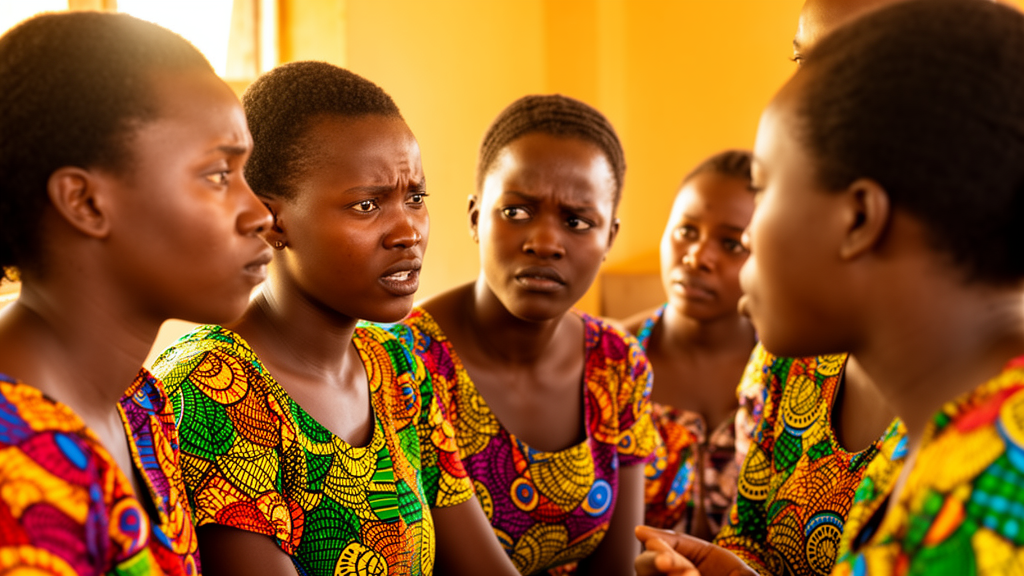
Image Credits: AI Generated

DOI: 10.1371/journal.pgph.0007311

Keywords: Tanzania, HIV, PrEP, adolescent girls and young women, risky sexual behavior, Tanzania HIV Impact Survey, THIS 2022-2023, Sub-Saharan Africa, alcohol use, HIV prevention, logistic regression, survey analysis

Cite Scienmag News

Courtney Benton. (October 24, 2026). Risky Sexual Behavior Affects Nearly Four in Ten Young Tanzanian Women, Survey Finds. Scienmag. https://scienmag.com/risky-sexual-behavior-affects-nearly-four-in-ten-young-tanzanian-women-survey-finds/


Courtney Benton. "Risky Sexual Behavior Affects Nearly Four in Ten Young Tanzanian Women, Survey Finds." Scienmag, 24 October 2026, https://scienmag.com/risky-sexual-behavior-affects-nearly-four-in-ten-young-tanzanian-women-survey-finds/. Accessed 24 October 2026.

Courtney Benton. "Risky Sexual Behavior Affects Nearly Four in Ten Young Tanzanian Women, Survey Finds." Scienmag. October 24, 2026. https://scienmag.com/risky-sexual-behavior-affects-nearly-four-in-ten-young-tanzanian-women-survey-finds/

Tags: adolescent girls and young womenage-related differences in sexual risk behavioralcohol useearly sexual activity and HIV vulnerabilityfactors influencing risky sexual behavior in youthHIVHIV acquisition risk factors in TanzaniaHIV preventionHIV prevention strategies in Sub-Saharan Africaimpact of relationship status on HIV risklogistic regressionPrEPPrEP awareness and use in Tanzaniapublic health implications of risky sexual behaviorsrisky sexual behaviorrisky sexual behavior prevalence in young womenstatistical analysis of sexual risk behaviorssub-Saharan Africasurvey analysissurvey-based research on adolescent sexual healthTanzaniaTanzania HIV Impact SurveyTanzania HIV risk among adolescent girlsTHIS 2022-2023youth-focused HIV intervention programs
Share26Tweet16
Previous Post

Research report: Editorial: Integration of physical activity for academic excellence and health promotion in adolescents and school children

Next Post

Students at schools with social-emotional learning report stronger self-regulation and altruism

Related Posts

AI Reads Ultrasound to Predict Breast Cancer Spread Before Surgery
Medicine

AI Reads Ultrasound to Predict Breast Cancer Spread Before Surgery

October 24, 2026
Study finds no link between physical activity and quality of life in Riyadh university
Medicine

Study finds no link between physical activity and quality of life in Riyadh university

October 24, 2026
Neurosurgical bills in Nigeria push vulnerable households deeper into poverty
Medicine

Neurosurgical bills in Nigeria push vulnerable households deeper into poverty

October 24, 2026
Single-center nomogram internally predicts sepsis risk in neonatal pneumonia
Medicine

Single-center nomogram internally predicts sepsis risk in neonatal pneumonia

October 24, 2026
AI Reads the Hidden Shape of the Optic Nerve to Spot Glaucoma in Highly Myopic Eyes
Medicine

AI Reads the Hidden Shape of the Optic Nerve to Spot Glaucoma in Highly Myopic Eyes

October 24, 2026
First US patients in pulmonary artery denervation trial
Medicine

First US patients in pulmonary artery denervation trial

October 24, 2026
Next Post
Students at schools with social-emotional learning report stronger self-regulation and altruism

Students at schools with social-emotional learning report stronger self-regulation and altruism

  • Mothers who receive childcare support from maternal grandparents show more optimized

    Mothers who receive childcare support from maternal grandparents show more parental warmth, finds NTU Singapore study

    27656 shares
    Share 11059 Tweet 6912
  • University of Seville Breaks 120-Year-Old Mystery, Revises a Key Einstein Concept

    1061 shares
    Share 424 Tweet 265
  • Bee body mass, pathogens and local climate influence heat tolerance

    682 shares
    Share 273 Tweet 171
  • Researchers record first-ever images and data of a shark experiencing a boat strike

    546 shares
    Share 218 Tweet 137
  • Groundbreaking Clinical Trial Reveals Lubiprostone Enhances Kidney Function

    531 shares
    Share 212 Tweet 133
Science

Embark on a thrilling journey of discovery with Scienmag.com—your ultimate source for cutting-edge breakthroughs. Immerse yourself in a world where curiosity knows no limits and tomorrow’s possibilities become today’s reality!

RECENT NEWS

  • Students at schools with social-emotional learning report stronger self-regulation and altruism
  • Risky Sexual Behavior Affects Nearly Four in Ten Young Tanzanian Women, Survey Finds
  • Research report: Editorial: Integration of physical activity for academic excellence and health promotion in adolescents and school children
  • Physics Meets Machine Learning to Predict the Full Seismic Response of Steel–Concrete Composite Structures

Categories

  • Agriculture
  • Anthropology
  • Archaeology
  • Athmospheric
  • Biology
  • Biotechnology
  • Blog
  • Bussines
  • Cancer
  • Chemistry
  • Climate
  • Earth Science
  • Editorial Policy
  • Marine
  • Mathematics
  • Medicine
  • Pediatry
  • Policy
  • Psychology & Psychiatry
  • Science Education
  • Science News
  • Social Science
  • Space
  • Technology and Engineering

Subscribe to Blog via Email

Enter your email address to subscribe to this blog and receive notifications of new posts by email.

Join 5,152 other subscribers

© 2025 Scienmag - Science Magazine

Welcome Back!

Login to your account below

Forgotten Password?

Retrieve your password

Please enter your username or email address to reset your password.

Log In
No Result
View All Result
  • HOME
  • SCIENCE NEWS
  • CONTACT US

© 2025 Scienmag - Science Magazine

Discover more from Science

Subscribe now to keep reading and get access to the full archive.

Continue reading