


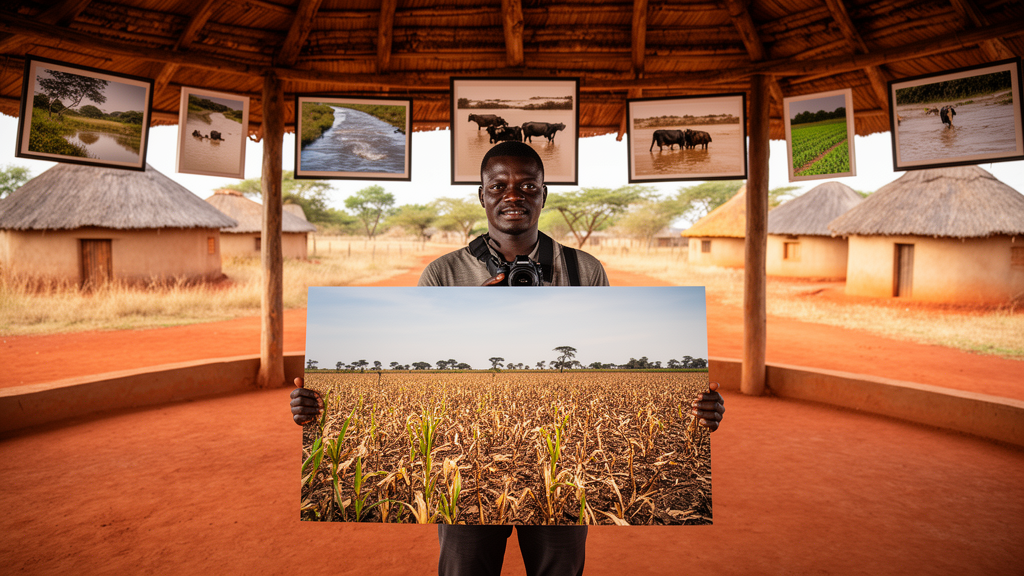
A national photography project has invited citizens across every province of Zambia to document climate change as they experience it, and a new analysis argues that this kind of visual, participatory storytelling can strengthen how the crisis is communicated in African contexts. The project, called Eco-Expressions Zambia: Voices for Climate Action, is described in a Practitioner Voices article published in the Journal of Environmental Studies and Sciences on 24 October 2026 by Anayawa Nyambe. Rather than relying on expert-led messaging, the initiative used an open call that welcomed members of the public, activists and professional photographers to submit photographs accompanied by short written stories.
Each submission was asked to capture what the participant perceived as climate change impacts in their community, along with possible solutions. The engagement spanned all ten provinces of Zambia, giving the collection a deliberately national scope. Selected works were then shown in a public exhibition and published in a climate photography book, extending the reach of the material beyond the initial contributors. According to the article, the project had three stated aims: to raise awareness of climate change and its impacts, to enhance dialogue, and to provide a baseline for developing climate solutions.
The author analyses the project through the lens of climate change communication research, drawing on interdisciplinary perspectives from environmental communication, visual studies and public engagement. This analysis identifies strengths in locally grounded storytelling, inclusivity and cultural relevance. The reasoning is familiar from the communication literature: climate change is often perceived as complex and abstract, and audiences engage more readily when messages connect with lived experience. Photographs made by community members about their own surroundings offer one route to that connection, grounding a global problem in recognizable local scenes.
The article is equally candid about methodological constraints. It acknowledges the absence of systematic participant evaluation, a gap the author describes as recurring in climate communication practice. Without structured evaluation, the project cannot demonstrate measured changes in awareness, dialogue or engagement among participants or audiences; its documented outputs are the submissions, the exhibition and the book. This limitation is presented not as a reason to dismiss participatory approaches, but as a known weakness of the field that future engagements should address.
The lessons drawn for practice centre on the value of visual participatory methods in low-resource settings. The article argues that such approaches can amplify public voices, bridge scientific and lived experience, and expand climate discourse beyond the channels typically dominated by institutional messaging. In contexts where climate communication remains challenging, opening the frame to the people living with the impacts appears, on the evidence of this project, to be a workable and culturally resonant strategy, even as the author notes that rigorous evaluation will be needed to establish what these engagements actually change.
Subject of Research: Participatory photography as a method for climate change communication and public engagement in Zambia
Article Title: Framing the climate crisis: lessons from a national participatory photography engagement in Zambia
Article References: Nyambe, A. (2026). Framing the climate crisis: lessons from a national participatory photography engagement in Zambia. Journal of Environmental Studies and Sciences. https://doi.org/10.1007/s13412-026-01156-2
Image Credits: AI Generated
DOI: 10.1007/s13412-026-01156-2
Keywords: climate change communication, participatory photography, Zambia, public engagement, visual storytelling, environmental communication, Framing, climate, crisis, lessons, national, participatory
Cite Scienmag News
Sloane Callahan. (October 24, 2026). Photographs from all ten Zambian provinces frame climate change through local eyes. Scienmag. https://scienmag.com/photographs-from-all-ten-zambian-provinces-frame-climate-change-through-local-eyes/
Sloane Callahan. "Photographs from all ten Zambian provinces frame climate change through local eyes." Scienmag, 24 October 2026, https://scienmag.com/photographs-from-all-ten-zambian-provinces-frame-climate-change-through-local-eyes/. Accessed 24 October 2026.
Sloane Callahan. "Photographs from all ten Zambian provinces frame climate change through local eyes." Scienmag. October 24, 2026. https://scienmag.com/photographs-from-all-ten-zambian-provinces-frame-climate-change-through-local-eyes/


