


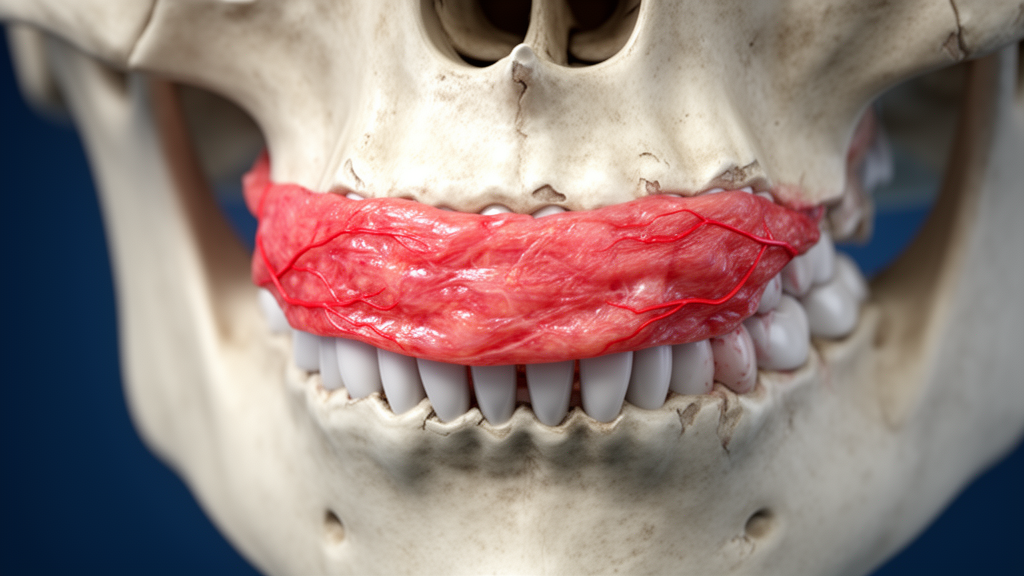
When surgeons rebuild a jaw that has been partially removed because of advanced mouth cancer, they usually reach for one workhorse solution: the fibula free flap. A segment of bone is taken from the lower leg, along with its blood supply, and shaped to replace the missing mandible. The technique has become the gold standard for segmental mandibular defects because the fibula offers a long vascular pedicle, reliable anatomy, bicortical bone stock and the potential later for dental implants.
Adjuvant radiotherapy, which is often essential for controlling the original tumour, quietly damages the surrounding tissue over the months and years that follow, and a new study now describes how a second round of microsurgery can repair the damage. Researchers at Tata Medical Center in Kolkata, India, have reported their experience with sequential microvascular tissue transfer, a second free flap operation performed after an initial successful free tissue transfer in the same region. In a retrospective observational study conducted between June 2024 and December 2025 and published in Frontiers in Oncology, the team followed ten patients who had undergone primary mandibular reconstruction with a fibula flap and adjuvant radiotherapy, and who later developed radiation-induced complications requiring secondary reconstruction.
All ten flaps used in the second operation survived completely, and all patients achieved satisfactory wound healing and restoration of facial contour. The interval between the end of radiotherapy and the secondary surgery ranged from seven to sixty months, with a mean of twenty-one months. Radiation therapy induces progressive tissue fibrosis, endothelial damage, impaired new blood vessel formation, chronic inflammation and tissue hypoxia.
These changes decrease local vascularity and alter the bone-to-metal interface, increasing the risk that the titanium plate used to fix the fibula in place will become exposed. The authors note that titanium can also produce a backscatter effect, raising the dose of radiation delivered to tissue immediately around the plate and contributing to screw loosening, wound breakdown and osteoradionecrosis, a serious condition in which irradiated bone dies. In the Kolkata cohort it was consistently accompanied by significant fibrosis of the overlying soft tissue, involving the native skin in six patients and the skin island of the original flap in the four patients who had undergone full-thickness reconstruction.
Every patient also experienced volume loss, which the authors describe as a major subjective concern. This shrinkage is a recognised phenomenon: a meta-analysis cited in the study found that flaps lost twenty-four percent of their volume at six months in irradiated tissue compared with eighteen percent in non-irradiated tissue, and by one year the average total loss reached thirty-eight percent for irradiated flaps and twenty-four percent for non-irradiated ones. The study population consisted of eight men and two women with a mean age of fifty-one years, ranging from forty to seventy-three.
Nine had primary squamous cell carcinoma of the mandible and one had recurrent disease. All tumours were staged T4. Six patients had undergone segmental mandibulectomy with buccal mucosa excision, while four had full-thickness segmental mandibulectomy involving the mucosa and overlying cheek skin.
Seven patients received bilateral selective neck dissection and three unilateral. All received adjuvant radiotherapy, and one also received concurrent chemotherapy. Three patients had bipaddle fibula flaps at the primary operation, one had a fibula combined with a superficial circumflex iliac artery perforator flap, and one patient received primary dental implants over the fibula flap.
Low-profile long plates were used for fixation in all patients. Before offering surgery, the team took careful steps to make sure they were not missing something more dangerous. Every patient underwent a CT scan of the head and neck three months after completing adjuvant therapy to rule out tumour recurrence and osteoradionecrosis, and any suspicious lesion was biopsied.
Orthopantomograms were obtained before adjuvant treatment, three months after radiotherapy and before planning the secondary surgery, to assess bony union at the reconstruction. Patients with established osteoradionecrosis were excluded from the study, as were those with plate exposure but no or minimal soft tissue volume loss and those unwilling to have the volume deficit corrected. Nine patients ultimately underwent plate removal with correction of the volume deficit, while one presented with an orocutaneous fistula requiring corrective reconstruction.
The surgical technique highlights one of the central challenges in re-operating on an irradiated, previously dissected neck. Because most of these patients had already undergone bilateral neck dissection, the surgeons avoided exploring the scarred and irradiated neck altogether. Instead, they used the ipsilateral superficial temporal vessels, the artery and vein running just in front of the ear, as recipient vessels in all ten cases.
The authors argue that these vessels are reliable and safe for scalp and facial reconstruction but remain underutilised for lower face defects. Their superficial location makes dissection straightforward and predictable, and the resulting scar is well hidden. No vein grafts were needed and no vascular complications were encountered, and the team now deliberately avoids using the external jugular vein as a recipient vein during primary surgery to preserve options for the future.
For the flaps themselves, the surgeons chose among three donor sites: four anterolateral thigh flaps, three radial forearm free flaps and three superficial circumflex iliac artery perforator flaps. Selection was guided by patient preference regarding donor-site morbidity and how well the donor skin tone would match the cheek. During the operation the reconstruction plates were completely removed while the surgeons strictly avoided stripping periosteum from either the fibula flap or the native mandible, protecting the blood supply to the bone.
The mean hospital stay was five days, and all patients healed without wound complications or residual volume deficits. Two patients who underwent secondary surgery at only seven months after radiotherapy also recovered uneventfully and did not develop further sequelae. By bringing additional vascularised tissue into a previously operated and irradiated field, the second flap improves what they call soft tissue equilibrium and achieves primary healing in a hostile environment.
They also suggest a practical timing advantage: since these patients already need surgery to remove the plate, correction of the radiation-induced soft tissue atrophy can be performed in the same sitting. They cite prior work identifying plate exposure as a key predictor of subsequent flap osteoradionecrosis, and they report that none of their patients developed osteoradionecrosis during six months of follow-up with CT imaging and orthopantomograms. However, they caution that a longer follow-up period is required before concluding that the procedure prevents progression to osteoradionecrosis.
It is a retrospective, single-centre series of only ten patients, without a comparison group, and the follow-up is short relative to the slow timeline of radiation injury. The literature on sequential free tissue transfer for post-radiotherapy complications after mandibular reconstruction remains sparse; most existing studies focus on salvage surgery for recurrent malignancy or on established osteoradionecrosis rather than on contour correction and hardware-related complications after a successful primary reconstruction. Within those constraints, the findings suggest that when plate exposure and soft tissue atrophy follow radiation after fibula flap mandibular reconstruction, a second microvascular transfer using superficial temporal recipient vessels can reliably restore healing and contour, while reserving judgment on longer-term protection against bone death for future studies with extended follow-up.
Subject of Research: Sequential microvascular free tissue transfer for radiation-induced complications after mandibular fibula flap reconstruction
Article Title: Outcomes of sequential microvascular tissue transfer for radiation induced sequelae post mandibular reconstruction
Article References: Panchal, K., Ukil, S., Kalwadia, N., Samadder, S., Manikantan, K., Arun, P., Kekatpure, V. D., Jain, P. V., & Sahu, G. C. (2026). Outcomes of sequential microvascular tissue transfer for radiation induced sequelae post mandibular reconstruction. Frontiers in Oncology, 16, Article 1897431. https://doi.org/10.3389/fonc.2026.1897431
Image Credits: AI Generated
DOI: 10.3389/fonc.2026.1897431
Keywords: mandibular reconstruction, fibula free flap, radiotherapy complications, plate exposure, sequential microvascular tissue transfer, superficial temporal vessels, osteoradionecrosis, soft tissue atrophy, ALT flap, SCIP flap, radial forearm flap, head and neck cancer
Cite Scienmag News
Ophelia Keating. (October 24, 2026). Second Free Flaps Restore Tissue Lost to Radiation After Jaw Reconstruction. Scienmag. https://scienmag.com/second-free-flaps-restore-tissue-lost-to-radiation-after-jaw-reconstruction/
Ophelia Keating. "Second Free Flaps Restore Tissue Lost to Radiation After Jaw Reconstruction." Scienmag, 24 October 2026, https://scienmag.com/second-free-flaps-restore-tissue-lost-to-radiation-after-jaw-reconstruction/. Accessed 24 October 2026.
Ophelia Keating. "Second Free Flaps Restore Tissue Lost to Radiation After Jaw Reconstruction." Scienmag. October 24, 2026. https://scienmag.com/second-free-flaps-restore-tissue-lost-to-radiation-after-jaw-reconstruction/


