


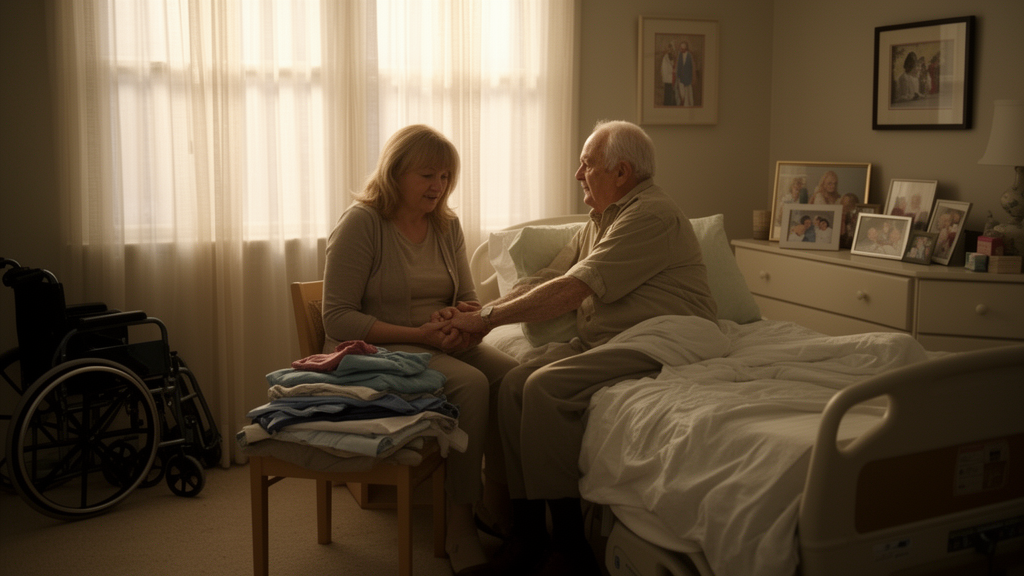
Caring for a loved one with cancer often means mourning before death arrives. A systematic review published in BMC Psychiatry has mapped the factors tied to this experience, known as anticipatory grief, in primary caregivers of patients with cancer. The review, conducted in line with the PRISMA 2020 reporting guidelines and registered in PROSPERO, brought together eleven cross-sectional studies identified through searches of PubMed, Web of Science, the Cochrane Library, CINAHL, Embase and PsycINFO, with no date restrictions. Two reviewers independently assessed study quality and extracted data, and the findings were synthesised narratively and grouped into thematic domains rather than pooled statistically.
Anticipatory grief describes the experience of loss in anticipation of a loved one’s approaching death. According to the review’s authors, it can significantly reduce caregivers’ quality of life and, if not actively addressed, may progress to pathological grief and lead to poor bereavement outcomes after the death itself. Identifying which factors influence this grief is therefore framed as critical for designing comprehensive interventions that prevent its most harmful forms and promote a more positive bereavement experience.
The included studies pointed to correlates across three broad domains: demographic factors, psychological factors, and family- and caregiving-related factors. Sociodemographic characteristics associated with anticipatory grief included female gender and family monthly income. Psychological factors comprised caregiver burden, resilience, attachment style, illness uncertainty, post-traumatic stress severity, coping style — both positive and negative coping — positive aspects of caregiving, and a lack of prior bereavement experience. Caregiving and disease-related factors included family functioning, caregiving role, home-care setting and poor communication.
A further cluster of influences concerned what caregivers know and how prepared they feel. Lack of information, knowledge of death education and palliative care, and preparedness for death emerged as relevant factors, as did social support resources, including perceived social support and general support. Taken together, the evidence suggests that anticipatory grief in this population is not driven by a single vulnerability but by an interplay of personal characteristics, psychological states and the practical and relational conditions of caregiving.
Some correlates appeared far more consistently than others. Across the eleven studies, caregiver burden, family functioning, illness uncertainty, communication problems, preparedness for death and social support were the most consistently reported correlates of anticipatory grief. By contrast, family monthly income, home-care setting and having no prior bereavement experience were each reported in only single studies and showed inconsistent associations, meaning the evidence for these factors remains tentative and should be interpreted with caution.
The review’s design shapes how its conclusions can be read. Because all included studies were cross-sectional, they capture associations at a single point in time and cannot establish whether a factor such as caregiver burden causes anticipatory grief or results from it. The narrative synthesis also means no pooled effect sizes were calculated, so the strength of each association cannot be quantified from this review alone. The authors nonetheless argue that the findings provide evidence that a variety of factors influence anticipatory grief in primary caregivers of cancer patients, and that it is important to identify those experiencing anticipatory grief as early as possible and intervene with controllable influences to manage it.
Within that framing, the consistently reported correlates offer the clearest leads for intervention. Caregiver burden, family functioning, illness uncertainty, communication between patients, families and professionals, preparedness for death and social support are all potentially modifiable, which makes them natural targets for programmes aiming to support caregivers before bereavement. Factors such as gender and prior bereavement experience, by contrast, describe who may be at higher risk rather than what can be changed, and the single-study evidence behind some of them limits firm conclusions.
For families and clinicians, the review’s practical message is that anticipatory grief deserves attention during the caregiving period itself, not only after a death. The authors emphasise early identification of caregivers experiencing anticipatory grief, followed by intervention on the influences that can be controlled. As the evidence base grows beyond the eleven cross-sectional studies synthesised here, longitudinal and interventional research will be needed to test whether addressing factors such as unpreparedness for death, poor communication or low social support actually improves caregivers’ grief trajectories and bereavement outcomes.
Subject of Research: Factors associated with anticipatory grief in primary caregivers of patients with cancer
Article Title: Factors associated with anticipatory grief in primary caregivers of patients with cancer: a systematic review
Article References: Feng, G.-H., Zhang, Q.-Q., Lyu, Z.-Z., Wang, Y.-F., Zhang, Y., & Peng, M.-Y. (2026). Factors associated with anticipatory grief in primary caregivers of patients with cancer: a systematic review. BMC Psychiatry. https://doi.org/10.1186/s12888-026-08783-7
Image Credits: AI Generated
DOI: 10.1186/s12888-026-08783-7
Keywords: anticipatory grief, cancer caregivers, systematic review, caregiver burden, family functioning, illness uncertainty, social support, preparedness for death, bereavement, palliative care, BMC Psychiatry, Factors
Cite Scienmag News
Nathaniel Bowman. (October 24, 2026). Caregiver burden and family ties shape anticipatory grief in cancer caregiving. Scienmag. https://scienmag.com/caregiver-burden-and-family-ties-shape-anticipatory-grief-in-cancer-caregiving/
Nathaniel Bowman. "Caregiver burden and family ties shape anticipatory grief in cancer caregiving." Scienmag, 24 October 2026, https://scienmag.com/caregiver-burden-and-family-ties-shape-anticipatory-grief-in-cancer-caregiving/. Accessed 24 October 2026.
Nathaniel Bowman. "Caregiver burden and family ties shape anticipatory grief in cancer caregiving." Scienmag. October 24, 2026. https://scienmag.com/caregiver-burden-and-family-ties-shape-anticipatory-grief-in-cancer-caregiving/


