

Saturday, October 24, 2026
Science
No Result
View All Result
  • Login
  • HOME
  • SCIENCE NEWS
  • CONTACT US
  • HOME
  • SCIENCE NEWS
  • CONTACT US
No Result
View All Result
Scienmag
No Result
View All Result
Home Science News Psychology & Psychiatry

Video psychiatry consultations rose more than fivefold in Australia as provision dispersed

October 24, 2026
in Psychology & Psychiatry
Glenn Wilkins
By Glenn Wilkins Scienmag Editorial Profile - Clinical Psychology
Reading Time: 3 mins read
0
Video psychiatry consultations rose more than fivefold in Australia as provision dispersed

Video psychiatry consultations rose more than fivefold in Australia as provision dispersed

65
SHARES
587
VIEWS
Share on FacebookShare on Twitter
ADVERTISEMENT

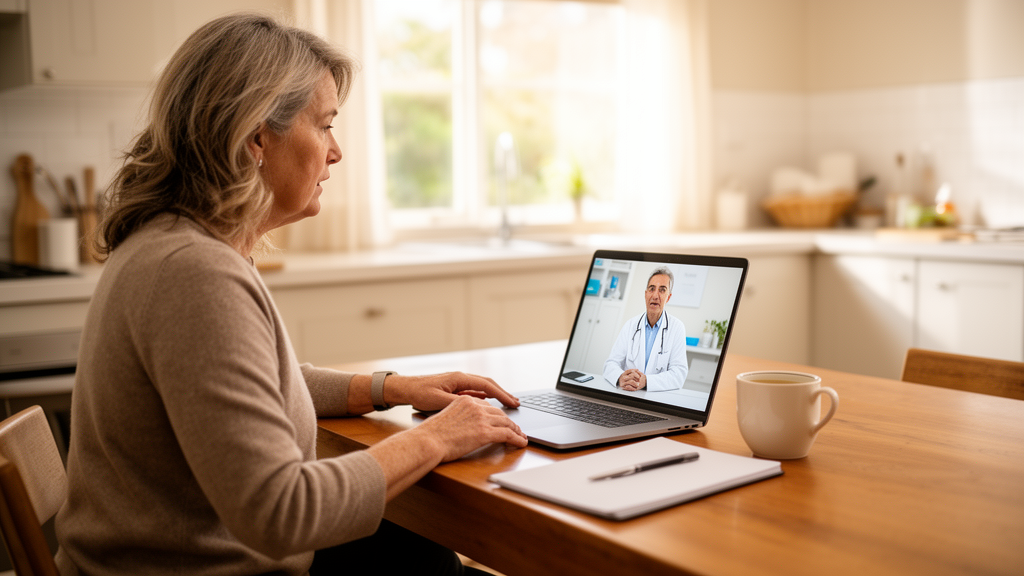
Video consultations with psychiatrists have risen from a marginal option to a substantial share of Australian mental health care, according to a postcode-level data-linkage analysis published in BMC Psychiatry. Drawing on what the researchers describe as the largest database of psychiatric consultations in Australia — 13.5 million Medicare Benefits Schedule consultation records spanning 2017 to 2023, linked with 2021 Census data — the study tracks how telepsychiatry use shifted across successive telehealth policy periods. In 2017, video consultations accounted for just 5 percent of all psychiatric contacts recorded in the dataset.

That share climbed sharply to 23 percent in 2020, the year pandemic-era telehealth rules reshaped remote care, and continued rising to 28 percent in 2023. The analysis, conducted by Luke Sy-Cherng Woon, Jeffrey C. L. Looi and Wai-Man Liu, indicates that video consulting has become an established mode of psychiatric service delivery rather than a temporary pandemic workaround. The team computed monthly and yearly fractions of face-to-face, video and telephone consultations for each provider postcode, then measured how concentrated each mode of provision was using the Herfindahl-Hirschman Index, a standard gauge of concentration.

For video consultations, the index more than halved, falling from 0.026 to 0.011, which the authors interpret as a marked geographic dispersion of service provision across the country. To identify the factors associated with video mode choice, the researchers ran fractional logit regression models on the postcode-level video consultation fractions. The results revealed a consistent sociodemographic pattern.

Video use was more common among metropolitan clinicians and among practices serving higher proportions of female patients. It was less common when patients were older or lived in more socioeconomically advantaged areas — a finding the authors flag as a persistent gradient that runs counter to the assumption that telehealth primarily benefits the affluent. During the consolidation phase of telehealth policy implementation, remote and regional providers increased their services to metropolitan patients by 450 to 783 percent.

That surge indicates that rural and regional psychiatrists were not merely serving local patients over video, but were increasingly drawing patients from major cities. The authors conclude that telehealth-enabling policies are associated with a sustained and more geographically diverse provision of psychiatric care, with participation expanding among both urban and rural providers. At the same time, they caution that the persistent sociodemographic gradients in their data highlight the need for targeted policy and service planning to secure equitable access as telepsychiatry matures into a routine mode of care.

As an observational, postcode-level analysis of billing records, the study describes patterns of utilisation and association rather than establishing causal effects of specific policies, and its ecological design means findings at the postcode level may not capture individual patient circumstances. Nevertheless, the scale of the linked dataset — 13.5 million consultations across seven years — gives an unusually detailed picture of how Australian psychiatry adapted to telehealth reform, and of who remains on the margins of that transition.

Subject of Research: Postcode-level data-linkage analysis of Medicare-reimbursed video telepsychiatry utilisation and associated factors in Australia, 2017–2023

Article Title: Provision of Australian medicare-reimbursed video telepsychiatry services: a postcode-level data-linkage analysis

Article References: Woon, L. S.-C., Looi, J. C. L., & Liu, W.-M. (2026). Provision of Australian medicare-reimbursed video telepsychiatry services: a postcode-level data-linkage analysis. BMC Psychiatry. https://doi.org/10.1186/s12888-026-08784-6

Image Credits: AI Generated

DOI: 10.1186/s12888-026-08784-6

Keywords: telepsychiatry, telehealth, Medicare, Australia, data linkage, health policy, geographic access, psychiatry, health equity, video consultations, BMC Psychiatry, Provision

Cite Scienmag News

Glenn Wilkins. (October 24, 2026). Video psychiatry consultations rose more than fivefold in Australia as provision dispersed. Scienmag. https://scienmag.com/video-psychiatry-consultations-rose-more-than-fivefold-in-australia-as-provision-dispersed/


Glenn Wilkins. "Video psychiatry consultations rose more than fivefold in Australia as provision dispersed." Scienmag, 24 October 2026, https://scienmag.com/video-psychiatry-consultations-rose-more-than-fivefold-in-australia-as-provision-dispersed/. Accessed 24 October 2026.

Glenn Wilkins. "Video psychiatry consultations rose more than fivefold in Australia as provision dispersed." Scienmag. October 24, 2026. https://scienmag.com/video-psychiatry-consultations-rose-more-than-fivefold-in-australia-as-provision-dispersed/

Tags: analysis of psychiatric consultation dataAustraliaBMC Psychiatrydata linkagegeographic accessgrowth of telepsychiatry during COVID-19 pandemichealth equityhealth policyHerfindahl-Hirschman Index in healthcare service concentrationimpactlinked Medicare and Census data for mental health researchlong-term trends in telehealth use for mental healthMedicareprovisionpsychiatryregional variation in telepsychiatry provisionshift from face-to-face to remote psychiatric servicestelehealthtelehealth policy impact on mental health caretelepsychiatrytelepsychiatry accessibility and dispersalvideo consultationsVideo psychiatry adoption in Australia
Share26Tweet16
Previous Post

Blood Markers and Imaging May Flag Lavage Need in Severe Mycoplasma Pneumonia

Next Post

Microbial ecologist Jack Gilbert wins 2026 Rachel Carson Environmental Conservation Award

Related Posts

Measuring the Quiet Acceptance of Death: Review Maps 12 Psychological Scales and Their Evidence
Psychology & Psychiatry

Measuring the Quiet Acceptance of Death: Review Maps 12 Psychological Scales and Their Evidence

October 24, 2026
Sleep education program shows early attention gains in nursing students
Psychology & Psychiatry

Sleep education program shows early attention gains in nursing students

October 24, 2026
Perceived Distraction Drives Social Media Users Toward Temporary Disengagement
Psychology & Psychiatry

Perceived Distraction Drives Social Media Users Toward Temporary Disengagement

October 24, 2026
Research report: Identifying target symptoms for mixed anxiety and depressive disorder in treatment-seeking patients: network analysis and computer-simulated intervention
Psychology & Psychiatry

Research report: Identifying target symptoms for mixed anxiety and depressive disorder in treatment-seeking patients: network analysis and computer-simulated intervention

October 23, 2026
Positive mental health indirectly buffers prolonged grief among refugees, study finds
Psychology & Psychiatry

Positive mental health indirectly buffers prolonged grief among refugees, study finds

October 23, 2026
LLMs Fail to Replace Human Coding of Adolescent Meaning-Making
Psychology & Psychiatry

LLMs Fail to Replace Human Coding of Adolescent Meaning-Making

October 23, 2026
Next Post
Microbial ecologist Jack Gilbert wins 2026 Rachel Carson Environmental Conservation Award

Microbial ecologist Jack Gilbert wins 2026 Rachel Carson Environmental Conservation Award

  • Mothers who receive childcare support from maternal grandparents show more optimized

    Mothers who receive childcare support from maternal grandparents show more parental warmth, finds NTU Singapore study

    27656 shares
    Share 11059 Tweet 6912
  • University of Seville Breaks 120-Year-Old Mystery, Revises a Key Einstein Concept

    1061 shares
    Share 424 Tweet 265
  • Bee body mass, pathogens and local climate influence heat tolerance

    682 shares
    Share 273 Tweet 171
  • Researchers record first-ever images and data of a shark experiencing a boat strike

    546 shares
    Share 218 Tweet 137
  • Groundbreaking Clinical Trial Reveals Lubiprostone Enhances Kidney Function

    531 shares
    Share 212 Tweet 133
Science

Embark on a thrilling journey of discovery with Scienmag.com—your ultimate source for cutting-edge breakthroughs. Immerse yourself in a world where curiosity knows no limits and tomorrow’s possibilities become today’s reality!

RECENT NEWS

  • Microbial ecologist Jack Gilbert wins 2026 Rachel Carson Environmental Conservation Award
  • Video psychiatry consultations rose more than fivefold in Australia as provision dispersed
  • Blood Markers and Imaging May Flag Lavage Need in Severe Mycoplasma Pneumonia
  • Antipsychotics Dominate Adverse Drug Reaction Reports in Children Across Two Global Databases

Categories

  • Agriculture
  • Anthropology
  • Archaeology
  • Athmospheric
  • Biology
  • Biotechnology
  • Blog
  • Bussines
  • Cancer
  • Chemistry
  • Climate
  • Earth Science
  • Editorial Policy
  • Marine
  • Mathematics
  • Medicine
  • Pediatry
  • Policy
  • Psychology & Psychiatry
  • Science Education
  • Science News
  • Social Science
  • Space
  • Technology and Engineering

Subscribe to Blog via Email

Enter your email address to subscribe to this blog and receive notifications of new posts by email.

Join 5,152 other subscribers

© 2025 Scienmag - Science Magazine

Welcome Back!

Login to your account below

Forgotten Password?

Retrieve your password

Please enter your username or email address to reset your password.

Log In
No Result
View All Result
  • HOME
  • SCIENCE NEWS
  • CONTACT US

© 2025 Scienmag - Science Magazine

Discover more from Science

Subscribe now to keep reading and get access to the full archive.

Continue reading