

Friday, October 23, 2026
Science
No Result
View All Result
  • Login
  • HOME
  • SCIENCE NEWS
  • CONTACT US
  • HOME
  • SCIENCE NEWS
  • CONTACT US
No Result
View All Result
Scienmag
No Result
View All Result
Home Science News Biology

Pyramidal and Inhibitory Neurons Respond Differently to Brain Stimulation Frequencies

October 23, 2026
in Biology, Technology and Engineering
Cassandra Pierce
By Cassandra Pierce Scienmag Editorial Profile - Systems Neuroscience
Reading Time: 2 mins read
0
Pyramidal and Inhibitory Neurons Respond Differently to Brain Stimulation Frequencies

Pyramidal and Inhibitory Neurons Respond Differently to Brain Stimulation Frequencies

65
SHARES
587
VIEWS
Share on FacebookShare on Twitter
ADVERTISEMENT

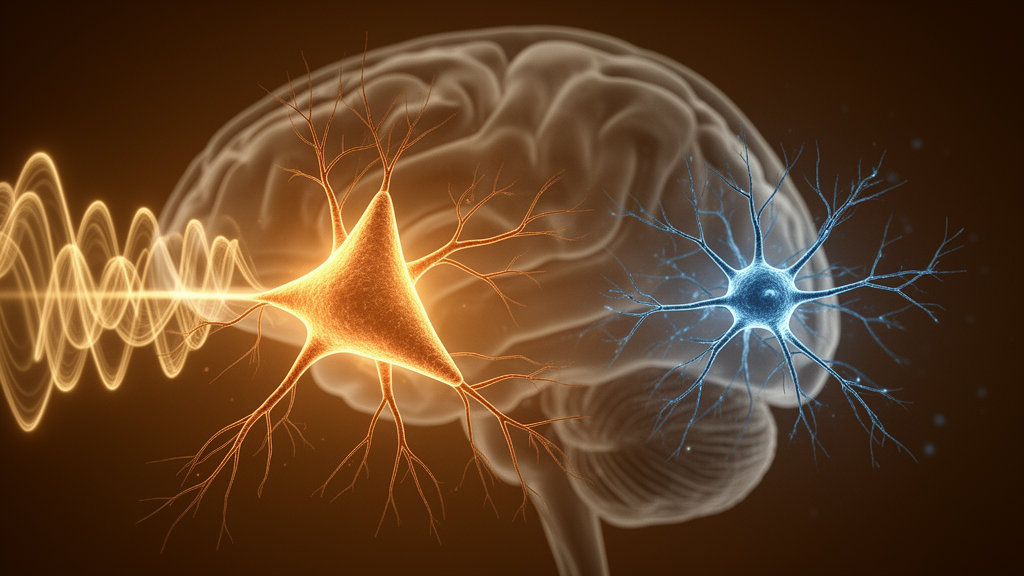
A modeling study of single neurons has found that the brain's main cell classes respond in markedly different ways to transcranial electrical stimulation (tES) depending on stimulation frequency. Using a large database of biophysically detailed neuron models, the researchers showed that pyramidal cells, the principal excitatory neurons, respond strongly to low-frequency stimulation but that their responses drop sharply as frequency increases. Inhibitory neurons behave differently: their responses decline less steeply with frequency, and above roughly 60 hertz they become, on average, more responsive than pyramidal cells.

The work addresses a central obstacle for tES, a non-invasive, safe and inexpensive method whose therapeutic value has been demonstrated but whose effects are highly variable. Conditions including Alzheimer's disease, Parkinson's disease, depression and epilepsy create an urgent need for better treatment options, and tailoring tES to specific conditions and individual patients requires a better understanding of how the technique modulates neural activity. The neural response to tES is highly complex, and the parameter space involved in optimizing treatments is daunting, which has made general insights difficult to obtain.

A key challenge lies in the cell-type-specific and frequency-dependent nature of these responses. To move beyond case-by-case simulation, the team applied a reciprocity theorem, demonstrating that the effect of tES on a given cell type is proportional to the frequency-dependent current-dipole moment that determines that cell type's contribution to the EEG signal. This link connects two quantities at different scales: the sensitivity of individual neurons to externally applied electric fields and the population-level signals recorded non-invasively from the scalp.

The researchers also derived an analytical formula for idealized neuron models that approximately predicts the tES sensitivity of different cell types at any given frequency, providing an efficient and accurate method for characterizing and comparing the responses of different neural populations across the frequency spectrum without running full biophysical simulations for every candidate protocol. Morphology emerged as a central determinant of these responses. Counterintuitively, total cell length had frequency-dependent and even opposing effects: longer neurons were more sensitive to tES at low frequencies, but at high frequencies increased length could reduce sensitivity instead.

These findings characterize the joint role of morphology and stimulation frequency in determining the responses of single cells. By clarifying how cell type, morphology and frequency together govern neuronal responses, the study represents an important step toward a better fundamental understanding of tES. The results also point toward a practical route for optimizing treatments: because the parameter space for tailoring stimulation is daunting, having a predictive, cell-type-resolved framework makes it feasible to design protocols aimed at selectively targeting specific neural populations.

Such cell-type-specific targeting could facilitate optimizing tES for particular neurological conditions, where the current variability of effects remains a major obstacle to realizing the technique's full therapeutic potential.

Subject of Research: Cell-type dependence of effects from transcranial electric brain stimulation

Article Title: Cell-type dependence of effects from transcranial electric brain stimulation

Article References: Dahle, S., Einevoll, G. T., & Ness, T. V. (2026). Cell-type dependence of effects from transcranial electric brain stimulation. PLOS Computational Biology, 22(10), e1014895. https://doi.org/10.1371/journal.pcbi.1014895

Image Credits: AI Generated

DOI: 10.1371/journal.pcbi.1014895

Keywords: Cell-type, dependence, effects, transcranial, electric, brain, stimulation, scientific research

Cite Scienmag News

Cassandra Pierce. (October 23, 2026). Pyramidal and Inhibitory Neurons Respond Differently to Brain Stimulation Frequencies. Scienmag. https://scienmag.com/pyramidal-and-inhibitory-neurons-respond-differently-to-brain-stimulation-frequencies/


Cassandra Pierce. "Pyramidal and Inhibitory Neurons Respond Differently to Brain Stimulation Frequencies." Scienmag, 23 October 2026, https://scienmag.com/pyramidal-and-inhibitory-neurons-respond-differently-to-brain-stimulation-frequencies/. Accessed 23 October 2026.

Cassandra Pierce. "Pyramidal and Inhibitory Neurons Respond Differently to Brain Stimulation Frequencies." Scienmag. October 23, 2026. https://scienmag.com/pyramidal-and-inhibitory-neurons-respond-differently-to-brain-stimulation-frequencies/

Tags: biophysical neuron models in neural modulationbrainbrain stimulation frequency-dependent neuron responseCell-typecell-type-specific neural response to tESchallenges in non-invasive brain stimulation therapydependenceDepressiondifferential neural responses in Alzheimer’sEffectseffects of low-frequency vs high-frequency brain stimulationElectricEpilepsy treatmentfrequency response differences between excitatory and inhibitory neuronsinhibitory neurons modulation by brain stimulationneuron modeling in transcranial stimulationoptimizing brain stimulation parameters for neurological conditionsParkinson'spyramidal neurons response to transcranial electrical stimulationScientific ResearchstimulationTranscranial
Share26Tweet16
Previous Post

Eastern Australian Humpback Whales Grow Faster Than Other Measured Populations

Next Post

Reddit community r/heat_prep reveals gaps in official heat-health guidance

Related Posts

Phage Protein Lys33795 Combines Cell-Wall Lysis and Capsule Degradation Against Streptococcus suis Biofilms
Biology

Phage Protein Lys33795 Combines Cell-Wall Lysis and Capsule Degradation Against Streptococcus suis Biofilms

October 23, 2026
Predictive Model for Nursing Home Dependency Loses Accuracy Outside VA Data
Medicine

Predictive Model for Nursing Home Dependency Loses Accuracy Outside VA Data

October 23, 2026
Tapeworm Protein Dampens Immune Alarm to Limit Heart Reperfusion Injury in Mice
Biology

Tapeworm Protein Dampens Immune Alarm to Limit Heart Reperfusion Injury in Mice

October 23, 2026
Past Biome Shifts Leave Little Mark on Today’s Vertebrate Diversity
Biology

Past Biome Shifts Leave Little Mark on Today’s Vertebrate Diversity

October 23, 2026
Snowpack surveys reveal hidden patchwork of winter carbon emissions in Arctic tundra
Biology

Snowpack surveys reveal hidden patchwork of winter carbon emissions in Arctic tundra

October 23, 2026
Czech Municipalities Rank Ageing, Climate and Economic Shocks as Top Threats to Local Resilience
Biology

Czech Municipalities Rank Ageing, Climate and Economic Shocks as Top Threats to Local Resilience

October 23, 2026
Next Post
Reddit community r/heat_prep reveals gaps in official heat-health guidance

Reddit community r/heat_prep reveals gaps in official heat-health guidance

  • Mothers who receive childcare support from maternal grandparents show more optimized

    Mothers who receive childcare support from maternal grandparents show more parental warmth, finds NTU Singapore study

    27656 shares
    Share 11059 Tweet 6912
  • University of Seville Breaks 120-Year-Old Mystery, Revises a Key Einstein Concept

    1061 shares
    Share 424 Tweet 265
  • Bee body mass, pathogens and local climate influence heat tolerance

    682 shares
    Share 273 Tweet 171
  • Researchers record first-ever images and data of a shark experiencing a boat strike

    546 shares
    Share 218 Tweet 137
  • Groundbreaking Clinical Trial Reveals Lubiprostone Enhances Kidney Function

    531 shares
    Share 212 Tweet 133
Science

Embark on a thrilling journey of discovery with Scienmag.com—your ultimate source for cutting-edge breakthroughs. Immerse yourself in a world where curiosity knows no limits and tomorrow’s possibilities become today’s reality!

RECENT NEWS

  • Phage Protein Lys33795 Combines Cell-Wall Lysis and Capsule Degradation Against Streptococcus suis Biofilms
  • Reddit community r/heat_prep reveals gaps in official heat-health guidance
  • Pyramidal and Inhibitory Neurons Respond Differently to Brain Stimulation Frequencies
  • Eastern Australian Humpback Whales Grow Faster Than Other Measured Populations

Categories

  • Agriculture
  • Anthropology
  • Archaeology
  • Athmospheric
  • Biology
  • Biotechnology
  • Blog
  • Bussines
  • Cancer
  • Chemistry
  • Climate
  • Earth Science
  • Editorial Policy
  • Marine
  • Mathematics
  • Medicine
  • Pediatry
  • Policy
  • Psychology & Psychiatry
  • Science Education
  • Science News
  • Social Science
  • Space
  • Technology and Engineering

Subscribe to Blog via Email

Enter your email address to subscribe to this blog and receive notifications of new posts by email.

Join 5,152 other subscribers

© 2025 Scienmag - Science Magazine

Welcome Back!

Login to your account below

Forgotten Password?

Retrieve your password

Please enter your username or email address to reset your password.

Log In
No Result
View All Result
  • HOME
  • SCIENCE NEWS
  • CONTACT US

© 2025 Scienmag - Science Magazine

Discover more from Science

Subscribe now to keep reading and get access to the full archive.

Continue reading