


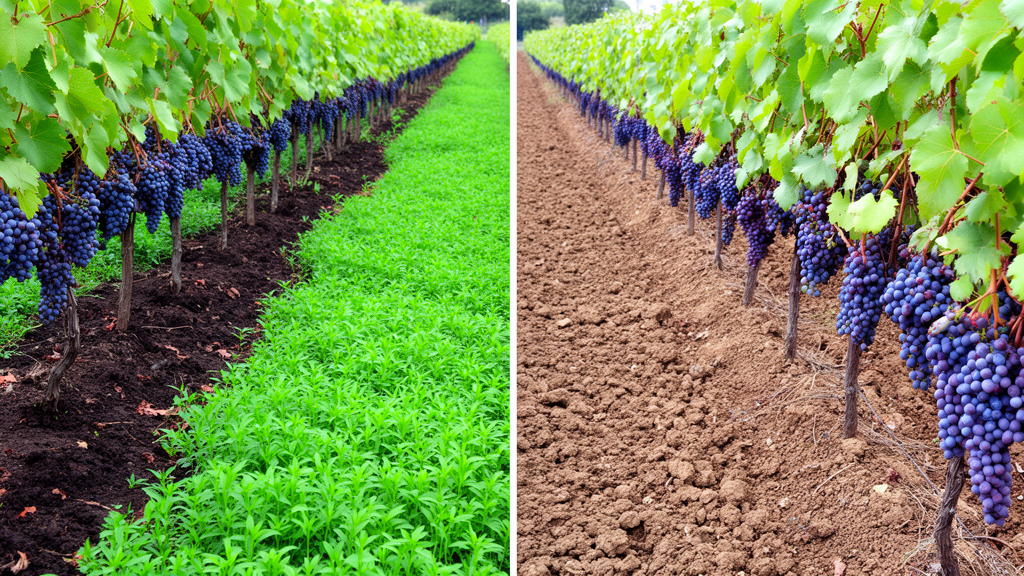
A three-year field trial conducted in a subtropical vineyard in southern Brazil has revealed that while sown cover crops significantly enhance soil quality and nutrient cycling, these improvements do not consistently translate into higher grapevine yields or altered fruit quality. The study, published in Frontiers in Environmental Science, evaluated five different vegetation management systems on Viognier grapevines, finding that although specific cover crop mixtures increased biomass and macronutrient accumulation, the expected boost in productivity was absent across the majority of the experimental period. This decoupling between soil health indicators and agricultural output challenges the assumption that improved soil conditions will immediately result in greater crop production in perennial systems.
The experiment was established at Legado Winery in Campo Largo, Paraná, Brazil, a region characterized by a humid subtropical climate and high-altitude conditions. The vineyard, planted with Viognier vines grafted onto P1103 rootstock, was divided into five treatments designed to compare spontaneous vegetation managed with or without herbicides against various sown cover crop systems. The treatments included spontaneous vegetation with herbicide application, spontaneous vegetation without herbicide, and three distinct sown systems involving single species or multi-species mixtures of grasses, legumes, and other functional plants. The study spanned the 2023/24, 2024/25, and 2025/26 growing seasons, allowing researchers to assess the consistency of responses under varying meteorological conditions.
Researchers measured a comprehensive suite of variables, including cover crop dry biomass, macronutrient accumulation, soil chemical and physical properties, and grapevine physiological and productive traits. The results demonstrated that sown cover crops, particularly those involving common vetch and mombaça grass or multi-species mixtures, produced substantially more biomass than spontaneous vegetation. These sown systems accumulated higher levels of nitrogen, phosphorus, potassium, calcium, and magnesium in their biomass, indicating a greater capacity for nutrient capture and recycling. The increased residue inputs were associated with measurable changes in surface soil properties, including higher total organic carbon, total nitrogen, and cation exchange capacity, as well as lower bulk density in certain treatments.
Despite these positive soil responses, the grapevines did not exhibit corresponding increases in canopy development or yield across the three-season average. Total leaf area and the ratio of yield to leaf area remained statistically similar among all treatments, suggesting that the additional nutrient inputs did not stimulate vegetative growth or improve productive efficiency per unit of leaf area. While physiological parameters such as net photosynthesis and carboxylation efficiency showed treatment-dependent responses, with some sown systems outperforming the herbicide-treated control, these physiological advantages did not consistently result in higher fruit production. The lack of a direct causal link between soil improvements and yield highlights the complexity of the soil-plant system in perennial crops.
Interannual variability played a significant role in the observed outcomes, with the most pronounced yield differences occurring in the 2025/26 season. In that year, treatments maintaining spontaneous vegetation without herbicide and those using vetch and mombaça grass reached yields of approximately 11.06 and 11.12 megagrams per hectare, respectively, which was about 20% higher than the herbicide-treated spontaneous vegetation. However, this specific seasonal response does not reflect the overall trend of the three-year study, where no consistent yield advantage was observed for any single management strategy. The variability underscores the importance of climatic factors, such as precipitation and temperature, in modulating the effects of vegetation management on grapevine performance.
The study also highlighted the importance of distinguishing between the effects of herbicide use and the presence of continuous vegetation cover. The treatment involving spontaneous vegetation without herbicide performed comparably to the sown cover crops in terms of grapevine productivity, despite producing less biomass and accumulating fewer nutrients. This suggests that the mere maintenance of living vegetation may be sufficient to sustain grapevine performance without the need for diversified sown species. The herbicide-treated control, which involved the suppression of vegetation within the vine row, generally showed lower yields and less favorable soil properties, although the specific contribution of herbicide cessation versus vegetation cover could not be fully isolated in this experimental design.
Fruit technological maturity was largely unaffected by vegetation management, with soluble solids and pH remaining stable across all treatments. Titratable acidity showed some variation, but these differences were not consistent across the three growing seasons. The stability of these quality parameters indicates that the different floor management strategies did not compromise the basic chemical composition of the grapes, which is a critical consideration for wine production. The findings indicate that cover crop systems can improve soil health and ecosystem services without risking the fundamental quality attributes of the fruit, provided that the vegetative-productive balance of the vines is maintained.
The authors emphasize that the translation of soil changes into grapevine responses may occur over longer time scales than the three-year period evaluated in this study. Perennial crops like grapevines may require several seasons for the cumulative effects of improved soil structure and nutrient cycling to manifest as consistent changes in yield and stability. Furthermore, the study was limited to the top 10 centimeters of soil, whereas mature grapevines can explore a much deeper soil volume, meaning that the measured surface changes may not fully represent the conditions experienced by the root system. Future research should extend the duration of such trials and incorporate deeper soil layers and direct measurements of soil temperature and water dynamics to better understand the long-term implications of cover crop management.
In conclusion, the study provides evidence that sown cover crops are effective in enhancing soil quality and nutrient cycling in subtropical vineyards, but these benefits do not automatically lead to increased grape production. The decoupling of soil health indicators from yield suggests that vineyard-floor management should be evaluated based on multiple criteria, including soil functioning, ecosystem services, and long-term sustainability, rather than short-term yield alone. The results support the agronomic feasibility of herbicide-free vegetation management and highlight the need for a nuanced approach to cover crop adoption, where the selection of species and management practices is tailored to local environmental conditions and long-term sustainability goals.
Subject of Research: Effects of cover crop management on soil properties and grapevine performance in a subtropical vineyard
Article Title: Cover crop management influences soil properties and grapevine performance across three growing seasons in a subtropical vineyard
Article References: Teixeira-Loss, M. B., da Rosa Dutra, B., Costa, F. W., Goedel, A. D., Carniel de Oliveira, M. G., Zimmermann, C. M., Botelho de Souza, M. E., Tokushima, A. E., Feuser dos Santos, L., Ferreira, G. W., Marcon Filho, J. L., Loss, A., & Brighenti, A. F. (2026). Cover crop management influences soil properties and grapevine performance across three growing seasons in a subtropical vineyard. Frontiers in Environmental Science, 14, Article 1895755. https://doi.org/10.3389/fenvs.2026.1895755
Image Credits: AI Generated
DOI: 10.3389/fenvs.2026.1895755
Keywords: cover crops, viticulture, soil health, Viognier, subtropical agriculture, nutrient cycling, herbicide management, grapevine yield, Cover, crop, management, influences
Cite Scienmag News
Alan Morgan. (October 23, 2026). Cover Crops Improve Soil But Not Grape Yield. Scienmag. https://scienmag.com/cover-crops-improve-soil-but-not-grape-yield/
Alan Morgan. "Cover Crops Improve Soil But Not Grape Yield." Scienmag, 23 October 2026, https://scienmag.com/cover-crops-improve-soil-but-not-grape-yield/. Accessed 23 October 2026.
Alan Morgan. "Cover Crops Improve Soil But Not Grape Yield." Scienmag. October 23, 2026. https://scienmag.com/cover-crops-improve-soil-but-not-grape-yield/


