


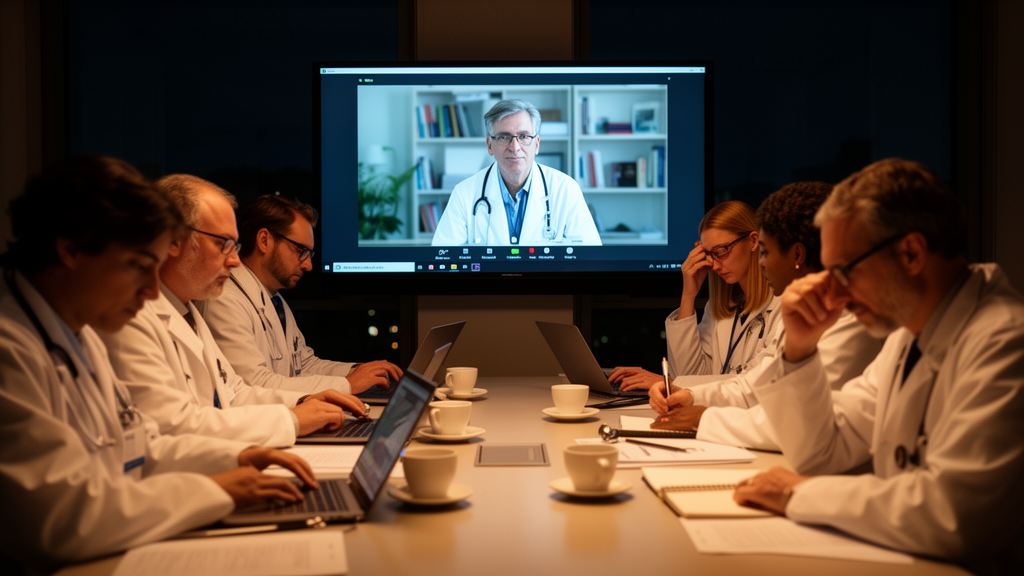
A ambitious effort to teach primary care clinicians how to manage Long COVID and related chronic illnesses has delivered a sobering lesson in implementation science: the model works well enough that clinicians love it, but the very design features they prize are the ones that make it hardest to sustain. That is the central finding of a new implementation evaluation of the Long COVID and Fatiguing Illnesses Recovery Program, or LC&FIRP, published October 23, 2026 in Frontiers in Health Services. The program, funded by the U.S. Centers for Disease Control and Prevention, combined the Extension for Community Healthcare Outcomes, or ECHO, telementoring model with monthly webinars and asynchronous online short courses. Across a trial lasting nearly three years at a large safety-net health system in San Diego, the researchers documented high satisfaction and genuine clinical benefit, alongside falling attendance, clinician attrition, and a case-presentation pipeline that never kept pace with the protocol.
Long COVID is an infection-associated chronic condition, or IACC, that emerges after SARS-CoV-2 infection and persists for at least three months as a continuous, relapsing and remitting, or progressive disease state affecting one or more organ systems. Its symptoms overlap heavily with myalgic encephalomyelitis/chronic fatigue syndrome, or ME/CFS, including fatigue, post-exertional malaise, and cognitive impairment, and ME/CFS can itself present as a manifestation of Long COVID. Both conditions typically require patients to consult multiple specialties, a demand that drains time and resources. For patients at federally qualified health centers, or FQHCs, which serve predominantly uninsured, low-income, and medically underserved populations, specialty access barriers translate into treatment delays. The ECHO model, first developed in New Mexico to empower primary care clinicians to deliver hepatitis C care in underserved settings, connects a multidisciplinary hub of specialists with a network of frontline clinicians through weekly virtual case-based learning sessions, and has since shown effectiveness for complex chronic issues such as opioid use disorder and hospice care.
The LC&FIRP team, led by researchers from Ata Health Strategies, Family Health Centers of San Diego, the ECHO Institute at the University of New Mexico, and the CDC, prospectively designed the program as a Type II effectiveness-implementation hybrid trial. This design simultaneously evaluates the clinical intervention on patient and clinician outcomes and the implementation strategies intended to support uptake, treating them as distinct research questions. From December 2021 to October 2024, twenty clinicians at Family Health Centers of San Diego, one of the ten largest FQHCs in the United States serving more than 227,000 patients annually, were randomized 1:1 to intervention or control conditions. Intervention clinicians were invited to weekly 60-minute ECHO sessions, each opening with a 15-minute didactic presentation from a multidisciplinary panel of subject matter experts, followed by questions and answers and, in most sessions, an interactive case presentation in which a participating clinician presented a real patient and received individualized diagnostic and therapeutic recommendations. Control and intervention clinicians alike were offered 60-minute monthly webinars and quarterly asynchronous online short courses, each designed to take under an hour.
The subject matter expert pool drew nationally across ME/CFS, pulmonology, neurology, psychiatry, cardiology, and physical medicine and rehabilitation, and crucially included lived experience experts, people living with Long COVID, ME/CFS, or other IACC who shared knowledge from the patient perspective. Every weekly and monthly session included at least one rehabilitation specialist and one lived experience expert. A WhatsApp group chat connected participating SMEs for discussion and resource-sharing, and participant feedback together with the rapidly evolving scientific literature shaped the curriculum in real time. The implementation evaluation, reported in the new paper, applied the Klaic et al. framework for program implementability, assessing acceptability, feasibility, fidelity, sustainability, and scalability through session surveys administered after every offering, quarterly clinician follow-up surveys, Zoom participation records, and semi-structured interviews with clinicians, SMEs, and clinic administrators at program end.
On acceptability, the quantitative results were striking. Intervention clinicians attended a mean and median of 37 weekly ECHO sessions, roughly 42 percent of the 89 sessions offered, equivalent to about 29 hours, while both clinician groups each attended a median of 13 monthly webinars, 38 percent of the 34 offered. Quarterly surveys showed overall satisfaction of 97.7 percent in the intervention group and 91.8 percent in the control group, averaged across the trial. After adjusting for baseline confidence in treating Long COVID, clinician sex, years of experience, and educational degree, the intervention effect was associated with a small but statistically significant increase in satisfaction of 8.1 percentage points, with a 95 percent confidence interval of 0.8 to 15.5 percentage points. The intervention group was also significantly more likely to report encountering a case similar to those presented in sessions, at 97.7 percent versus 79.6 percent, an adjusted difference of 13.4 percentage points, suggesting the case-based content mapped closely onto their actual practices.
The qualitative interviews, in which 14 of the 20 randomized clinicians, six administrators, and 16 SMEs participated, revealed what clinicians valued most: interactive peer exchange, practical diagnostic and treatment approaches, and lessons from SMEs with lived experience. Many clinicians described feeling lost or anxious about treating these patients before the series, and reported that participation gave them greater awareness of diagnostic tools, new therapeutics, and concrete strategies to try, improving their confidence in managing patients in the absence of clinical guidelines. Lived experience experts were singled out for enhancing clinician empathy, patient listening, and communication, helping clinicians appreciate the enormous breadth of symptom severity and flexibly adapt interventions. The benefits rippled outward: administrators observed participating clinicians sharing lessons with non-trial colleagues in curbside discussions and routine meetings, while SMEs reported that the WhatsApp chat reduced their professional isolation, enabled referral networks, and even generated academic and clinical collaborations, along with an unexpected improvement in their own confidence caring for these patients.
Feasibility, however, told a harder story. Only half of the 20 recruited clinicians remained for the full intended duration; six dropped out, five of them intervention clinicians, and four paused participation, three of them controls. Exits were driven primarily by departures from the health system and by time commitment. All clinicians and SMEs cited competing clinical and administrative demands, scheduling conflicts, and the difficulty of transitioning between patient care windows and lunchtime sessions as major barriers. Intervention clinicians found the weekly cadence too onerous over 30 months, and were most concerned about the workload of preparing case presentations, a burden that grew as attrition shrank the pool of presenters. One clinician described racing from seeing a patient, struggling to log in on time, then rushing back to the next visit. SMEs faced their own hurdle: some lacked administrative approval to participate in live sessions, either because sessions interfered with patient slots or because administrators were skeptical of Long COVID as a condition. Participation in the quarterly short courses was negligible among trial clinicians, with median attendance of zero, so that modality could not be analyzed at all.
Fidelity was correspondingly mixed. Funding, partnerships, clinician recruitment, monthly webinars, and quarterly short courses were all delivered as planned, but only 89 of the 136 planned weekly ECHO sessions were held, a 65 percent achievement rate, and just 52 of 136 planned case presentations occurred, a 38 percent rate. Sessions were cancelled due to facilitator shortages, last-minute speaker cancellations, and holidays, while the case-presentation target foundered because clinicians lacked time to complete forms, pull patient data, and prepare. An unplanned addition, eight quarterly check-in meetings with intervention clinicians hosted by the local study team from October 2022 to June 2024, emerged from clinician requests to discuss how to apply SME feedback and access referral networks. Meanwhile, the quarterly short courses reached a broad national audience of 927 registrants and 516 completers, making them a robust dissemination platform even though they offered the least value to clinicians already attending weekly and monthly offerings.
Sustainability and scalability showed early promise. After the trial ended, weekly ECHO sessions and monthly webinars continued through new funding from the CDC and the Schmidt Initiative for Long COVID, with the ECHO sessions opened to primary care clinicians nationwide and globally and restructured into two monthly cohorts rather than weekly meetings. But participants flagged serious future barriers: clinician fatigue with COVID-19-related learning, speculation that patient demand for Long COVID care may decline as perceived risk falls, and the ongoing cost of incentive payments, including the $400 honoraria paid to SMEs per weekly session and hourly compensation for clinicians. Their recommendations, unranked, included renaming the series to focus on infection-associated chronic conditions more broadly, reducing ECHO sessions to biweekly or monthly intervals, rebalancing compensation toward case presenters, shortening sessions to 45 to 50 minutes to ease transitions, emphasizing interactive case-based discussion in webinars over academic content without clear clinical application, maintaining lived experience expert participation, and providing regular updates to clinic administrators.
The findings carry real weight for how telementoring should be deployed for emerging conditions. A companion analysis found that maximal self-reported intervention effects on clinician confidence and changes to practice were associated with roughly 74 sessions of weekly ECHO exposure, and 65 sessions for knowledge, well below the 132 total sessions offered, supporting the authors’ recommendation for a shorter intervention period that achieves sufficient exposure while reducing burden. The authors also note a trade-off: clinicians relying only on webinars and asynchronous courses may experience smaller knowledge and confidence gains than ECHO participants, positioning the short courses best as optional or fee-based continuing education for those not otherwise engaged. Limitations include the single FQHC network, which restricts generalizability, and potential selection bias toward more satisfied and more engaged participants, since interviewees represented 70 percent of randomized clinicians and only 13 percent of SMEs who attended a single session. Still, the study demonstrates that a multimodal ECHO program for Long COVID, ME/CFS, and other IACC can be feasibly implemented and is acceptable to clinicians, while making clear that sustaining engagement and scaling the model will demand adaptations that lighten the participation burden and align resources with the realities of primary care practice.
Subject of Research: Health
Article Title: Implementation effectiveness of the Long COVID and Fatiguing Illnesses Recovery Program (LC&FIRP): a multimodal Extension for Community Healthcare Outcomes (ECHO) model for clinician learning
Article References: Zuber, A., Rothwell, J. T., Godino, J. G., Samaniego, J. C., Sharp, S. P., Taren, D., Unger, E. R., Bertolli, J., Lin, J.-M. S., Regan, J. J., Armistad, A. J., Scott, J. D., Struminger, B. B., & Ramers, C. B. (2026). Implementation effectiveness of the Long COVID and Fatiguing Illnesses Recovery Program (LC&FIRP): a multimodal Extension for Community Healthcare Outcomes (ECHO) model for clinician learning. Frontiers in Health Services, 6, Article 1912278. https://doi.org/10.3389/frhs.2026.1912278
Image Credits: AI Generated
DOI: 10.3389/frhs.2026.1912278
Keywords: Long COVID, ECHO model, telementoring, ME/CFS, infection-associated chronic conditions, primary care, implementation science, Family Health Centers of San Diego, CDC, continuing medical education, Implementation, effectiveness
Cite Scienmag News
Ophelia Keating. (October 23, 2026). Telementoring Program for Long COVID Wins Clinician Praise but Strains Under Time Burdens. Scienmag. https://scienmag.com/telementoring-program-for-long-covid-wins-clinician-praise-but-strains-under-time-burdens/
Ophelia Keating. "Telementoring Program for Long COVID Wins Clinician Praise but Strains Under Time Burdens." Scienmag, 23 October 2026, https://scienmag.com/telementoring-program-for-long-covid-wins-clinician-praise-but-strains-under-time-burdens/. Accessed 23 October 2026.
Ophelia Keating. "Telementoring Program for Long COVID Wins Clinician Praise but Strains Under Time Burdens." Scienmag. October 23, 2026. https://scienmag.com/telementoring-program-for-long-covid-wins-clinician-praise-but-strains-under-time-burdens/


