

Friday, October 23, 2026
Science
No Result
View All Result
  • Login
  • HOME
  • SCIENCE NEWS
  • CONTACT US
  • HOME
  • SCIENCE NEWS
  • CONTACT US
No Result
View All Result
Scienmag
No Result
View All Result
Home Science News Cancer

Fitbit Data Link More Daily Steps to Better Quality of Life in Newly Diagnosed Blood Cancer Patients

October 23, 2026
in Cancer
Nathaniel Bowman
By Nathaniel Bowman Scienmag Editorial Profile - Precision Oncology
Reading Time: 3 mins read
0
Fitbit Data Link More Daily Steps to Better Quality of Life in Newly Diagnosed Blood Cancer Patients

Fitbit Data Link More Daily Steps to Better Quality of Life in Newly Diagnosed Blood Cancer Patients

65
SHARES
587
VIEWS
Share on FacebookShare on Twitter
ADVERTISEMENT

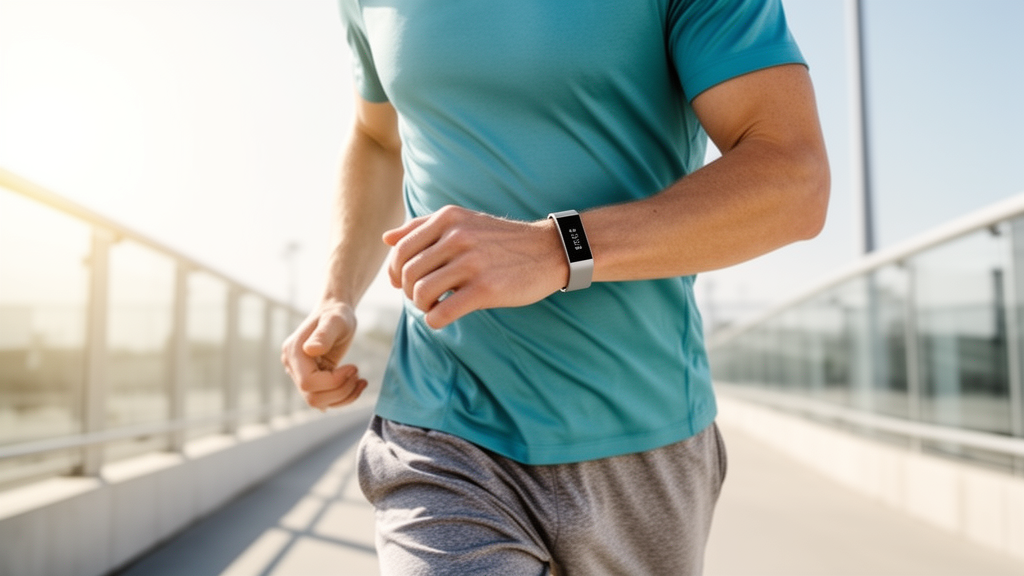
Newly diagnosed patients with hematologic cancers who walked more each day reported better health-related quality of life during their first year after diagnosis, according to an observational cohort study published in the Journal of Cancer Survivorship. The research, led by Afke Ekels and colleagues, used consumer-grade Fitbit Inspire HR trackers to capture real-world activity data in 130 patients, while 314 patients in the broader cohort completed quality-of-life questionnaires at diagnosis and again at 3, 6, and 12 months.

The study measured physical activity as daily step counts and used heart rate data from the trackers as an indicator of general fitness and health status. Quality of life was assessed with the EORTC QLQ-C30 questionnaire and disease-specific modules. Mixed statistical models were used to evaluate how steps and heart rate related to quality-of-life outcomes over time, and results were presented according to quartiles of daily steps. At diagnosis, the median daily step counts per quartile were approximately 3,000, 6,000, 8,000, and 11,000 steps.

The researchers found that clinically relevant improvements in quality of life rose with step count but plateaued at higher activity levels, at around 8,000 steps per day. In other words, the largest quality-of-life differences appeared between the least active and moderately active patients, while gains flattened beyond that threshold. Patients in the lowest step-count quartile differed from those in the highest in several ways: they were older, more often male, more likely to be overweight or current smokers, more likely to report two or more comorbidities or a multiple myeloma diagnosis, and less likely to have higher education or income.

Quantitatively, every additional 1,000 steps per day was associated with statistically significant improvements on several EORTC scales: physical functioning (β=1.0, p<0.001), role functioning (β=1.1, p=0.03), and global health status/quality of life (β=1.0, p<0.001), alongside significant reductions in fatigue (β=-0.9, p=0.03) and dyspnea (β=-1.1, p=0.01). Higher heart rate, in contrast, was associated with a greater symptom burden, indicating that the tracker-derived fitness measure carried information about patients’ overall health status.

The authors conclude that physical activity and general fitness or health status at diagnosis may be important predictors of maintaining health-related quality of life during the first year after a hematologic cancer diagnosis. They emphasize that the findings underscore the potential of wearable technology to inform supportive care and empower self-management, and that even small increases in daily steps may contribute to maintaining quality of life after diagnosis.

As an observational study, the research cannot establish that increasing steps causes better quality of life. The tracker subgroup was also smaller than the full questionnaire cohort, with 130 of the 314 patients wearing Fitbit devices, and the step-count quartiles differed in demographic and clinical characteristics such as age, comorbidities, and diagnosis type, which the statistical models sought to account for. Nevertheless, the study is notable for capturing continuous, objective activity data alongside repeated quality-of-life assessments in a population of patients with blood cancers, including multiple myeloma, during the first year after diagnosis.

Subject of Research: Associations between wearable-tracker-measured physical activity and quality of life in newly diagnosed hematologic cancer patients

Article Title: Assessing physical activity using Fitbit trackers and the association with quality of life among newly diagnosed patients with hematologic cancer

Article References: Ekels, A., Oerlemans, S., Kirsch, S., Issa, D. E., Hoogendoorn, M., Nijziel, M. R., Koster, A., de Jong, C. N., Achouiti, A., Thielen, N., Van Deun, K., Ezendam, N. P. M., Stuiver, M., Posthuma, E. F. M., & van de Poll-Franse, L. V. (2026). Assessing physical activity using Fitbit trackers and the association with quality of life among newly diagnosed patients with hematologic cancer. Journal of Cancer Survivorship. https://doi.org/10.1007/s11764-026-02139-6

Image Credits: AI Generated

DOI: 10.1007/s11764-026-02139-6

Keywords: hematologic cancer, physical activity, Fitbit, wearable trackers, quality of life, daily steps, heart rate, EORTC QLQ-C30, cancer survivorship, observational cohort, fatigue, multiple myeloma

Cite Scienmag News

Nathaniel Bowman. (October 23, 2026). Fitbit Data Link More Daily Steps to Better Quality of Life in Newly Diagnosed Blood Cancer Patients. Scienmag. https://scienmag.com/fitbit-data-link-more-daily-steps-to-better-quality-of-life-in-newly-diagnosed-blood-cancer-patients/


Nathaniel Bowman. "Fitbit Data Link More Daily Steps to Better Quality of Life in Newly Diagnosed Blood Cancer Patients." Scienmag, 23 October 2026, https://scienmag.com/fitbit-data-link-more-daily-steps-to-better-quality-of-life-in-newly-diagnosed-blood-cancer-patients/. Accessed 23 October 2026.

Nathaniel Bowman. "Fitbit Data Link More Daily Steps to Better Quality of Life in Newly Diagnosed Blood Cancer Patients." Scienmag. October 23, 2026. https://scienmag.com/fitbit-data-link-more-daily-steps-to-better-quality-of-life-in-newly-diagnosed-blood-cancer-patients/

Tags: association between daily steps and health-related quality of lifecancer survivorshipdaily stepsEORTC QLQ-C30fatigueFitbitFitbit-based daily step count and quality of lifeheart rateheart rate as fitness indicator in cancer carehematologic cancerHematologic cancer patient activity monitoringimpact of physical activity on blood cancer prognosislong-term effects of walking on cancer recoveryMultiple Myelomaobservational cohortobservational cohort study on cancer patient mobilityoptimal dailypatient-reported outcomes and activity trackingPhysical activityphysical activity levels in newly diagnosed blood cancer patientsQuality of Lifereal-world data collection for cancer patientswearable fitness trackers in cancer survivorshipwearable trackers
Share26Tweet16
Previous Post

Rare NF1-Linked Brain Tumors Show Partial Shrinkage on MEK Blocker Mirdametinib

Next Post

Electric Current Spins a Helical Molecule and Boosts Its Conductance

Related Posts

Rare NF1-Linked Brain Tumors Show Partial Shrinkage on MEK Blocker Mirdametinib
Cancer

Rare NF1-Linked Brain Tumors Show Partial Shrinkage on MEK Blocker Mirdametinib

October 23, 2026
Patient-Tailored Gilteritinib Triplet Therapy Shows Tolerability Gains in Relapsed FLT3-Mutated AML
Cancer

Patient-Tailored Gilteritinib Triplet Therapy Shows Tolerability Gains in Relapsed FLT3-Mutated AML

October 23, 2026
Genomic test may identify which prostate cancer patients benefit from added abiraterone
Cancer

Genomic test may identify which prostate cancer patients benefit from added abiraterone

October 23, 2026
Chronological Age Fails to Predict Survival After Gastric Cancer Surgery in Patients 75 and Older
Cancer

Chronological Age Fails to Predict Survival After Gastric Cancer Surgery in Patients 75 and Older

October 23, 2026
Drug Combinations Compared for Kidney Cancer Recurrence Risk After Surgery
Cancer

Drug Combinations Compared for Kidney Cancer Recurrence Risk After Surgery

October 23, 2026
For Blood Cancer Patients, a Transplant Can Feel Like the Only Choice
Cancer

For Blood Cancer Patients, a Transplant Can Feel Like the Only Choice

October 23, 2026
Next Post
Electric Current Spins a Helical Molecule and Boosts Its Conductance

Electric Current Spins a Helical Molecule and Boosts Its Conductance

  • Mothers who receive childcare support from maternal grandparents show more optimized

    Mothers who receive childcare support from maternal grandparents show more parental warmth, finds NTU Singapore study

    27656 shares
    Share 11059 Tweet 6912
  • University of Seville Breaks 120-Year-Old Mystery, Revises a Key Einstein Concept

    1061 shares
    Share 424 Tweet 265
  • Bee body mass, pathogens and local climate influence heat tolerance

    682 shares
    Share 273 Tweet 171
  • Researchers record first-ever images and data of a shark experiencing a boat strike

    546 shares
    Share 218 Tweet 137
  • Groundbreaking Clinical Trial Reveals Lubiprostone Enhances Kidney Function

    531 shares
    Share 212 Tweet 133
Science

Embark on a thrilling journey of discovery with Scienmag.com—your ultimate source for cutting-edge breakthroughs. Immerse yourself in a world where curiosity knows no limits and tomorrow’s possibilities become today’s reality!

RECENT NEWS

  • Blood Exosome miRNA Signature Shows Strong Accuracy for Detecting Parkinson’s Disease
  • Insomnia Therapy Modestly Reduces Suicidal Thoughts, Major Meta-Analysis Finds
  • Electric Current Spins a Helical Molecule and Boosts Its Conductance
  • Fitbit Data Link More Daily Steps to Better Quality of Life in Newly Diagnosed Blood Cancer Patients

Categories

  • Agriculture
  • Anthropology
  • Archaeology
  • Athmospheric
  • Biology
  • Biotechnology
  • Blog
  • Bussines
  • Cancer
  • Chemistry
  • Climate
  • Earth Science
  • Editorial Policy
  • Marine
  • Mathematics
  • Medicine
  • Pediatry
  • Policy
  • Psychology & Psychiatry
  • Science Education
  • Science News
  • Social Science
  • Space
  • Technology and Engineering

Subscribe to Blog via Email

Enter your email address to subscribe to this blog and receive notifications of new posts by email.

Join 5,151 other subscribers

© 2025 Scienmag - Science Magazine

Welcome Back!

Login to your account below

Forgotten Password?

Retrieve your password

Please enter your username or email address to reset your password.

Log In
No Result
View All Result
  • HOME
  • SCIENCE NEWS
  • CONTACT US

© 2025 Scienmag - Science Magazine

Discover more from Science

Subscribe now to keep reading and get access to the full archive.

Continue reading