

Thursday, October 22, 2026
Science
No Result
View All Result
  • Login
  • HOME
  • SCIENCE NEWS
  • CONTACT US
  • HOME
  • SCIENCE NEWS
  • CONTACT US
No Result
View All Result
Scienmag
No Result
View All Result
Home Science News Medicine

San Antonio tests machine vision to survey unrestrained dogs

October 22, 2026
in Medicine
Elena Sutton
By Elena Sutton Scienmag Editorial Profile - Computer Vision
Reading Time: 3 mins read
0
San Antonio tests machine vision to survey unrestrained dogs

San Antonio tests machine vision to survey unrestrained dogs

65
SHARES
587
VIEWS
Share on FacebookShare on Twitter
ADVERTISEMENT

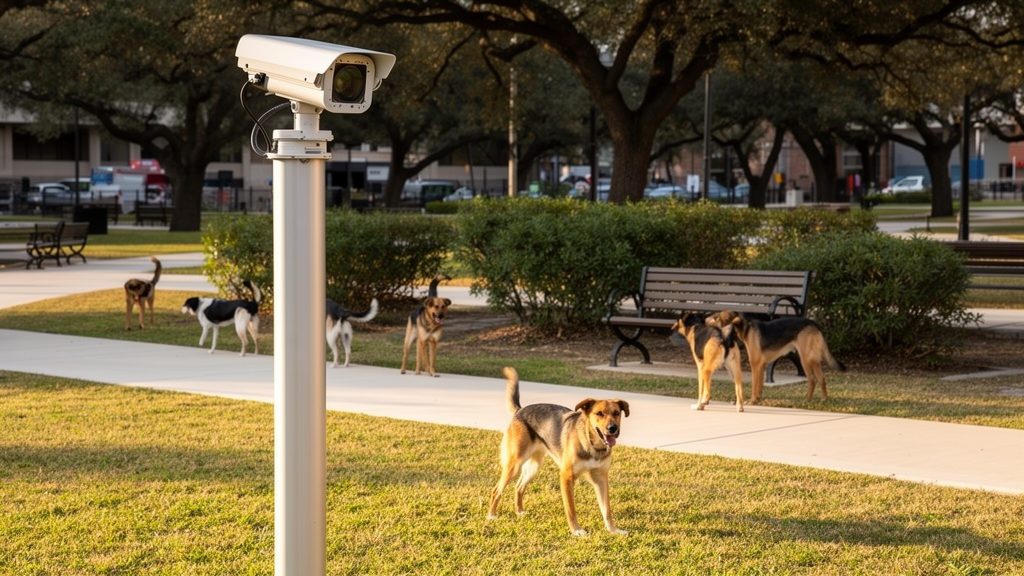
Southwest Research Institute and the City of San Antonio are beginning an automated survey of unrestrained dogs across 32 areas of the city. The city-funded project pairs cellular phones mounted on vehicle windows with SwRI-developed object-detection and data-analysis software. Engineers plan to collect video during fieldwork from October through December 2026, then compile summary data and videos of observed dogs in a final report.

The study is a sampled survey rather than a census of every unrestrained dog in San Antonio, and the announced project is a test of the surveying technology rather than a report of completed findings. The automated effort will revisit the 32 study locations used in a manual survey conducted in 2019. In that earlier survey, volunteers helped San Antonio Animal Care Services identify unrestrained dogs and classify them as “stray” or “roaming.” Under the survey’s stated criteria, strays appear malnourished and skittish, whereas dogs that seem healthier and more approachable are likely to be owned by local families and are classified as roaming.

The new study uses the same general sampling areas to determine whether a camera-and-software workflow can help characterize this population while retaining human review. For each deployment, SwRI engineers will use a cellular phone mounted to a vehicle window to gather video of unrestrained dogs. Object-detection software will identify candidate animals in the footage, after which automated and human review will examine the clips.

Reviewers are expected to verify that detected animals were unrestrained, determine whether a human was present, count the dogs and assess whether each animal was owned or a stray. The survey has an explicitly limited geographic scope. The 32 locations represent areas in which unrestrained dogs are common, but the sample does not cover the entire city.

The project will therefore produce information about dogs observed in the selected areas rather than a precise total for San Antonio as a whole. Its workflow will also connect machine vision with human evaluation: the phone-mounted camera gathers roadside video, the software detects animals, and reviewers determine whether each detection meets the survey’s criteria. No totals, detection rates, classification accuracy or comparisons with the 2019 manual survey are available at the start of the announced October-to-December 2026 research period.

Those outcomes have not yet been reported, and the release does not provide performance measurements for the system. San Antonio Animal Care Services Director Jon Gary said the study would give the department another tool for understanding where unrestrained dogs are seen while supporting its broader work to protect the health and safety of people and pets. Mike Koets, a staff engineer in SwRI’s Intelligent Systems Division, said the organization was excited to test the technology and help San Antonio apply real-world solutions to an issue affecting many residents.

The planned final report is expected to include summary data and videos of dogs observed during the deployment. Until that report is completed, the release supports a description of the survey method and its intended municipal application, but not conclusions about how many unrestrained dogs are present or how well the automated system performs compared with the earlier volunteer-led survey.

Subject of Research: A machine vision and human-review survey of unrestrained dogs in 32 sampled areas of San Antonio

Article Title: SwRI applies automation to count unrestrained dogs in San Antonio

Article References: SwRI applies automation to count unrestrained dogs in San Antonio. Original publication (Bibliographic details unavailable.)

Image Credits: AI Generated

DOI: Not provided

Keywords: unrestrained dogs, machine vision, San Antonio, Southwest Research Institute, object detection, stray dogs, roaming dogs, municipal surveys, animal care services, SwRI, applies, automation

Cite Scienmag News

Elena Sutton. (October 22, 2026). San Antonio tests machine vision to survey unrestrained dogs. Scienmag. https://scienmag.com/san-antonio-tests-machine-vision-to-survey-unrestrained-dogs/

Elena Sutton. "San Antonio tests machine vision to survey unrestrained dogs." Scienmag, 22 October 2026, https://scienmag.com/san-antonio-tests-machine-vision-to-survey-unrestrained-dogs/. Accessed 22 October 2026.

Elena Sutton. "San Antonio tests machine vision to survey unrestrained dogs." Scienmag. October 22, 2026. https://scienmag.com/san-antonio-tests-machine-vision-to-survey-unrestrained-dogs/


Tags: AI-based animal classificationanimal care servicesappliesautomated city animal managementautomated urban animal monitoringautomationcellular phone-mounted video surveyscitywide stray dog population studydigital tools for animal controlmachine visionMachine vision for dog surveymunicipal surveysobject detectionremote animal behavior analysisroaming dogsSan Antoniosoftware-assisted wildlife surveysSouthwest Research Institutestray dogsSwRISwRI-developed object detection softwareunrestrained dog detection technologyunrestrained dogsurban stray dog research methods
Share26Tweet16
Previous Post

Coal power expansion linked to sharply higher urban air-pollution deaths in India

Next Post

Dominant trajectory framework tracks priorities in multiple ground-glass nodules

Related Posts

Dominant trajectory framework tracks priorities in multiple ground-glass nodules
Medicine

Dominant trajectory framework tracks priorities in multiple ground-glass nodules

October 22, 2026
MRI links trigeminal neuralgia to cerebellar thickness and postoperative changes
Medicine

MRI links trigeminal neuralgia to cerebellar thickness and postoperative changes

October 22, 2026
Elevated ELABELA levels distinguish neonatal risk groups from controls
Medicine

Elevated ELABELA levels distinguish neonatal risk groups from controls

October 22, 2026
Research report: Pluronic F-127-functionalized magnetic ternary hybrid nanoparticles for co-delivery of paclitaxel and psoralen: a synergistic strategy to overcome multidrug resistance in triple-negative breast cancer
Medicine

Research report: Pluronic F-127-functionalized magnetic ternary hybrid nanoparticles for co-delivery of paclitaxel and psoralen: a synergistic strategy to overcome multidrug resistance in triple-negative breast cancer

October 22, 2026
Ultrasound-guided sacroiliac puncture links stronger improvement with inflammatory disease
Medicine

Ultrasound-guided sacroiliac puncture links stronger improvement with inflammatory disease

October 22, 2026
CT and biomarkers support small cell lung cancer diagnosis in unbiopsied patient
Medicine

CT and biomarkers support small cell lung cancer diagnosis in unbiopsied patient

October 22, 2026
Next Post
Dominant trajectory framework tracks priorities in multiple ground-glass nodules

Dominant trajectory framework tracks priorities in multiple ground-glass nodules

  • Mothers who receive childcare support from maternal grandparents show more optimized

    Mothers who receive childcare support from maternal grandparents show more parental warmth, finds NTU Singapore study

    27656 shares
    Share 11059 Tweet 6912
  • University of Seville Breaks 120-Year-Old Mystery, Revises a Key Einstein Concept

    1061 shares
    Share 424 Tweet 265
  • Bee body mass, pathogens and local climate influence heat tolerance

    682 shares
    Share 273 Tweet 171
  • Researchers record first-ever images and data of a shark experiencing a boat strike

    546 shares
    Share 218 Tweet 137
  • Groundbreaking Clinical Trial Reveals Lubiprostone Enhances Kidney Function

    531 shares
    Share 212 Tweet 133
Science

Embark on a thrilling journey of discovery with Scienmag.com—your ultimate source for cutting-edge breakthroughs. Immerse yourself in a world where curiosity knows no limits and tomorrow’s possibilities become today’s reality!

RECENT NEWS

  • Dominant trajectory framework tracks priorities in multiple ground-glass nodules
  • San Antonio tests machine vision to survey unrestrained dogs
  • Coal power expansion linked to sharply higher urban air-pollution deaths in India
  • MRI links trigeminal neuralgia to cerebellar thickness and postoperative changes

Categories

  • Agriculture
  • Anthropology
  • Archaeology
  • Athmospheric
  • Biology
  • Biotechnology
  • Blog
  • Bussines
  • Cancer
  • Chemistry
  • Climate
  • Earth Science
  • Editorial Policy
  • Marine
  • Mathematics
  • Medicine
  • Pediatry
  • Policy
  • Psychology & Psychiatry
  • Science Education
  • Science News
  • Social Science
  • Space
  • Technology and Engineering

Subscribe to Blog via Email

Enter your email address to subscribe to this blog and receive notifications of new posts by email.

Join 5,151 other subscribers

© 2025 Scienmag - Science Magazine

Welcome Back!

Login to your account below

Forgotten Password?

Retrieve your password

Please enter your username or email address to reset your password.

Log In
No Result
View All Result
  • HOME
  • SCIENCE NEWS
  • CONTACT US

© 2025 Scienmag - Science Magazine

Discover more from Science

Subscribe now to keep reading and get access to the full archive.

Continue reading