

Thursday, October 22, 2026
Science
No Result
View All Result
  • Login
  • HOME
  • SCIENCE NEWS
  • CONTACT US
  • HOME
  • SCIENCE NEWS
  • CONTACT US
No Result
View All Result
Scienmag
No Result
View All Result
Home Science News Medicine

Research report: Functional independence in pediatric hemiplegia, spastic diplegia, and spastic tetraplegia: two-year outcomes following comprehensive rehabilitation – a prospective observational study

October 22, 2026
in Medicine
Harold Sullivan
By Harold Sullivan Scienmag Editorial Profile - Maternal and Child Health
Reading Time: 2 mins read
0
Research report: Functional independence in pediatric hemiplegia, spastic diplegia, and spastic tetraplegia: two-year outcomes following comprehensive rehabilitation – a prospective observational study

Research report: Functional independence in pediatric hemiplegia, spastic diplegia, and spastic tetraplegia: two-year outcomes following comprehensive rehabilitation – a prospective observational study

65
SHARES
587
VIEWS
Share on FacebookShare on Twitter
ADVERTISEMENT

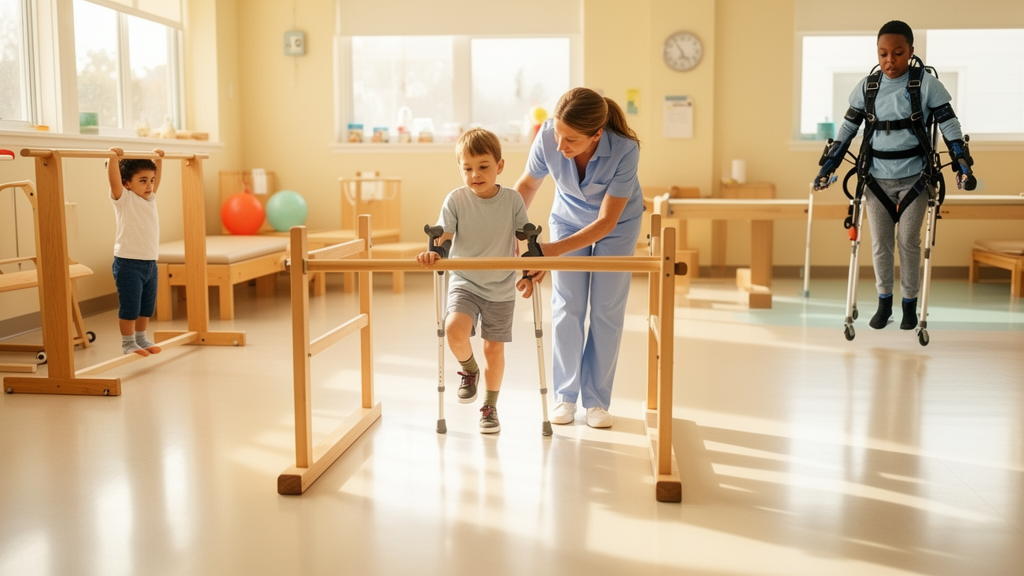
Children with spastic cerebral palsy who completed a two-year multidisciplinary rehabilitation programme had higher average functional-independence scores at follow-up, according to a prospective observational study of 100 programme completers. Mean scores on the Functional Independence Measure for Children (WeeFIM) increased in all 12 groups defined by motor subtype and age, but the study cannot attribute those changes to rehabilitation alone. The participants were 5 to 12 years old at enrollment and were receiving care at a single rehabilitation center.

The cohort included 36 children with spastic hemiplegia, 31 with spastic diplegia and 33 with spastic tetraplegia. Researchers assessed WeeFIM scores before the programme and again after 24 months, while describing subgroup means and standard deviations. Rehabilitation comprised 40 courses over the two-year period, with 384 reported therapy procedures and sessions lasting 45 to 60 minutes.

This means the analysis addresses changes during the overall programme rather than isolating the effect of any one type of care. For children with hemiplegia, the weighted mean WeeFIM total score rose from 79.2 at baseline to 108.5 at 24 months, corresponding to an increase of 29.3 points. The largest average change among the three motor subtypes occurred in the diplegia group: the weighted mean increased from 68.2 to 100.5, a change of 32.3 points.

Children with tetraplegia had lower scores both before and after the programme. Their weighted mean increased from 18.1 to 29.3, representing an average change of 11.2 points. Thus, although follow-up scores were higher in all three groups, the magnitude of the descriptive increase differed by motor subtype.

Age-specific results also varied within those categories. Mean score changes ranged from 25.2 to 31.9 points among children with hemiplegia and from 29.0 to 35.3 points among those with diplegia. For children with tetraplegia, changes ranged from 6.9 to 16.0 points and were larger at ages 5 to 8 than at ages 9 to 12.

Younger children had higher follow-up means in the hemiplegia and diplegia groups, but the study did not find a consistent pattern in which younger participants achieved larger changes from baseline. A higher final score and a larger improvement are therefore distinct findings in this cohort, particularly where initial functional levels differed. The study has important limitations.

It included no control group, selected children who completed the programme and may have been influenced by unmeasured confounding. Individual clinical meaningfulness could not be determined, and the results did not establish domain-specific outcomes. Authors concluded that mean functional independence increased during two years of multidisciplinary rehabilitation among programme completers, with descriptive differences by motor subtype and baseline age.

They call for controlled studies that incorporate severity and domain-level outcomes to clarify the relationship between rehabilitation and functional change without treating these observational results as proof of a treatment effect.

Subject of Research: Two-year functional-independence outcomes after multidisciplinary rehabilitation in children with spastic cerebral palsy

Article Title: Functional independence in pediatric hemiplegia, spastic diplegia, and spastic tetraplegia: two-year outcomes following comprehensive rehabilitation – a prospective observational study

Article References: Sopromadze, M., Natroshvili, I., & Gvajaia, N. (2026). Functional independence in pediatric hemiplegia, spastic diplegia, and spastic tetraplegia: two-year outcomes following comprehensive rehabilitation – a prospective observational study. BMC Pediatrics. https://doi.org/10.1186/s12887-026-07895-z

Image Credits: AI Generated

DOI: 10.1186/s12887-026-07895-z

Keywords: cerebral palsy, pediatric rehabilitation, functional independence, WeeFIM, spastic hemiplegia, spastic diplegia, spastic tetraplegia, children, observational study, longitudinal outcomes, Functional, independence

Cite Scienmag News

Harold Sullivan. (October 22, 2026). Research report: Functional independence in pediatric hemiplegia, spastic diplegia, and spastic tetraplegia: two-year outcomes following comprehensive rehabilitation – a prospective observational study. Scienmag. https://scienmag.com/research-report-functional-independence-in-pediatric-hemiplegia-spastic-diplegia-and-spastic-tetraplegia-two-year-outcomes-following-comprehensive-rehabilitation-a-prospective-observatio/


Harold Sullivan. "Research report: Functional independence in pediatric hemiplegia, spastic diplegia, and spastic tetraplegia: two-year outcomes following comprehensive rehabilitation – a prospective observational study." Scienmag, 22 October 2026, https://scienmag.com/research-report-functional-independence-in-pediatric-hemiplegia-spastic-diplegia-and-spastic-tetraplegia-two-year-outcomes-following-comprehensive-rehabilitation-a-prospective-observatio/. Accessed 22 October 2026.

Harold Sullivan. "Research report: Functional independence in pediatric hemiplegia, spastic diplegia, and spastic tetraplegia: two-year outcomes following comprehensive rehabilitation – a prospective observational study." Scienmag. October 22, 2026. https://scienmag.com/research-report-functional-independence-in-pediatric-hemiplegia-spastic-diplegia-and-spastic-tetraplegia-two-year-outcomes-following-comprehensive-rehabilitation-a-prospective-observatio/

Tags: cerebral palsyChildrencomprehensive rehabilitation for spastic tetraplegiafunctionalfunctional independencefunctional independence in children with spastic cerebral palsyimpact of multidisciplinary care on functional independenceindependencelong-term functional gains in pediatric hemiplegialongitudinal outcomesmotor subtype-specific rehabilitation outcomesmultidisciplinary therapy for spastic diplegiaobservational studyobservational study on CP rehabilitationpediatric cerebral palsy rehabilitation outcomespediatric rehabilitationrehabilitation program metrics and assessmentsspastic diplegiaspastic hemiplegiaspastic tetraplegiatherapy session analysis in pediatric neurorehabilitationtwo-year rehabilitation program effectsWeeFIMWeeFIM score improvements in pediatric CP
Share26Tweet16
Previous Post

Trauma critical care shifts toward a multisystem, physiology-led approach

Next Post

Designed proteins enable enantioselective artificial photocatalysts

Related Posts

Designed proteins enable enantioselective artificial photocatalysts
Medicine

Designed proteins enable enantioselective artificial photocatalysts

October 22, 2026
Trauma critical care shifts toward a multisystem, physiology-led approach
Medicine

Trauma critical care shifts toward a multisystem, physiology-led approach

October 22, 2026
New Zealand asthma guidelines shifted reliever prescribing toward anti-inflammatory therapy
Medicine

New Zealand asthma guidelines shifted reliever prescribing toward anti-inflammatory therapy

October 22, 2026
Continuous Performance Tests Reveal ADHD Differences, Not Standalone Diagnoses
Medicine

Continuous Performance Tests Reveal ADHD Differences, Not Standalone Diagnoses

October 22, 2026
MRI Activity Drives Early High-Efficacy Treatment Choices in Multiple Sclerosis
Medicine

MRI Activity Drives Early High-Efficacy Treatment Choices in Multiple Sclerosis

October 22, 2026
Recent metoprolol use linked to modestly elevated acute kidney injury risk
Medicine

Recent metoprolol use linked to modestly elevated acute kidney injury risk

October 22, 2026
Next Post
Designed proteins enable enantioselective artificial photocatalysts

Designed proteins enable enantioselective artificial photocatalysts

  • Mothers who receive childcare support from maternal grandparents show more optimized

    Mothers who receive childcare support from maternal grandparents show more parental warmth, finds NTU Singapore study

    27656 shares
    Share 11059 Tweet 6912
  • University of Seville Breaks 120-Year-Old Mystery, Revises a Key Einstein Concept

    1061 shares
    Share 424 Tweet 265
  • Bee body mass, pathogens and local climate influence heat tolerance

    682 shares
    Share 273 Tweet 171
  • Researchers record first-ever images and data of a shark experiencing a boat strike

    546 shares
    Share 218 Tweet 137
  • Groundbreaking Clinical Trial Reveals Lubiprostone Enhances Kidney Function

    531 shares
    Share 212 Tweet 133
Science

Embark on a thrilling journey of discovery with Scienmag.com—your ultimate source for cutting-edge breakthroughs. Immerse yourself in a world where curiosity knows no limits and tomorrow’s possibilities become today’s reality!

RECENT NEWS

  • Wari-La Field Survey Records 82 Vascular Plant Species
  • Designed proteins enable enantioselective artificial photocatalysts
  • Research report: Functional independence in pediatric hemiplegia, spastic diplegia, and spastic tetraplegia: two-year outcomes following comprehensive rehabilitation – a prospective observational study
  • Trauma critical care shifts toward a multisystem, physiology-led approach

Categories

  • Agriculture
  • Anthropology
  • Archaeology
  • Athmospheric
  • Biology
  • Biotechnology
  • Blog
  • Bussines
  • Cancer
  • Chemistry
  • Climate
  • Earth Science
  • Editorial Policy
  • Marine
  • Mathematics
  • Medicine
  • Pediatry
  • Policy
  • Psychology & Psychiatry
  • Science Education
  • Science News
  • Social Science
  • Space
  • Technology and Engineering

Subscribe to Blog via Email

Enter your email address to subscribe to this blog and receive notifications of new posts by email.

Join 5,151 other subscribers

© 2025 Scienmag - Science Magazine

Welcome Back!

Login to your account below

Forgotten Password?

Retrieve your password

Please enter your username or email address to reset your password.

Log In
No Result
View All Result
  • HOME
  • SCIENCE NEWS
  • CONTACT US

© 2025 Scienmag - Science Magazine

Discover more from Science

Subscribe now to keep reading and get access to the full archive.

Continue reading