


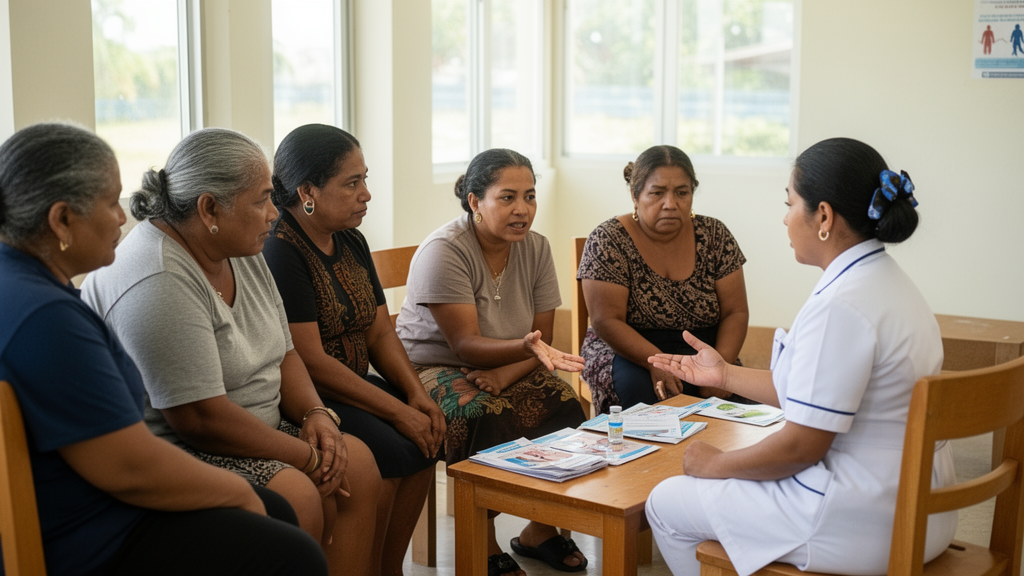
A qualitative pilot study of 19 Tongan adults in Utah found that most participants were unaware of the human papillomavirus vaccine, while attitudes toward vaccination varied by age, social network and access to culturally relevant health information. Fifteen of the 19 participants, or 78.9%, lacked awareness of the HPV vaccine and its role in preventing cervical cancer, according to the study published in BMC Public Health.
The findings come amid documented inequities in routine vaccination among Native Hawaiian and Pacific Islander communities in the United States, a group that also faces a higher risk of death from HPV-related cervical cancer than other populations. The researchers said broad category labels can obscure cultural, social and linguistic differences within those communities, including the experiences of Tongans.
The researchers conducted three focus group discussions in February and March 2024 with Tongan adults aged 18 and older who lived in Utah. Groups were conducted in English and Tongan. The study used the Socioecological Model and Social Cognitive Theory to examine behavioral, social and cultural influences on general vaccine attitudes and HPV literacy, experience and access.
Participants showed a generational pattern in where they preferred to obtain vaccine information. Those younger than 55 relied mainly on social media, whereas participants aged 56 to 65 and older expressed greater confidence in healthcare providers. The older group emphasized the importance of trust between patients and physicians, identifying that relationship as central to confidence in vaccination decisions.
Within families and households, participants described conformity with traditional gender expectations as a major influence. Tongan women were viewed as the primary caregivers and health decision-makers, with much of the responsibility for household health decisions, including vaccination, assigned to them. The study therefore identified gender and family roles as important parts of the environment in which vaccine acceptance and refusal were considered.
Vaccine hesitancy within close social circles was strongly influenced by misinformation, according to the participants. Their accounts also highlighted the strong reliance on traditional medicine and religious leaders in Tongan communities. At the same time, participants said discussions of sexual health and sexually transmitted diseases are constrained by social stigma. The findings indicate that misinformation and culturally influential sources operate alongside limited discussion of subjects directly relevant to HPV vaccination.
At the societal level, participants identified several structural barriers: inadequate insurance coverage for preventive and therapeutic services, limited access to health information in culturally and linguistically appropriate forms, and under-representation of Tongans among healthcare providers and staff. These gaps were described not only as problems of individual knowledge but also as conditions affecting whether useful information and services could be reached and trusted.
As a qualitative pilot study, the research was designed to explore experiences and perceptions rather than estimate vaccination rates or test an intervention. Its sample was small and geographically limited to Tongan adults in Utah, and the findings arose from three facilitated discussions conducted in two languages. The authors said the results underscore the need for culturally specific and culturally humble vaccine messaging and strategies at multiple social-ecological levels, particularly to address misinformation and barriers affecting HPV vaccine awareness and acceptance.
Subject of Research: Tongan adults’ vaccine attitudes, HPV awareness and access barriers in Utah
Article Title: Navigating vaccine beliefs: a qualitative pilot study of general vaccine attitudes and HPV awareness among Tongan adults
Article References: Obray, A. M., Skyles, T. J., Poole, B. D., Bashford, T. M., Hoelzer, H., Davis, S. C., Petersen, L. G., Fox, D., Sloan, D. S., Vergara, M. A. C., & Novilla, M. L. B. (2026). Navigating vaccine beliefs: a qualitative pilot study of general vaccine attitudes and HPV awareness among Tongan adults. BMC Public Health. https://doi.org/10.1186/s12889-026-29627-9
Image Credits: AI Generated
DOI: 10.1186/s12889-026-29627-9
Keywords: Tongan adults, HPV vaccine, vaccine hesitancy, cervical cancer, health disparities, Utah, cultural competence, health misinformation, focus groups, public health, Navigating, vaccine
Cite Scienmag News
Kristina Jarvis. (October 22, 2026). Tongan adults highlight vaccine trust and HPV awareness gaps. Scienmag. https://scienmag.com/tongan-adults-highlight-vaccine-trust-and-hpv-awareness-gaps/
Kristina Jarvis. "Tongan adults highlight vaccine trust and HPV awareness gaps." Scienmag, 22 October 2026, https://scienmag.com/tongan-adults-highlight-vaccine-trust-and-hpv-awareness-gaps/. Accessed 22 October 2026.
Kristina Jarvis. "Tongan adults highlight vaccine trust and HPV awareness gaps." Scienmag. October 22, 2026. https://scienmag.com/tongan-adults-highlight-vaccine-trust-and-hpv-awareness-gaps/


