

Wednesday, October 21, 2026
Science
No Result
View All Result
  • Login
  • HOME
  • SCIENCE NEWS
  • CONTACT US
  • HOME
  • SCIENCE NEWS
  • CONTACT US
No Result
View All Result
Scienmag
No Result
View All Result
Home Science News Earth Science

Ore Fingerprinting Reveals 700-Kilometre Bronze Age Copper Network

October 21, 2026
in Earth Science
Violet Maxwell
By Violet Maxwell Scienmag Editorial Profile - Natural Hazards
Reading Time: 2 mins read
0
Ore Fingerprinting Reveals 700-Kilometre Bronze Age Copper Network

Ore Fingerprinting Reveals 700-Kilometre Bronze Age Copper Network

65
SHARES
587
VIEWS
Share on FacebookShare on Twitter
ADVERTISEMENT

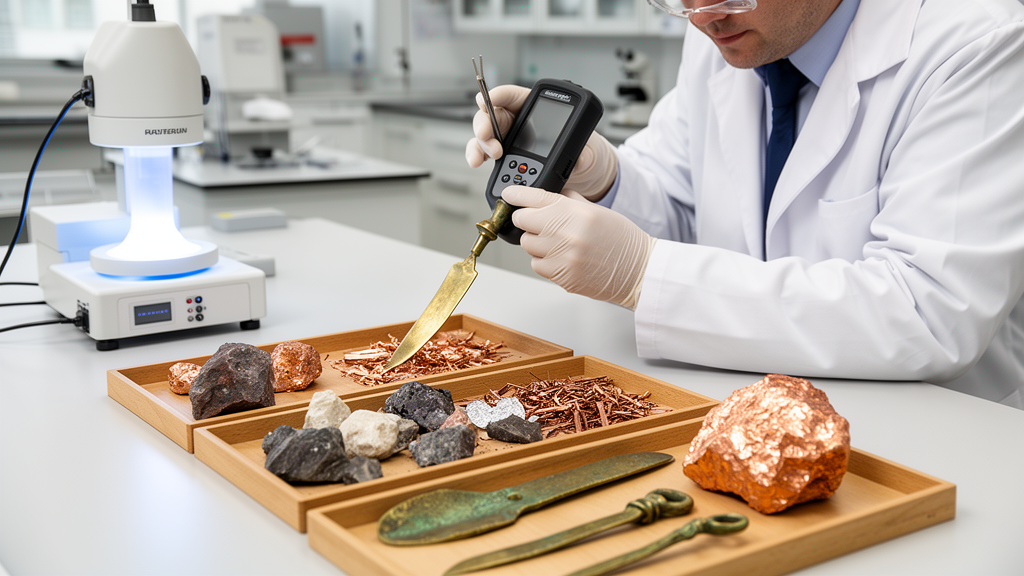
Archaeochemical evidence indicates that Shang capitals near Zhengzhou obtained copper from the Jiurui district in the Middle Yangtze Valley, approximately 700 kilometres to the south. The study identifies one of the earliest long-distance copper-supply networks in East Asia and provides evidence that metal-resource exchange linked the Yangtze and Yellow River basins during the formative period of Chinese civilisation.

The evidence comes from copper-ore assemblages associated with two Upper Erligang-period bronze-casting sites dated to about 1400 BC: Chuangxinjie School North Campus and Xiaoshuangqiao. Both sites were associated with the Shang capitals at Zhengzhou. By comparing their ores with geological material from the Middle Yangtze Valley, the researchers traced the copper supplied to these casting locations to the Jiurui district.

Determining the origins of Bronze Age Chinese copper is difficult because Shang bronzes were produced as ternary copper–tin–lead alloys. Alloying masks the geochemical signature of the original ore, making finished bronze objects less reliable for straightforward provenance comparisons. The researchers instead analysed copper-ore assemblages directly, applying a multi-proxy fingerprinting method designed to identify geological links that could otherwise remain obscured by alloy composition.

The approach combined uranium–lead dating of garnet with the chemical compositions of garnet and chalcopyrite and the lead-isotope signatures of the ores. The garnet dates established the ages of individual ore assemblages, while the compositional and isotopic measurements supplied complementary evidence for matching deposits. Together, these proxies supported the conclusion that copper used at the two Zhengzhou casting sites came from Jiurui, roughly 700 kilometres away.

This is a provenance study of a defined archaeological context, not a measurement of ancient trade volume. It documents a geographically extensive supply connection between ore sources in the Middle Yangtze Valley and Shang casting sites associated with Zhengzhou in the Yellow River region. The result supports metal-resource exchange between the two basins during the Shang state’s formative period. The authors also present their multi-proxy ore-fingerprinting strategy as a potentially transferable framework for resolving copper-provenance questions in other archaeological contexts, although the reported source assignment is based on the investigated sites, period and combined mineralogical and geochemical evidence.

Subject of Research: Provenance of copper used at two Upper Erligang-period Shang casting sites near Zhengzhou

Article Title: A 700-kilometre copper supply network in Bronze Age China revealed by multi-proxy ore fingerprinting

Article References: Sun, Z., Li, J., Yang, S., Li, S., Chen, J., Li, D., Zhong, R., & Liu, S. (2026). A 700-kilometre copper supply network in Bronze Age China revealed by multi-proxy ore fingerprinting. Nature Communications. https://doi.org/10.1038/s41467-026-78864-4

Image Credits: AI Generated

DOI: 10.1038/s41467-026-78864-4

Keywords: Bronze Age China, Shang dynasty, copper provenance, ore fingerprinting, archaeometry, geochemistry, Zhengzhou, Jiurui district, Middle Yangtze Valley, metal exchange, kilometre, copper

Cite Scienmag News

Violet Maxwell. (October 21, 2026). Ore Fingerprinting Reveals 700-Kilometre Bronze Age Copper Network. Scienmag. https://scienmag.com/ore-fingerprinting-reveals-700-kilometre-bronze-age-copper-network/

Violet Maxwell. "Ore Fingerprinting Reveals 700-Kilometre Bronze Age Copper Network." Scienmag, 21 October 2026, https://scienmag.com/ore-fingerprinting-reveals-700-kilometre-bronze-age-copper-network/. Accessed 21 October 2026.

Violet Maxwell. "Ore Fingerprinting Reveals 700-Kilometre Bronze Age Copper Network." Scienmag. October 21, 2026. https://scienmag.com/ore-fingerprinting-reveals-700-kilometre-bronze-age-copper-network/


Tags: archaeochemical copper fingerprintingarchaeometryBronze Age ChinaBronze Age copper supply networks in East Asiacoppercopper alloy composition masking ore signaturescopper provenanceearly Chinese metallurgical resource networksgeochemical analysis of copper oresgeochemistryJiurui districtkilometrelong-distance copper trade in ancient Chinametal exchangeMiddle Yangtze ValleyMiddle Yangtze Valley copper sourcesmulti-proxy fingerprinting methods for metal provenanceore fingerprintingorigin tracing of Bronze Age Chinese copperShang civilization bronze productionShang dynastyuranium-lead dating of garnet in archaeologyYellow River basin resource exchangeZhengzhou
Share26Tweet16
Previous Post

Research report: The regulatory role of DzERF94 in carotenoid biosynthesis during ripening in durian (Durio zibethinus) pulp

Next Post

Smart Healthcare’s Next Test: Can Vision-Language Models Reason Safely?

Related Posts

Deep learning pipeline detects and maps satellite oil spills
Earth Science

Deep learning pipeline detects and maps satellite oil spills

October 21, 2026
Warming since the Last Glacial Maximum enlarged PDO-driven drought areas
Earth Science

Warming since the Last Glacial Maximum enlarged PDO-driven drought areas

October 21, 2026
Cultural sustainability crisis of the Taikat people of Papua
Earth Science

Cultural sustainability crisis of the Taikat people of Papua

October 21, 2026
Record Baltic sea-level depression exposed unusually strong atmospheric forcing
Earth Science

Record Baltic sea-level depression exposed unusually strong atmospheric forcing

October 21, 2026
Mount Halla study links free-tropospheric bromine chemistry to mercury deposition
Earth Science

Mount Halla study links free-tropospheric bromine chemistry to mercury deposition

October 21, 2026
GSAT improves synthetic UAE temperature generation beyond Gaussian benchmarks
Earth Science

GSAT improves synthetic UAE temperature generation beyond Gaussian benchmarks

October 21, 2026
Next Post
Smart Healthcare’s Next Test: Can Vision-Language Models Reason Safely?

Smart Healthcare’s Next Test: Can Vision-Language Models Reason Safely?

  • Mothers who receive childcare support from maternal grandparents show more optimized

    Mothers who receive childcare support from maternal grandparents show more parental warmth, finds NTU Singapore study

    27656 shares
    Share 11059 Tweet 6912
  • University of Seville Breaks 120-Year-Old Mystery, Revises a Key Einstein Concept

    1061 shares
    Share 424 Tweet 265
  • Bee body mass, pathogens and local climate influence heat tolerance

    682 shares
    Share 273 Tweet 171
  • Researchers record first-ever images and data of a shark experiencing a boat strike

    546 shares
    Share 218 Tweet 137
  • Groundbreaking Clinical Trial Reveals Lubiprostone Enhances Kidney Function

    531 shares
    Share 212 Tweet 133
Science

Embark on a thrilling journey of discovery with Scienmag.com—your ultimate source for cutting-edge breakthroughs. Immerse yourself in a world where curiosity knows no limits and tomorrow’s possibilities become today’s reality!

RECENT NEWS

  • Healthcare Providers Use Translation Tools Despite Governance Gaps
  • Smart Healthcare’s Next Test: Can Vision-Language Models Reason Safely?
  • Ore Fingerprinting Reveals 700-Kilometre Bronze Age Copper Network
  • Research report: The regulatory role of DzERF94 in carotenoid biosynthesis during ripening in durian (Durio zibethinus) pulp

Categories

  • Agriculture
  • Anthropology
  • Archaeology
  • Athmospheric
  • Biology
  • Biotechnology
  • Blog
  • Bussines
  • Cancer
  • Chemistry
  • Climate
  • Earth Science
  • Editorial Policy
  • Marine
  • Mathematics
  • Medicine
  • Pediatry
  • Policy
  • Psychology & Psychiatry
  • Science Education
  • Science News
  • Social Science
  • Space
  • Technology and Engineering

Subscribe to Blog via Email

Enter your email address to subscribe to this blog and receive notifications of new posts by email.

Join 5,151 other subscribers

© 2025 Scienmag - Science Magazine

Welcome Back!

Login to your account below

Forgotten Password?

Retrieve your password

Please enter your username or email address to reset your password.

Log In
No Result
View All Result
  • HOME
  • SCIENCE NEWS
  • CONTACT US

© 2025 Scienmag - Science Magazine

Discover more from Science

Subscribe now to keep reading and get access to the full archive.

Continue reading