


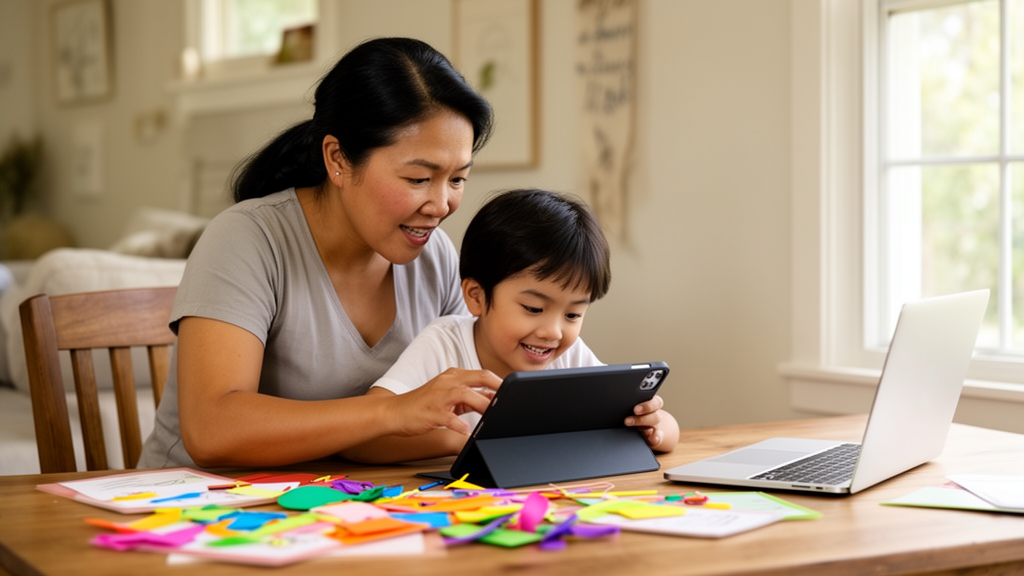
A planned randomized controlled trial will test whether a culturally adapted, remotely delivered parenting program can improve parenting practices and reduce anxiety and depression symptoms among Filipino American children aged 8 to 12. Researchers will enroll 250 parent-child dyads in a Type 1 hybrid individually randomized group treatment trial, comparing immediate access to the Incredible Years Parenting Program with delayed treatment. The protocol describes the study design and planned analyses; it does not report evidence that the intervention is effective.
The trial is intended to address a gap in two areas at once: the limited implementation of evidence-based parenting interventions in Filipino communities and the shortage of research on delivering such programs online. The study background reports that Filipino youth in the United States have higher rates of depression, suicidal ideation, anxiety and substance use than other Asian subgroups and non-Hispanic whites, while also being less likely to seek help or receive preventive care. The authors frame the project as a response to these disparities, although the protocol itself cannot establish whether the new program will alter those outcomes. Its immediate focus is on positive parenting practices and child-reported internalizing symptoms, with the longer-term aim of preventing the onset or escalation of behavioral health problems.
Participants will be individually assigned to either a 12-week intervention or a usual-care control group that will receive the Incredible Years program after three months. Each intervention session is scheduled to last two hours and will be delivered remotely once a week. The culturally adapted program is based on the Incredible Years Parenting Program, an established approach designed to promote social-emotional learning and positive behavioral outcomes. By offering the control group delayed access, the design preserves access to the intervention while allowing the researchers to compare changes observed before the control group begins the program with those seen in the immediate-treatment group.
The primary outcomes are parent-reported positive verbal discipline, measured with the Parent Practices Interview; child-reported depression, assessed through the Child Depression Inventory; and child-reported anxiety symptoms, measured with the Screen for Child Anxiety Related Disorders. Secondary measures will include parent-reported physical punishment, child internalizing behavior assessed with the Child Behavior Checklist, parent-reported child depression and anxiety, and youth resilience measured with the Child and Youth Resilience Measure. Both parents and children will report resilience. Assessments will occur at baseline and at three- and six-month follow-ups, making six months the final observation point described in the protocol.
The project is registered as version 1.0 of the Filipino Family Health Initiative in ClinicalTrials.gov under identifier NCT06569303, with registration dated August 22, 2024. The protocol was accepted for publication in BMC Psychology as an open-access study protocol and is presented as an early version of the peer-reviewed article. Researchers will examine both the intervention’s effectiveness and its implementation, a feature of the Type 1 hybrid design. That approach integrates effectiveness and implementation questions, but no comparative results are available in the supplied protocol. Consequently, the study should be understood as a test of a remotely delivered, culturally adapted parenting intervention for an at-risk population, not as evidence that the program has already prevented depression, anxiety or adverse parenting practices.
Subject of Research: Randomized trial protocol for a culturally adapted remote parenting intervention among Filipino American families
Article Title: Virtual parenting intervention to promote positive parenting and prevent child anxiety and depression symptoms among filipino americanfamilies: protocol for a randomized controlled trial
Article References: Javier, J. R., Mesina, D. M., Osumo, J. R., Aligaen, K. A., Cunanan, P. L., Adili, A., Kipke, M. D., Palinkas, L. A., & Mack, W. J. (2026). Virtual parenting intervention to promote positive parenting and prevent child anxiety and depression symptoms among filipino americanfamilies: protocol for a randomized controlled trial. BMC Psychology. https://doi.org/10.1186/s40359-026-05534-x
Image Credits: AI Generated
DOI: 10.1186/s40359-026-05534-x
Keywords: Filipino American families, parenting intervention, child anxiety, child depression, Incredible Years, telehealth, randomized controlled trial, positive parenting, youth resilience, Virtual, parenting, intervention
Cite Scienmag News
Glenn Wilkins. (October 21, 2026). Trial to test remote parenting program for Filipino American children. Scienmag. https://scienmag.com/trial-to-test-remote-parenting-program-for-filipino-american-children/
Glenn Wilkins. "Trial to test remote parenting program for Filipino American children." Scienmag, 21 October 2026, https://scienmag.com/trial-to-test-remote-parenting-program-for-filipino-american-children/. Accessed 21 October 2026.
Glenn Wilkins. "Trial to test remote parenting program for Filipino American children." Scienmag. October 21, 2026. https://scienmag.com/trial-to-test-remote-parenting-program-for-filipino-american-children/


