


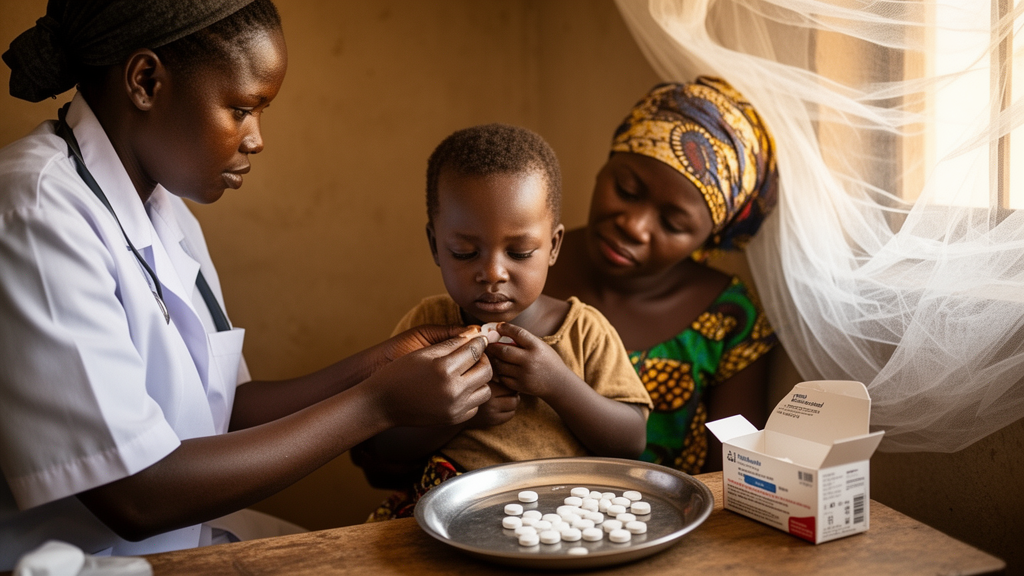
A pooled analysis of 934 children in Uganda, Mozambique and Burkina Faso found that exposure to desethylamodiaquine, the active metabolite of amodiaquine, was the primary statistical determinant of malaria infection by day 28 among children receiving sulfadoxine-pyrimethamine plus amodiaquine for seasonal malaria chemoprevention. Children with low day-28 desethylamodiaquine exposure had nearly twice the risk of infection as those with higher exposure. The study combined individual-level measurements of drug concentrations with malaria infection data from three clinical studies: NCT05323721 in Uganda, NCT05186363 in Mozambique and NCT05478954 in Burkina Faso.
The primary outcome was malaria infection by day 28. The secondary outcome was the day-28 quantitative polymerase chain reaction cycle-threshold value. Researchers used natural variation in drug exposure to estimate associations between concentrations of the regimen’s components and the study outcomes.
Each standard-deviation increase in log desethylamodiaquine concentration was associated with an odds ratio of 0.55 for malaria infection, with a 95% confidence interval of 0.44 to 0.68. The confidence interval did not include 1, indicating that the estimated association was statistically distinguishable from no association within the analysis. The analysis also classified children by whether their day-28 desethylamodiaquine concentration was below 24 nanograms per millilitre.
Children below that threshold had a relative risk of malaria infection of 1.9, with a 95% confidence interval of 1.5 to 2.4, compared with children whose exposure was not below the threshold. This result describes an exposure–infection association in the pooled study population; it does not establish that a particular concentration causes the difference in risk. In contrast, sulfadoxine and pyrimethamine showed only weak associations with malaria infection.
These weak associations were consistent across the three countries despite varying resistance haplotypes in the parasite populations. The finding means that the modeled relationship between exposure to those two drugs and infection was limited and broadly similar between the national study populations; it does not mean that either drug has been shown to lack preventive value. The overall pattern supports the authors’ conclusion that the parasitological efficacy of sulfadoxine-pyrimethamine plus amodiaquine appears to be driven primarily by amodiaquine.
Desethylamodiaquine provided the strongest exposure-based signal in the analysis, while concentrations of sulfadoxine and pyrimethamine had comparatively weak relationships with the primary outcome. These results concern parasitological efficacy, measured through infection outcomes, rather than every possible dimension of protection. The study design is important for interpreting the findings.
This was a pooled pharmacokinetic–efficacy analysis using observed differences in exposure; it was not a randomized comparison of sulfadoxine-pyrimethamine plus amodiaquine against an amodiaquine-only regimen or a full-dose sulfadoxine-pyrimethamine regimen. The reported estimates therefore identify concentration–outcome associations and support the interpretation that amodiaquine exposure was the main contributor to the observed effect, rather than directly quantifying the performance of alternative treatment regimens. Based on the results, the authors state that the role of single-dose sulfadoxine-pyrimethamine in seasonal malaria chemoprevention merits further evaluation.
The analysis does not support concluding that sulfadoxine-pyrimethamine contributes nothing to the combination, nor does it determine whether the observed relationships extend to other populations, dosing schedules or outcomes beyond malaria infection by day 28. The evidence instead identifies desethylamodiaquine exposure as the principal correlate of parasitological efficacy in the 934 children studied.
Subject of Research: Drug-exposure analysis of seasonal malaria chemoprevention in African children
Article Title: Parasitological efficacy of sulfadoxine-pyrimethamine and amodiaquine for seasonal malaria chemoprevention in Africa
Article References: Sararat, C., Sondo, P., Bonnington, C., Achan, J., Nnaji, C. A., Burkhard, A. Y., Tougri, G., Traore, A., Yaro, A. P. K., Nuwa, A., Kajubi, R., Suwannasin, K., Proux, S., Koesukwiwat, U., Enosse, S., Pulido Tarquino, I. A., Leopold, S. J., Dondorp, A. M., Tinto, H., … White, N. J. (2026). Parasitological efficacy of sulfadoxine-pyrimethamine and amodiaquine for seasonal malaria chemoprevention in Africa. Nature Communications. https://doi.org/10.1038/s41467-026-78189-2
Image Credits: AI Generated
DOI: 10.1038/s41467-026-78189-2
Keywords: seasonal malaria chemoprevention, amodiaquine, desethylamodiaquine, sulfadoxine-pyrimethamine, malaria infection, drug exposure, Uganda, Mozambique, Burkina Faso, children, Parasitological, efficacy
Cite Scienmag News
Ophelia Keating. (October 21, 2026). Research report: Parasitological efficacy of sulfadoxine-pyrimethamine and amodiaquine for seasonal malaria chemoprevention in Africa. Scienmag. https://scienmag.com/research-report-parasitological-efficacy-of-sulfadoxine-pyrimethamine-and-amodiaquine-for-seasonal-malaria-chemoprevention-in-africa/
Ophelia Keating. "Research report: Parasitological efficacy of sulfadoxine-pyrimethamine and amodiaquine for seasonal malaria chemoprevention in Africa." Scienmag, 21 October 2026, https://scienmag.com/research-report-parasitological-efficacy-of-sulfadoxine-pyrimethamine-and-amodiaquine-for-seasonal-malaria-chemoprevention-in-africa/. Accessed 21 October 2026.
Ophelia Keating. "Research report: Parasitological efficacy of sulfadoxine-pyrimethamine and amodiaquine for seasonal malaria chemoprevention in Africa." Scienmag. October 21, 2026. https://scienmag.com/research-report-parasitological-efficacy-of-sulfadoxine-pyrimethamine-and-amodiaquine-for-seasonal-malaria-chemoprevention-in-africa/


