


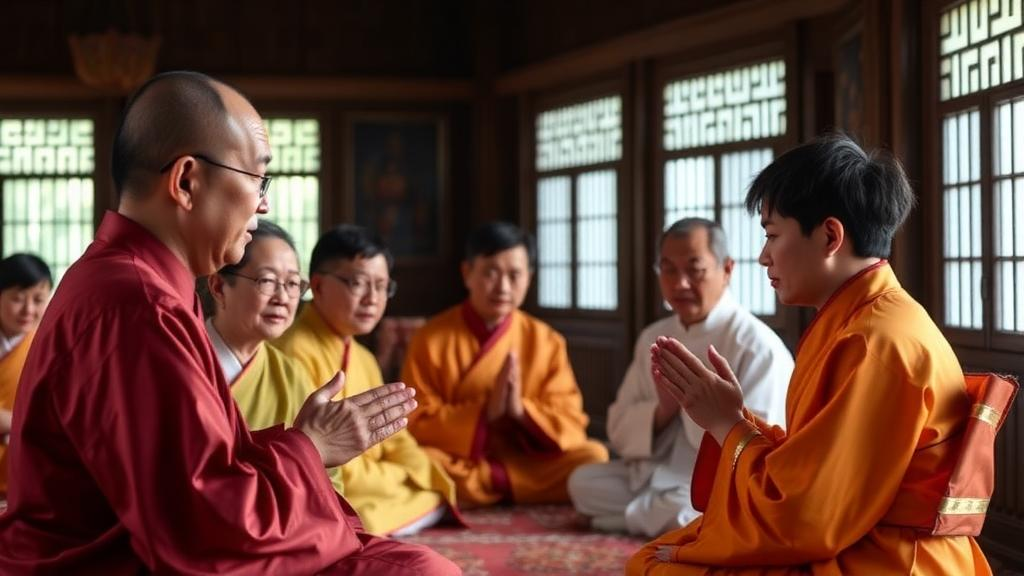
A cross-sectional survey of 299 clinically stable outpatients with schizophrenia in Wuhan, China, found that 57.2% had used a religious, spiritual or folk healing practice to cope with or alleviate their illness. Among the 171 participants who reported such use, 69.6% considered the practice helpful. Zen meditation was the most common practice, reported by 44.8% of the full sample, while scripture chanting and religious rituals followed at 24.1%. These were patient-reported experiences, however, and the study did not test whether the practices reduced psychotic symptoms or produced other clinical benefits.
Researchers at Wuhan Mental Health Center consecutively recruited adults aged 18 to 60 who had an International Classification of Diseases, 10th Revision diagnosis of schizophrenia and were considered clinically stable by their treating psychiatrists. Recruitment took place from March to May 2024 at the outpatient department of the hospital, which serves Wuhan and surrounding cities in south-central China. Patients were excluded if severe physical illness, marked cognitive or communication difficulties or acute psychotic symptoms prevented them from completing the questionnaire. The single-center sample therefore represents a selected group of non-geriatric outpatients rather than the full spectrum of people with schizophrenia.
Formal religious affiliation was reported by 36.5% of participants, with Buddhism the most common affiliation at 20.1%. Christianity accounted for 6.0% and folk religion for 4.7%; smaller groups identified with Catholicism, Islam, Daoism or other affiliations. Practice use did not closely follow formal membership, however. Among patients with a religious affiliation, 66.1% had used at least one religious, spiritual or folk healing practice, compared with 52.1% of those without such an affiliation, a statistically significant difference. Even among participants reporting no formal affiliation, Zen meditation was used by 38.9% and scripture chanting or religious rituals by 22.1%, illustrating the overlap between formal religion and culturally embedded spiritual practice in China.
The four practices assessed were Zen meditation, scripture chanting and religious rituals, religious prayer, and shamanic dance or exorcism rituals. Their prevalence differed according to affiliation: 65.0% of participants affiliated with Buddhism reported Zen meditation, while religious prayer was reported by 44.4% of those affiliated with Christianity. The authors noted that Chinese spiritual life can combine Buddhist, Daoist, Confucian, ancestral and folk traditions rather than fitting neatly into exclusive institutional identities. The questionnaire therefore measured both declared affiliation and specific beliefs and behaviors, including belief in reincarnation and karma, supernatural interpretations of illness, and whether family members held supernatural beliefs about illness.
Helpfulness ratings varied by practice. Among the 134 participants who used Zen meditation, 77.6% regarded it as helpful. The corresponding proportions were 61.1% for scripture chanting and religious rituals, 59.5% for religious prayer and 57.7% for shamanic dance or exorcism practices. These percentages describe subjective appraisals among each practice’s users, not changes in symptoms or evidence that any practice is clinically effective. The survey did not include standardized clinician-rated symptom measures such as the Positive and Negative Syndrome Scale, and it did not collect detailed antipsychotic use, medication adherence or psychotherapy information. A patient could therefore perceive benefit even if the underlying psychotic symptoms persisted.
Exploratory classification tree analysis identified belief in reincarnation and karma as the first factor separating patients by practice use. Among the 120 participants who endorsed these beliefs, 76.7% reported using a religious, spiritual or folk practice, compared with 44.1% of the 179 who did not, a difference with P<0.001. Further subdivisions involved education and age among those who endorsed reincarnation and karma. Among participants without those beliefs, the analysis instead highlighted non-conventional health beliefs, family members’ supernatural beliefs and occupation. The structure indicates combinations of factors rather than independent causes, and the researchers did not directly measure distress, stigma, motivations for using the practices or pathways into psychiatric care.
Within the subgroup of practice users, religious affiliation was the first split associated with perceived helpfulness. Among 53 patients affiliated with Buddhism, Daoism, Catholicism or Islam, 92.5% rated their practices helpful, compared with 59.3% among the other 118 users, a difference with P<0.001. Within that second group, family members’ supernatural beliefs were again associated with the rating: 70.8% of users whose relatives held such beliefs considered the practices helpful, versus 51.4% of those whose relatives did not. The authors interpreted the family findings cautiously, noting that relatives may reinforce particular ways of understanding illness, but the cross-sectional survey cannot establish that family beliefs cause practice use or perceived benefit.
Methodological constraints limit how broadly the findings can be applied. The practice checklist was developed for the study from relevant literature and preliminary interviews with 10 patients, while the exploratory four-item non-conventional health-belief scale had acceptable internal consistency in this sample, with Cronbach’s alpha of 0.75, but had not undergone formal factor or validity testing. Classification tree analysis was chosen as an exploratory way to detect potentially nonlinear subgroup patterns, not to build a validated predictive model. Its stability and generalizability remain untested in independent samples. The cross-sectional design also prevents causal conclusions, and recruitment from one tertiary hospital limits representation of inpatients, people with acute psychosis, older adults, untreated patients, rural communities and regions with different religious traditions.
Even with those limitations, the survey documents an important part of how patients in this Wuhan outpatient population experience and manage schizophrenia. The most common practice, meditation, was also the one most often regarded as helpful, while the analysis connected use and perceived benefit with personal beliefs, family context and selected demographic factors. The findings do not justify replacing evidence-based psychiatric treatment or interpreting spiritual rituals as treatments for core psychotic symptoms. They do indicate that clinicians assessing these patients may encounter religious and spiritual practices that are meaningful to them and influential within their families. Recognizing those practices without assuming that they caused symptom improvement could help make psychiatric communication more attentive to the cultural frameworks through which patients interpret illness.
Subject of Research: Prevalence and perceived helpfulness of religious and spiritual practices among clinically stable Chinese outpatients with schizophrenia
Article Title: Use of religious and spiritual complementary practices among Chinese patients with schizophrenia: prevalence, perceived helpfulness, and associated factors
Article References: Tang, M., Liu, H., & Zhong, B.-L. (2026). Use of religious and spiritual complementary practices among Chinese patients with schizophrenia: prevalence, perceived helpfulness, and associated factors. Frontiers in Psychiatry, 17, Article 1948994. https://doi.org/10.3389/fpsyt.2026.1948994
Image Credits: AI Generated
DOI: 10.3389/fpsyt.2026.1948994
Keywords: schizophrenia, religious practices, spiritual care, Chinese psychiatry, patient-reported outcomes, Zen meditation, folk healing, family beliefs, cultural psychiatry, cross-sectional survey, religious, spiritual
Cite Scienmag News
Glenn Wilkins. (October 21, 2026). Survey links religious practices to perceived benefit in Chinese schizophrenia outpatients. Scienmag. https://scienmag.com/survey-links-religious-practices-to-perceived-benefit-in-chinese-schizophrenia-outpatients/
Glenn Wilkins. "Survey links religious practices to perceived benefit in Chinese schizophrenia outpatients." Scienmag, 21 October 2026, https://scienmag.com/survey-links-religious-practices-to-perceived-benefit-in-chinese-schizophrenia-outpatients/. Accessed 21 October 2026.
Glenn Wilkins. "Survey links religious practices to perceived benefit in Chinese schizophrenia outpatients." Scienmag. October 21, 2026. https://scienmag.com/survey-links-religious-practices-to-perceived-benefit-in-chinese-schizophrenia-outpatients/


