

Wednesday, October 21, 2026
Science
No Result
View All Result
  • Login
  • HOME
  • SCIENCE NEWS
  • CONTACT US
  • HOME
  • SCIENCE NEWS
  • CONTACT US
No Result
View All Result
Scienmag
No Result
View All Result
Home Science News Cancer

AI tools emerge for Gamma Knife planning and outcome prediction

October 21, 2026
in Cancer
Nathaniel Bowman
By Nathaniel Bowman Scienmag Editorial Profile - Precision Oncology
Reading Time: 2 mins read
0
AI tools emerge for Gamma Knife planning and outcome prediction

AI tools emerge for Gamma Knife planning and outcome prediction

65
SHARES
587
VIEWS
Share on FacebookShare on Twitter
ADVERTISEMENT

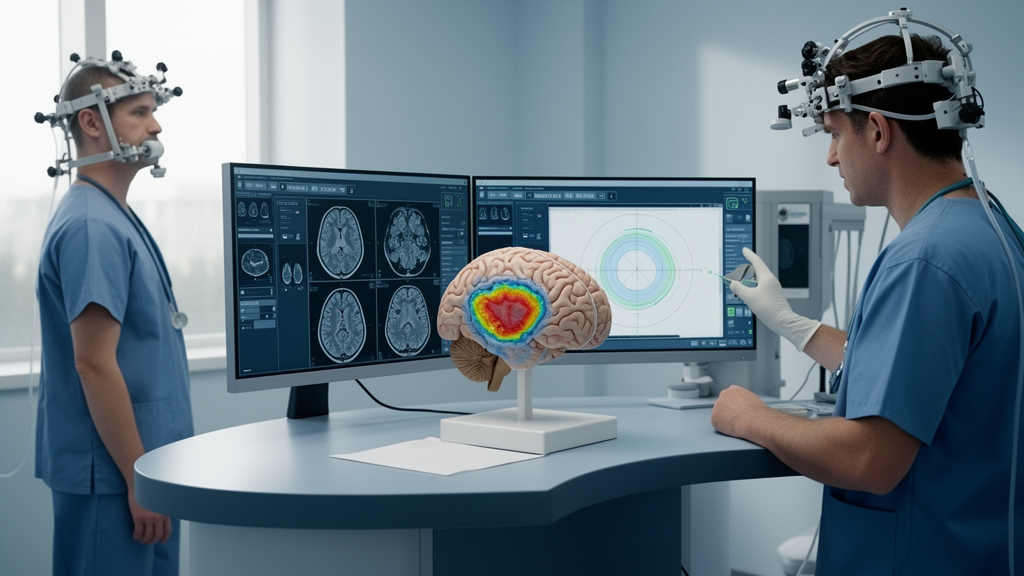
Artificial intelligence is being developed for multiple stages of the Gamma Knife radiosurgery workflow, from tumor segmentation and treatment planning to prediction of treatment response and toxicity assessment. A narrative review of learning-based approaches finds promising results in several tasks, but concludes that the evidence is predominantly retrospective and task-specific, with limited external or prospective validation.

The review, published in Journal of Neuro-Oncology, evaluated research that applied AI to Gamma Knife clinical, imaging or treatment-planning data. The authors searched PubMed/MEDLINE, Embase and Scopus through September 20, 2026. Studies outside the field of Gamma Knife radiosurgery and those not using learning-based methods were excluded, while eligible studies were synthesized according to major stages of the radiosurgery workflow. As a narrative review, the analysis maps the applications of AI rather than testing one model or intervention in a clinical trial.

Identified applications include tumor segmentation, isocenter selection, prescription and dose-distribution prediction, synthetic computed tomography generation, and assessment of treatment-plan quality. These tools address different parts of the technical planning process, from identifying anatomy to supporting decisions about where to focus treatment and how a proposed radiation dose is distributed. Several models have reported promising performance, but the review does not establish that routine use of these methods would improve patient outcomes. The evidence for each application also remains tied to the specific data, task and clinical setting in which its model was evaluated.

Post-treatment applications include longitudinal tumor monitoring and prediction of response, functional outcomes and toxicity. The reviewed toxicity models address outcomes such as peritumoral edema and radiation necrosis. Some studies have produced encouraging results within their respective datasets, but those findings do not demonstrate clinical benefit across Gamma Knife centers or among individual patients. Predictive performance alone therefore does not show that an AI tool can meaningfully improve treatment decisions, and the review emphasizes the need to demonstrate clinical benefit separately from technical performance.

Across the literature, the central limitation is the gap between promising model results and dependable clinical use. Many studies rely on small or single-center datasets, while external and prospective validation has been limited. This restricts the strength of the conclusions that can be drawn for broader clinical adoption. The review calls for multicenter validation, prospective evaluation, integration into clinical workflows, and evidence of meaningful clinical benefit before AI becomes routine in Gamma Knife radiosurgery. Until that evidence is available, the authors characterize AI as a decision-support tool that can support radiosurgical expertise rather than replace it. The current evidence therefore supports further evaluation of AI across specific Gamma Knife tasks, but not autonomous use or claims of improved safety, effectiveness or consistency in clinical practice.

Subject of Research: Artificial intelligence applications in Gamma Knife radiosurgery

Article Title: Artificial intelligence in gamma knife radiosurgery: applications in treatment planning, response prediction, and toxicity assessment

Article References: Zidan, A., El-Sherbini, A., Burns, L., & Soliman, H. (2026). Artificial intelligence in gamma knife radiosurgery: applications in treatment planning, response prediction, and toxicity assessment. Journal of Neuro-Oncology, 180(2), Article 27. https://doi.org/10.1007/s11060-026-05834-7

Image Credits: AI Generated

DOI: 10.1007/s11060-026-05834-7

Keywords: artificial intelligence, Gamma Knife radiosurgery, treatment planning, tumor segmentation, outcome prediction, toxicity assessment, radiation necrosis, medical imaging, clinical validation, decision support, Artificial, intelligence

Cite Scienmag News

Nathaniel Bowman. (October 21, 2026). AI tools emerge for Gamma Knife planning and outcome prediction. Scienmag. https://scienmag.com/ai-tools-emerge-for-gamma-knife-planning-and-outcome-prediction/

Nathaniel Bowman. "AI tools emerge for Gamma Knife planning and outcome prediction." Scienmag, 21 October 2026, https://scienmag.com/ai-tools-emerge-for-gamma-knife-planning-and-outcome-prediction/. Accessed 21 October 2026.

Nathaniel Bowman. "AI tools emerge for Gamma Knife planning and outcome prediction." Scienmag. October 21, 2026. https://scienmag.com/ai-tools-emerge-for-gamma-knife-planning-and-outcome-prediction/


Tags: AI models for isocenter selection in Gamma Knife proceduresAI-based treatment planning and dose prediction tools for Gamma KnifeAI-driven tumor segmentation in Gamma Knife radiosurgeryapplication of machine learning in gamma knife treatment plan quality evaluationArtificialArtificial Intelligenceartificial intelligence for toxicity risk assessment in Gamma Knife radiosurgeryClinical validationdecision supportGamma Knife radiosurgeryintelligencemachine learning for treatment response outcome prediction in Gamma KnifeMedical Imagingoutcome predictionradiation necrosisretrospective studies on AI applications in Gamma Knifesynthetic CT generation using AI for Gamma Knife planningtoxicity assessmenttreatment planningtumor segmentationvalidation challenges of AI tools in Gamma Knife neurosurgery
Share26Tweet16
Previous Post

Research report: Prevalence of iron deficiency anaemia and associated factors among preterm infants aged 3–6 months attending clinics in Dodoma, Tanzania: a facility-based cross-sectional study

Next Post

Synthetic organelle records transient gene activity in human cells

Related Posts

Musculoskeletal shear-wave elastography in the paediatric population: a systematic review
Cancer

Musculoskeletal shear-wave elastography in the paediatric population: a systematic review

October 21, 2026
TIMP1 linked to anoikis resistance and metastasis in esophageal cancer
Cancer

TIMP1 linked to anoikis resistance and metastasis in esophageal cancer

October 21, 2026
GFPT1 silencing curbs aggressive esophageal cancer cell behavior through ER stress
Cancer

GFPT1 silencing curbs aggressive esophageal cancer cell behavior through ER stress

October 21, 2026
Long weekend sleep associated with prostate cancer death in prospective cohort
Cancer

Long weekend sleep associated with prostate cancer death in prospective cohort

October 21, 2026
NO2 linked to higher lung cancer risk in cohort studies outside Europe
Cancer

NO2 linked to higher lung cancer risk in cohort studies outside Europe

October 21, 2026
Review links ncRNA signaling to macrophage states in colorectal cancer
Cancer

Review links ncRNA signaling to macrophage states in colorectal cancer

October 21, 2026
Next Post
Synthetic organelle records transient gene activity in human cells

Synthetic organelle records transient gene activity in human cells

  • Mothers who receive childcare support from maternal grandparents show more optimized

    Mothers who receive childcare support from maternal grandparents show more parental warmth, finds NTU Singapore study

    27656 shares
    Share 11059 Tweet 6912
  • University of Seville Breaks 120-Year-Old Mystery, Revises a Key Einstein Concept

    1061 shares
    Share 424 Tweet 265
  • Bee body mass, pathogens and local climate influence heat tolerance

    682 shares
    Share 273 Tweet 171
  • Researchers record first-ever images and data of a shark experiencing a boat strike

    546 shares
    Share 218 Tweet 137
  • Groundbreaking Clinical Trial Reveals Lubiprostone Enhances Kidney Function

    531 shares
    Share 212 Tweet 133
Science

Embark on a thrilling journey of discovery with Scienmag.com—your ultimate source for cutting-edge breakthroughs. Immerse yourself in a world where curiosity knows no limits and tomorrow’s possibilities become today’s reality!

RECENT NEWS

  • Synthetic organelle records transient gene activity in human cells
  • AI tools emerge for Gamma Knife planning and outcome prediction
  • Research report: Prevalence of iron deficiency anaemia and associated factors among preterm infants aged 3–6 months attending clinics in Dodoma, Tanzania: a facility-based cross-sectional study
  • Youth Exercise Shows Tentative Benefits for Stress Outcomes

Categories

  • Agriculture
  • Anthropology
  • Archaeology
  • Athmospheric
  • Biology
  • Biotechnology
  • Blog
  • Bussines
  • Cancer
  • Chemistry
  • Climate
  • Earth Science
  • Editorial Policy
  • Marine
  • Mathematics
  • Medicine
  • Pediatry
  • Policy
  • Psychology & Psychiatry
  • Science Education
  • Science News
  • Social Science
  • Space
  • Technology and Engineering

Subscribe to Blog via Email

Enter your email address to subscribe to this blog and receive notifications of new posts by email.

Join 5,150 other subscribers

© 2025 Scienmag - Science Magazine

Welcome Back!

Login to your account below

Forgotten Password?

Retrieve your password

Please enter your username or email address to reset your password.

Log In
No Result
View All Result
  • HOME
  • SCIENCE NEWS
  • CONTACT US

© 2025 Scienmag - Science Magazine

Discover more from Science

Subscribe now to keep reading and get access to the full archive.

Continue reading