

Wednesday, October 21, 2026
Science
No Result
View All Result
  • Login
  • HOME
  • SCIENCE NEWS
  • CONTACT US
  • HOME
  • SCIENCE NEWS
  • CONTACT US
No Result
View All Result
Scienmag
No Result
View All Result
Home Science News Medicine

Ecological Factors Linked to Social Exclusion Among Older Adults in Türkiye

October 21, 2026
in Medicine
Ophelia Keating
By Ophelia Keating Scienmag Editorial Profile - Health Services Research
Reading Time: 2 mins read
0
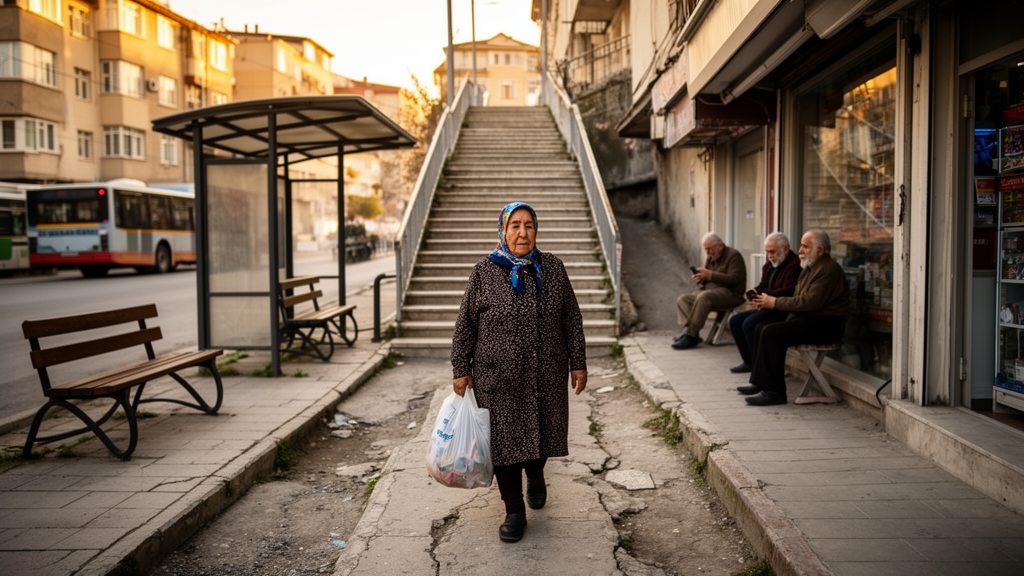
Ecological Factors Linked to Social Exclusion Among Older Adults in Türkiye

Ecological Factors Linked to Social Exclusion Among Older Adults in Türkiye

65
SHARES
587
VIEWS
Share on FacebookShare on Twitter
ADVERTISEMENT

A cross-sectional study of 400 people aged 65 and over in Türkiye found that social exclusion was associated with conditions at multiple levels of the ecological framework, spanning individual circumstances, community settings, local institutions, and broader social conditions. Researchers collected interview data and used the Social Exclusion Scale for Older Adults, then applied multiple linear regression to examine the relationships between ecological characteristics and participants’ social exclusion scores. The findings show that later-life exclusion was connected to several intertwined factors rather than to a single personal disadvantage.

At the micro level, the clearest reported associations involved education, income, health, physical activity, and housing. Higher education and income, better self-reported health, greater physical activity, and more suitable housing were each associated with lower levels of social exclusion among the participants. These relationships emerged from the statistical analysis and do not demonstrate that changing any one of these factors would directly reduce exclusion.

The cross-sectional design cannot establish temporal order or causality, so the results are best understood as characteristics associated with lower scores in this sample of 400 older adults. The analysis also examined meso-level characteristics within the immediate community, including consumption patterns, digital connectivity, and age-friendly environments. These features were identified as correlates of social exclusion, although the reported findings did not specify a direction for their associations with exclusion scores.

The same distinction applies to several exo-level factors: satisfaction with local services, awareness of socioeconomic rights, utilization of social assistance, and active participation in community life were included among the correlates, but the abstract does not state which direction each association took. Their presence in the model nevertheless indicates that social exclusion scores varied in relation to factors extending beyond an individual’s personal characteristics. At the macro level, the absence of ageism, equitable resource access, and fewer employment barriers were associated with lower levels of exclusion.

By organizing variables across the micro, meso, exo, and macro levels, the study examined social exclusion as a multidimensional outcome embedded in interconnected personal, community, institutional, and societal conditions. The approach avoids treating age, income, health, or housing in isolation and instead considers how exclusion can be statistically related to conditions at several scales. Its scope also limits conclusions about how widely the observed associations apply beyond the surveyed population.

The authors’ overall implication is that addressing exclusion in later life may require multilevel interventions and policies directed at multiple ecological systems, rather than action confined to one setting or factor.

Subject of Research: Ecological correlates of social exclusion among adults aged 65 and over in Türkiye

Article Title: Social Exclusion Among Older Adults in Türkiye: A Cross-Sectional Assessment from an Ecological Social Work Perspective

Article References: Karakaya, C., & Çağlar, T. (2026). Social Exclusion Among Older Adults in Türkiye: A Cross-Sectional Assessment from an Ecological Social Work Perspective. Ageing International, 51(4), Article 44. https://doi.org/10.1007/s12126-026-09688-2

Image Credits: AI Generated

DOI: 10.1007/s12126-026-09688-2

Keywords: social exclusion, older adults, Türkiye, cross-sectional study, ecological systems, ageism, social assistance, digital connectivity, age-friendly environments, housing, Social, Exclusion

Cite Scienmag News

Ophelia Keating. (October 21, 2026). Ecological Factors Linked to Social Exclusion Among Older Adults in Türkiye. Scienmag. https://scienmag.com/ecological-factors-linked-to-social-exclusion-among-older-adults-in-turkiye/


Ophelia Keating. "Ecological Factors Linked to Social Exclusion Among Older Adults in Türkiye." Scienmag, 21 October 2026, https://scienmag.com/ecological-factors-linked-to-social-exclusion-among-older-adults-in-turkiye/. Accessed 21 October 2026.

Ophelia Keating. "Ecological Factors Linked to Social Exclusion Among Older Adults in Türkiye." Scienmag. October 21, 2026. https://scienmag.com/ecological-factors-linked-to-social-exclusion-among-older-adults-in-turkiye/

Tags: age-friendly environmentsageismcommunity health and agingcross-sectional aging studiescross-sectional studydigital connectivitydigital connectivity among seniorsecological frameworkecological systemselderly social exclusion in Türkiyeexclusionhealth status and social exclusionhousinghousing and social participationinterventions for social inclusion in older populationsolder adultsolder adults social integrationsocialsocial assistancesocial determinants of agingsocial exclusionsocioeconomic factors and agingTürkiye
Share26Tweet16
Previous Post

Compostable plastic residues preserve compost quality and support lettuce growth

Next Post

Gut microbes track pigeon muscle quality differences in multi-omics study

Related Posts

Single-arm trial reports orelabrutinib response in high-risk lymphoma
Medicine

Single-arm trial reports orelabrutinib response in high-risk lymphoma

October 21, 2026
CALLY index shows no independent link to colorectal polyp risk
Medicine

CALLY index shows no independent link to colorectal polyp risk

October 21, 2026
Australian study finds repeated help-seeking before postpartum psychosis diagnosis
Medicine

Australian study finds repeated help-seeking before postpartum psychosis diagnosis

October 21, 2026
Blurred Vision Shifts Emotional Processing Toward Sound and Dorsal Pathways
Medicine

Blurred Vision Shifts Emotional Processing Toward Sound and Dorsal Pathways

October 21, 2026
AI chatbots differ in reliability, usefulness and readability for dental implant questions
Medicine

AI chatbots differ in reliability, usefulness and readability for dental implant questions

October 21, 2026
Review maps psychological patterns linked to suicidal thoughts in university students
Medicine

Review maps psychological patterns linked to suicidal thoughts in university students

October 21, 2026
Next Post
Gut microbes track pigeon muscle quality differences in multi-omics study

Gut microbes track pigeon muscle quality differences in multi-omics study

  • Mothers who receive childcare support from maternal grandparents show more optimized

    Mothers who receive childcare support from maternal grandparents show more parental warmth, finds NTU Singapore study

    27656 shares
    Share 11059 Tweet 6912
  • University of Seville Breaks 120-Year-Old Mystery, Revises a Key Einstein Concept

    1061 shares
    Share 424 Tweet 265
  • Bee body mass, pathogens and local climate influence heat tolerance

    682 shares
    Share 273 Tweet 171
  • Researchers record first-ever images and data of a shark experiencing a boat strike

    546 shares
    Share 218 Tweet 137
  • Groundbreaking Clinical Trial Reveals Lubiprostone Enhances Kidney Function

    531 shares
    Share 212 Tweet 133
Science

Embark on a thrilling journey of discovery with Scienmag.com—your ultimate source for cutting-edge breakthroughs. Immerse yourself in a world where curiosity knows no limits and tomorrow’s possibilities become today’s reality!

RECENT NEWS

  • Gut microbes track pigeon muscle quality differences in multi-omics study
  • Ecological Factors Linked to Social Exclusion Among Older Adults in Türkiye
  • Compostable plastic residues preserve compost quality and support lettuce growth
  • Sugar beet transformation protocol achieves high direct shoot regeneration

Categories

  • Agriculture
  • Anthropology
  • Archaeology
  • Athmospheric
  • Biology
  • Biotechnology
  • Blog
  • Bussines
  • Cancer
  • Chemistry
  • Climate
  • Earth Science
  • Editorial Policy
  • Marine
  • Mathematics
  • Medicine
  • Pediatry
  • Policy
  • Psychology & Psychiatry
  • Science Education
  • Science News
  • Social Science
  • Space
  • Technology and Engineering

Subscribe to Blog via Email

Enter your email address to subscribe to this blog and receive notifications of new posts by email.

Join 5,150 other subscribers

© 2025 Scienmag - Science Magazine

Welcome Back!

Login to your account below

Forgotten Password?

Retrieve your password

Please enter your username or email address to reset your password.

Log In
No Result
View All Result
  • HOME
  • SCIENCE NEWS
  • CONTACT US

© 2025 Scienmag - Science Magazine

Discover more from Science

Subscribe now to keep reading and get access to the full archive.

Continue reading