

Wednesday, October 21, 2026
Science
No Result
View All Result
  • Login
  • HOME
  • SCIENCE NEWS
  • CONTACT US
  • HOME
  • SCIENCE NEWS
  • CONTACT US
No Result
View All Result
Scienmag
No Result
View All Result
Home Science News Psychology & Psychiatry

Young Erbil residents describe emotion suppression shaped by digital and cultural pressures

October 21, 2026
in Psychology & Psychiatry
Glenn Wilkins
By Glenn Wilkins Scienmag Editorial Profile - Clinical Psychology
Reading Time: 3 mins read
0
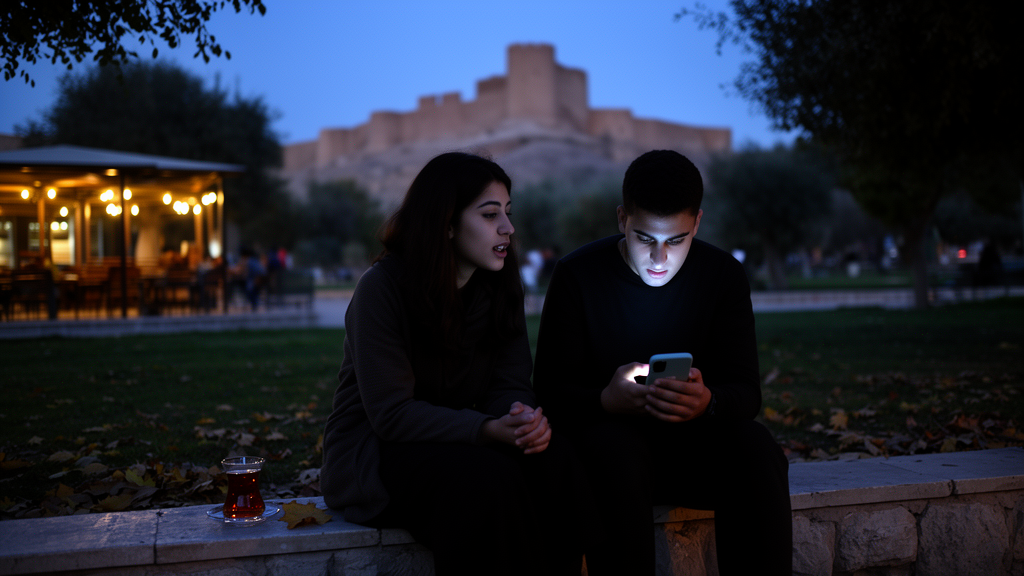
Young Erbil residents describe emotion suppression shaped by digital and cultural pressures

Young Erbil residents describe emotion suppression shaped by digital and cultural pressures

65
SHARES
587
VIEWS
Share on FacebookShare on Twitter
ADVERTISEMENT

Young people aged 15–28 in Erbil, Iraq, described emotional suppression as a layered experience shaped by personal beliefs, cultural expectations and the perceived safety of expressing feelings online, according to a qualitative study published in BMC Psychology. The study did not measure how common emotional suppression is, so its findings describe the experiences of the interviewed group rather than establishing prevalence in Iraq or elsewhere.

Researchers conducted a qualitative descriptive study in Erbil Governorate between July and September 2025. They used maximum variation purposive sampling to recruit 20 participants, including men and women, younger and older respondents, residents with different educational and family circumstances, and young people with varied levels of digital engagement and self-rated family support. All participants were selected from people who had responded to an earlier anonymous survey and had provided written agreement to be contacted again. Data were collected through face-to-face, semi-structured interviews, which were audio-recorded and transcribed verbatim.

The transcripts were analysed using inductive content analysis informed by the work of Graneheim and colleagues and supported by MAXQDA software. The researchers reported the study in line with the COREQ checklist. Their analysis identified three broad categories and nine subcategories. The personal and internal category included internalized stoicism, guilt or fear of becoming an emotional burden, and difficulty recognizing and articulating emotions. The social and cultural category covered norms that equate emotion with weakness, fear of emotional exploitation and interpersonal distrust, and gendered expectations and family pressure. The digital and online category included fear of permanent digital exposure, self-censorship and deletion of emotional content, and pressure to perform happiness online.

These findings suggest that the decision to suppress emotion was not presented as a single reaction to social media or digital communication. Participants linked it to the internal meanings they attached to emotional expression, the expectations of family and wider society, and the risks they associated with leaving emotional traces online. The study is restricted to 20 young people in one Iraqi setting, and its design does not allow the researchers to determine the frequency of these experiences or to assess causal relationships between digital use and emotional suppression. The authors instead emphasize that the themes reflect how participants understood their own experiences in the context of personal, cultural and digital pressures.

The researchers concluded that culturally adapted psychosocial and digital-literacy interventions, developed with young people and delivered in community and educational settings, may be worth exploring and evaluating. The source presents this as a direction for future intervention research, not as evidence that any particular program has already produced clinical benefits. Because the study was qualitative and locally focused, additional work would be needed to test the frequency, mechanisms and broader applicability of the reported patterns, as well as the effectiveness of any proposed responses.

Subject of Research: Qualitative study of emotional suppression among young people in Erbil, Iraq

Article Title: Silenced emotions in the digital age: a qualitative study of emotional suppression among young people aged 15–28 years in Erbil, Iraq

Article References: Rasool, A. A., Kareem, M. S., Zainalddin, H. K., Saber, A. F., Ali, A. N., Hussain, H. A., Mohammed, K. S., Faqe, M. G., Ahmed, K. O., & Majeed, N. K. (2026). Silenced emotions in the digital age: a qualitative study of emotional suppression among young people aged 15–28 years in Erbil, Iraq. BMC Psychology. https://doi.org/10.1186/s40359-026-05610-2

Image Credits: AI Generated

DOI: 10.1186/s40359-026-05610-2

Keywords: emotional suppression, young people, digital communication, Erbil, Iraq, qualitative research, social media, cultural norms, self-censorship, psychosocial research, Silenced, emotions

Cite Scienmag News

Glenn Wilkins. (October 21, 2026). Young Erbil residents describe emotion suppression shaped by digital and cultural pressures. Scienmag. https://scienmag.com/young-erbil-residents-describe-emotion-suppression-shaped-by-digital-and-cultural-pressures/


Glenn Wilkins. "Young Erbil residents describe emotion suppression shaped by digital and cultural pressures." Scienmag, 21 October 2026, https://scienmag.com/young-erbil-residents-describe-emotion-suppression-shaped-by-digital-and-cultural-pressures/. Accessed 21 October 2026.

Glenn Wilkins. "Young Erbil residents describe emotion suppression shaped by digital and cultural pressures." Scienmag. October 21, 2026. https://scienmag.com/young-erbil-residents-describe-emotion-suppression-shaped-by-digital-and-cultural-pressures/

Tags: cross-cultural perspectives on emotional healthcultural expectations and emotional resiliencecultural influences on emotional expressioncultural normsdigital communicationdigital safety and online emotional regulationeffects of cultural norms on emotional wellbeingemotional regulation and societal pressuresemotional suppressionemotional suppression in young IraqisemotionsErbilErbil youth mental healthfamily support and emotional suppressionimpact of digital media on emotional expressionIraqpsychosocial researchqualitative researchqualitative research on emotional healthqualitative study methodology in psychologyself-censorshipSilencedsocial mediayoung people
Share26Tweet16
Previous Post

Curated multi-marker analysis resolves fungal phylogeny and ecological patterns in two ophiostomatoid orders

Next Post

Mixed-Methods Study Finds Two Markets in Turkish English-Medium Medical Education

Related Posts

Network model outperforms latent factors for pediatric pain anxiety
Psychology & Psychiatry

Network model outperforms latent factors for pediatric pain anxiety

October 21, 2026
Prospective multi-cohort LSTM predicts depressive symptoms in older adults
Psychology & Psychiatry

Prospective multi-cohort LSTM predicts depressive symptoms in older adults

October 21, 2026
Research report: Emotional instability and somatic symptoms explain the longitudinal link between childhood adversity and later motor impulsivity in college students
Psychology & Psychiatry

Research report: Emotional instability and somatic symptoms explain the longitudinal link between childhood adversity and later motor impulsivity in college students

October 21, 2026
Breast and gynecological cancer care needs linked to distress and financial strain
Psychology & Psychiatry

Breast and gynecological cancer care needs linked to distress and financial strain

October 21, 2026
NCRB analysis finds India’s child and adolescent suicide burden rising
Psychology & Psychiatry

NCRB analysis finds India’s child and adolescent suicide burden rising

October 21, 2026
Turkish Intuitive Eating Scale-3 shows reliable, valid performance in Ankara adults
Psychology & Psychiatry

Turkish Intuitive Eating Scale-3 shows reliable, valid performance in Ankara adults

October 21, 2026
Next Post
Mixed-Methods Study Finds Two Markets in Turkish English-Medium Medical Education

Mixed-Methods Study Finds Two Markets in Turkish English-Medium Medical Education

  • Mothers who receive childcare support from maternal grandparents show more optimized

    Mothers who receive childcare support from maternal grandparents show more parental warmth, finds NTU Singapore study

    27656 shares
    Share 11059 Tweet 6912
  • University of Seville Breaks 120-Year-Old Mystery, Revises a Key Einstein Concept

    1061 shares
    Share 424 Tweet 265
  • Bee body mass, pathogens and local climate influence heat tolerance

    682 shares
    Share 273 Tweet 171
  • Researchers record first-ever images and data of a shark experiencing a boat strike

    546 shares
    Share 218 Tweet 137
  • Groundbreaking Clinical Trial Reveals Lubiprostone Enhances Kidney Function

    531 shares
    Share 212 Tweet 133
Science

Embark on a thrilling journey of discovery with Scienmag.com—your ultimate source for cutting-edge breakthroughs. Immerse yourself in a world where curiosity knows no limits and tomorrow’s possibilities become today’s reality!

RECENT NEWS

  • Field study finds site and seasonal differences in fish assemblages at two Korean eelgrass meadows
  • Taxonomic study identifies new North Korean crane fly species and three distribution records
  • Review links lower baseline cognition to greater Parkinson’s intervention gains
  • Pilot model shows 22 dB acoustic reduction after corridor retrofit

Categories

  • Agriculture
  • Anthropology
  • Archaeology
  • Athmospheric
  • Biology
  • Biotechnology
  • Blog
  • Bussines
  • Cancer
  • Chemistry
  • Climate
  • Earth Science
  • Editorial Policy
  • Marine
  • Mathematics
  • Medicine
  • Pediatry
  • Policy
  • Psychology & Psychiatry
  • Science Education
  • Science News
  • Social Science
  • Space
  • Technology and Engineering

Subscribe to Blog via Email

Enter your email address to subscribe to this blog and receive notifications of new posts by email.

Join 5,150 other subscribers

© 2025 Scienmag - Science Magazine

Welcome Back!

Login to your account below

Forgotten Password?

Retrieve your password

Please enter your username or email address to reset your password.

Log In
No Result
View All Result
  • HOME
  • SCIENCE NEWS
  • CONTACT US

© 2025 Scienmag - Science Magazine

Discover more from Science

Subscribe now to keep reading and get access to the full archive.

Continue reading