
Wednesday, October 21, 2026
Science
No Result
View All Result
  • Login
  • HOME
  • SCIENCE NEWS
  • CONTACT US
  • HOME
  • SCIENCE NEWS
  • CONTACT US
No Result
View All Result
Scienmag
No Result
View All Result
Home Science News

Rattlesnakes Show Population-Dependent Stress Responses

October 21, 2026
in Science News
Reading Time: 3 mins read
0
Rattlesnakes Show Population-Dependent Stress Responses

Rattlesnakes Show Population-Dependent Stress Responses

65
SHARES
587
VIEWS
Share on FacebookShare on Twitter
ADVERTISEMENT

In an experiment with 28 adult Southern Pacific rattlesnakes, snakes from a population that overwinters individually displayed longer periods of stress-related cardiac acceleration and longer bouts of rattling than snakes from a population that overwinters communally. The study found no evidence that the presence of another snake reduced either cardiac or behavioral responses to an acute stressor, suggesting that social buffering in rattlesnakes may depend on the circumstances and methods used to detect it.

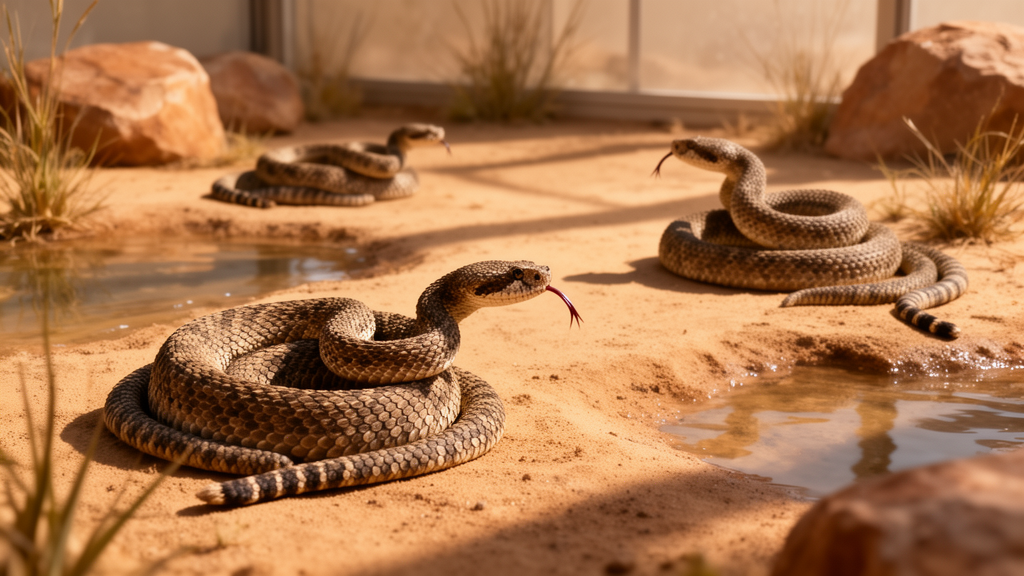
Researchers tested the snakes in an open-field arena under three conditions: alone, with a familiar companion, or with an unfamiliar companion. The animals came from lowland and montane populations of Crotalus oreganus helleri, populations that differ in their overwintering behavior. Lowland snakes overwinter individually, whereas montane snakes gather communally. The experiment examined whether population, sex, and companion familiarity influenced heart-rate responses, recovery, defensive posturing, and rattling during an acute stressful event.

The clearest population difference concerned the duration of the physiological and behavioral response. Although the magnitude of emotional tachycardia was similar between the populations, lowland snakes that overwinter individually experienced emotional tachycardia and rattled for longer than montane snakes that overwinter communally. This distinction is important because a stronger peak response is not necessarily equivalent to a more prolonged response. The researchers also found differences associated with sex: montane males clustered more closely together than females and were the least likely to rattle, although males and females showed similar cardiac responses.

Companion familiarity did not produce the expected pattern of stronger calming among familiar pairs. In fact, snakes placed with unfamiliar same-sex companions recovered from the cardiac response more quickly than those placed with familiar companions. Neither familiar nor unfamiliar companionship reduced cardiac responses or rattling relative to testing alone. These results provide no evidence of social buffering, the attenuation of a stress response through social contact. The finding contrasts with earlier reports of social buffering in rattlesnakes and points to the possible importance of experimental context in determining whether the phenomenon can be detected.

One possible complication is emotional contagion, in which an animal’s state reflects or matches that of a companion. If both snakes respond similarly to the stressor, a companion could obscure rather than reveal a buffering effect, because responses measured in a pair might be difficult to distinguish from mutual arousal. The authors therefore argue that future studies should explicitly test the conditions under which social buffering becomes detectable. The present experiment involved a specific open-field protocol, a modest sample of 28 adults, two populations distinguished by overwintering behavior, and controlled categories of companion familiarity. Its results show that social context did not consistently calm these rattlesnakes under those conditions; they do not establish that buffering is absent in every population, sex, life stage, or stressful situation.

Subject of Research: Acute stress responses in Southern Pacific rattlesnakes vary with population, sex, and social context.

Article Title: Cardiac and behavioral responses to an acute stressor in Southern Pacific rattlesnakes (Crotalus oreganus helleri): effects of population, sex, and companion familiarity

Article References: Martin, C. E., Streit, M. B., & Hayes, W. K. (2026). Cardiac and behavioral responses to an acute stressor in Southern Pacific rattlesnakes (Crotalus oreganus helleri): effects of population, sex, and companion familiarity. Frontiers in Ethology, 5, 1890331. https://doi.org/10.3389/fetho.2026.1890331

Image Credits: AI Generated

DOI: 10.3389/fetho.2026.1890331

Keywords: Southern Pacific rattlesnake, acute stress, social buffering, emotional tachycardia, defensive rattling, companion familiarity, population differences, overwintering behavior, reptile behavior, stress physiology, Cardiac, behavioral

Cite Scienmag News

Scienmag. (October 21, 2026). Rattlesnakes Show Population-Dependent Stress Responses. https://scienmag.com/rattlesnakes-show-population-dependent-stress-responses/

Scienmag. "Rattlesnakes Show Population-Dependent Stress Responses." Scienmag, 21 October 2026, https://scienmag.com/rattlesnakes-show-population-dependent-stress-responses/. Accessed 21 October 2026.

Scienmag. "Rattlesnakes Show Population-Dependent Stress Responses." Scienmag. October 21, 2026. https://scienmag.com/rattlesnakes-show-population-dependent-stress-responses/


Tags: acute stressBehavioralbehavioral differences between snake populationscardiaccardiac acceleration in snakescompanion familiaritydefensive rattlingemotional tachycardiaenvironmental influence on snake stress physiologyimpact of social context on snake stresslong-term effects of overwintering behavioroverwintering behavioroverwintering strategies in snakesphysiological stress responses in Crotalus oreganuspopulation differencespopulation-dependent behaviorrattlesnake stress responserattling behavior under stressreptile behaviorsocial bufferingsocial buffering in reptilesSouthern Pacific rattlesnakestress physiologystress recovery in rattlesnakes
Share26Tweet16
Previous Post

Cross-country survey finds greater body dissatisfaction among French sports science students

Next Post

Experimental study reports ordered polar vortices in lead-free BaTiO3/SrTiO3 superlattices on silicon

Related Posts

COVID-19 Did Not Delay Oral Cancer Treatment in Saxony, Registry Study Finds
Medicine

Saxony registry study finds no prolongation of post-diagnostic treatment intervals during the early COVID-19 pandemic

October 21, 2026
Fine-scale livestock density maps for Central Apennines conservation
Science News

Central Apennines protocol maps livestock density below municipal level

October 21, 2026
How Political Polarization Quietly Undermines Public Health in Germany
Medicine

Perspective links political polarization to governance risks in Germany’s public health service

October 21, 2026
At-Home Brain Stimulation Trial Shows Remote Depression Care Is Feasible, but Active Treatment Matches Sham Control
Medicine

Home-based brain stimulation passes major feasibility test, while depression results raise new questions

October 21, 2026
Girls Now Outpace Boys in Youth Vaping, National Study Finds
Medicine

Girls Now Outpace Boys in Youth Vaping, National Study Finds

October 21, 2026
Closer to the Sea Is Not Always Happier: Tourist Emotions Along the Coast Follow a Nonlinear Path
Social Science

Qingdao travelogue study finds tourist emotions near coast are nonlinear

October 21, 2026
Next Post
Lead-Free Polar Vortices Grown Directly on Silicon Open New Device Frontier

Experimental study reports ordered polar vortices in lead-free BaTiO3/SrTiO3 superlattices on silicon

  • Mothers who receive childcare support from maternal grandparents show more optimized

    Mothers who receive childcare support from maternal grandparents show more parental warmth, finds NTU Singapore study

    27656 shares
    Share 11059 Tweet 6912
  • University of Seville Breaks 120-Year-Old Mystery, Revises a Key Einstein Concept

    1061 shares
    Share 424 Tweet 265
  • Bee body mass, pathogens and local climate influence heat tolerance

    682 shares
    Share 273 Tweet 171
  • Researchers record first-ever images and data of a shark experiencing a boat strike

    546 shares
    Share 218 Tweet 137
  • Groundbreaking Clinical Trial Reveals Lubiprostone Enhances Kidney Function

    531 shares
    Share 212 Tweet 133
Science

Embark on a thrilling journey of discovery with Scienmag.com—your ultimate source for cutting-edge breakthroughs. Immerse yourself in a world where curiosity knows no limits and tomorrow’s possibilities become today’s reality!

RECENT NEWS

  • Saxony registry study finds no prolongation of post-diagnostic treatment intervals during the early COVID-19 pandemic
  • Central Apennines protocol maps livestock density below municipal level
  • Perspective links political polarization to governance risks in Germany’s public health service
  • Home-based brain stimulation passes major feasibility test, while depression results raise new questions

Categories

  • Agriculture
  • Anthropology
  • Archaeology
  • Athmospheric
  • Biology
  • Biotechnology
  • Blog
  • Bussines
  • Cancer
  • Chemistry
  • Climate
  • Earth Science
  • Editorial Policy
  • Marine
  • Mathematics
  • Medicine
  • Pediatry
  • Policy
  • Psychology & Psychiatry
  • Science Education
  • Science News
  • Social Science
  • Space
  • Technology and Engineering

Subscribe to Blog via Email

Enter your email address to subscribe to this blog and receive notifications of new posts by email.

Join 5,150 other subscribers

© 2025 Scienmag - Science Magazine

Welcome Back!

Login to your account below

Forgotten Password?

Retrieve your password

Please enter your username or email address to reset your password.

Log In
No Result
View All Result
  • HOME
  • SCIENCE NEWS
  • CONTACT US

© 2025 Scienmag - Science Magazine

Discover more from Science

Subscribe now to keep reading and get access to the full archive.

Continue reading