


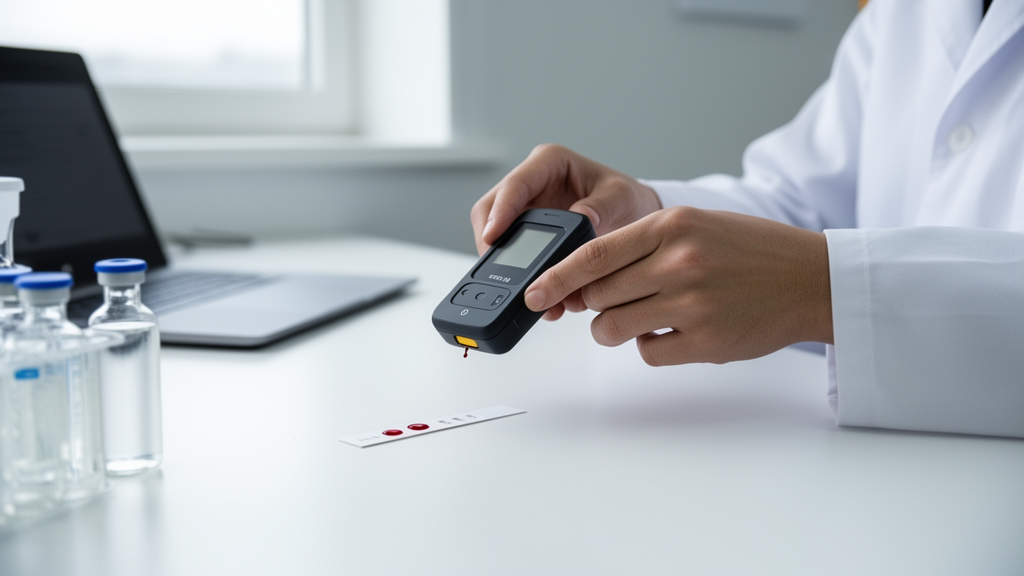
A €50,000 grant will support development of a laboratory prototype for a portable biosensor intended to measure phenylalanine in people with phenylketonuria, or PKU. The grant-funded project is led by Tiago Cordeiro at Instituto de Tecnologia Química e Biológica António Xavier da Universidade NOVA de Lisboa, known as ITQB NOVA, in Portugal. It aims to establish whether appropriately sensitive and specific biosensors can support rapid phenylalanine monitoring, but the announcement does not report sensor performance or clinical-test results.
PKU is a rare inherited condition in which the body lacks the enzyme needed to break down the amino acid phenylalanine. Phenylalanine can consequently build up in the blood and brain and, if untreated, may cause serious long-term problems, including intellectual disability, seizures, developmental delay, behavioral difficulties and psychiatric disorders. Lifelong dietary and medical management can prevent many of these outcomes, while people with PKU must individually limit phenylalanine intake because it occurs in foods such as meat, fish, dairy, nuts and some grains.
Current monitoring commonly involves blood tests. Some patients use an at-home finger-prick sample placed on filter paper that is mailed to a laboratory, with results communicated after a wait of days to a week. Other patients have biomarkers assessed through in-clinic blood draws, and testing may be needed weekly depending on the condition and its severity. The project’s stated goal is to enable patients to measure phenylalanine and adjust diet and treatment in real time, reducing the delay between obtaining a result and making a management decision.
Cordeiro and Paula Leandro of the Faculdade de Farmácia da Universidade de Lisboa are combining expertise in enzymes and macromolecular interactions with knowledge of PKU to develop the biosensors. ITQB NOVA will coordinate the scientific and technological work, drawing on its experience with intrinsically disordered proteins, electrochemistry and microfabrication. Felipe Conzuelo will lead electrochemistry and microfabrication activities, while Jorge Carvalho will participate through the institute’s Makers Hub Research Facility. Doctors and patient organizations, including APOFEN, will be involved in planned clinical validation.
The initial award covers development of a laboratory prototype for proof of concept; it is not evidence that a usable sensor has already been completed or clinically evaluated. The team may seek further funding through the same programme for later development stages. The sensor is a project objective rather than an established at-home capability, and the announcement provides no measured sensitivity, specificity, testing time, sample type, device dimensions or clinical outcomes. The work is part of CaixaImpulse Health Innovation, an 18-month programme intended to support validation and development of health and life-sciences innovations for eventual transfer through spin-offs or licensing.
Subject of Research: Grant-funded prototype development of a portable biosensor for phenylketonuria
Article Title: 50K€ to develop a portable sensor for rare metabolic disease
Article References: 50K€ to develop a portable sensor for rare metabolic disease. Original publication (Bibliographic details unavailable.)
Image Credits: AI Generated
DOI: Not provided
Keywords: phenylketonuria, phenylalanine, portable biosensor, metabolic disease, grant funding, proof of concept, clinical validation, ITQB NOVA, develop, portable, sensor, rare
Cite Scienmag News
Ophelia Keating. (October 21, 2026). €50,000 grant funds prototype development for a portable phenylalanine sensor. Scienmag. https://scienmag.com/e50000-grant-funds-prototype-development-for-a-portable-phenylalanine-sensor/
Ophelia Keating. "€50,000 grant funds prototype development for a portable phenylalanine sensor." Scienmag, 21 October 2026, https://scienmag.com/e50000-grant-funds-prototype-development-for-a-portable-phenylalanine-sensor/. Accessed 21 October 2026.
Ophelia Keating. "€50,000 grant funds prototype development for a portable phenylalanine sensor." Scienmag. October 21, 2026. https://scienmag.com/e50000-grant-funds-prototype-development-for-a-portable-phenylalanine-sensor/


