


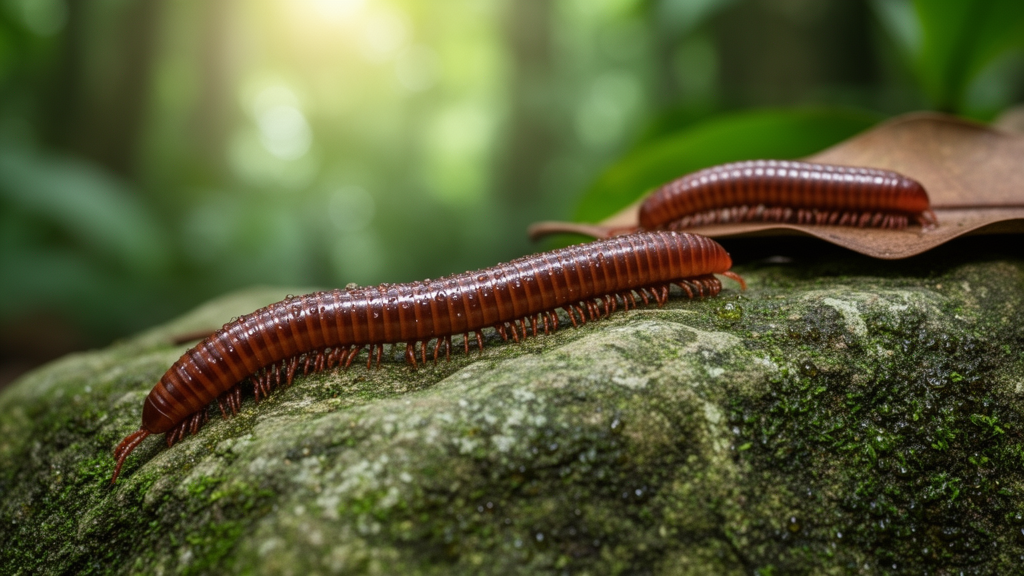
A taxonomic and DNA-barcode study documented the millipede genus Hedinomorpha in Vietnam for the first time and described two new species from Cao Bang Province in northern Vietnam: Hedinomorpha caobang and Hedinomorpha vast. The findings extend the confirmed geographic range of a genus previously recorded mainly in China, with one species each reported from Tajikistan and eastern Russia.
The new species were established through detailed examination of their external anatomy and male reproductive structures, known as gonopods. Specimens were collected in July 2025 and preserved in 90% ethanol. Researchers examined them with a Nikon SMZ800N stereomicroscope, dissected the gonopods, photographed structures at different focal depths with a Sony A6000 camera, and assembled the images using Helicon Focus 7.0 and Adobe Photoshop CS6. Scanning electron microscopy was also used.
The type series of H. caobang came from Truong Ha commune on the way to Coc Po Cave. It comprised one male holotype, one male paratype and five female paratypes: two females deposited at the Institute of Ecology and Biological Resources in Hanoi and three females at the Department of Entomology at Virginia Tech. The male holotype measured 25.1 mm in body length, with prozona and metazona widths of 1.87 mm and 2.27 mm, respectively. Females ranged from 28.0 to 29.2 mm in body length.
H. caobang is generally black, with yellow middle portions of the metaterga and paraterga, yellowish-brown legs and sterna, and black antennae. Its diagnostic features include a highly elevated, coniform process between the coxae of the fourth pair of legs on sternum 5, a long and slender gonopod femorite, and a strongly spiraled solenophore that is broad apically and bears spiniform processes on its lateral and mesal sides. Although its apical solenophore resembles that of H. montana, the Vietnamese species lacks the prominent solenophore tooth present in H. montana. The specimens were found beneath leaf litter in moist limestone forest.
The second species, H. vast, was represented by one male holotype collected at Thang Hen Lake in limestone forest on 15 July 2025, one male paratype with the same collection data, and seven additional paratypes from Pia Oac-Pia Den National Park. The holotype was 26.9 mm long, with prozona and metazona widths of 2.14 mm and 2.48 mm. Male paratypes measured 24.9–26.05 mm, while the reported female was 28.5 mm long. The species was collected beneath leaf litter in moist limestone forest at an elevation of about 1,000 metres above sea level.
H. vast is generally dark brown, with yellowish-brown pleura, pale-yellow sterna and legs, and brown antennae except for the distal half of antennomere 6 and antennomere 7, which are black. It has a highly elevated, rounded process between the fourth coxae on sternum 5. Its gonopods have a long, slender femorite and a spiraled solenophore with a long acute process and a strongly bifid apical tip. These features distinguish it from H. caobang, which has a broader apical solenophore bearing two spiniform processes.
For DNA barcoding, the researchers extracted genomic DNA with Qiagen DNeasy Blood and Tissue Kits. They amplified a 680-base-pair fragment of the mitochondrial cytochrome c oxidase subunit I gene with the LCO1490 and HCO2198 primers and a 500-base-pair fragment of the 16S ribosomal RNA gene with either the 16Sa/16Sb or 16S-1F19 primer set. Two-microlitre portions of amplification products were screened by electrophoresis in 1% agarose-TAE, then sent to GenLab in Vietnam for purification and sequencing. The sequences were checked through an NCBI BLAST search and deposited in GenBank.
Both species yielded 16S rRNA barcodes, but the COI barcode from H. vast failed to sequence. The H. caobang sequences were deposited under accession numbers QB104726 for COI and QB104679 for 16S rRNA, while the H. vast 16S rRNA sequence was deposited as QB104680. BLAST comparisons reported genetic similarities of 85.63% for H. caobang and 85.51% for H. vast with Sellanucheza variata. Because no Hedinomorpha sequences were then available in NCBI, direct genetic comparisons with members of the genus were not possible.
Both Vietnamese species resemble H. reducta from Sichuan, China, in having poorly developed paraterga, long and slender gonopod femorites without a mesal groove, and generally comparable gonopod configurations. They differ from that species in body width and in the form of the process at the base of the solenophore: H. reducta has an unciform process, whereas the Vietnamese species have a large spine. Their morphology does not fully match the typical diagnosis of Hedinomorpha, and their closest BLAST matches were Sellanucheza species. Nevertheless, the authors retained both in Hedinomorpha because the available molecular and morphological evidence did not justify transferring them to Sellanucheza or erecting a new genus. The records confirm the genus in northern Vietnam while leaving questions about the placement of these unusual species open.
Subject of Research: Taxonomic description of two new Hedinomorpha millipede species from northern Vietnam using morphology and mitochondrial DNA barcoding
Article Title: First records of the millipede genus Hedinomorpha Verhoeff, 1934 ( Diplopoda , Polydesmida , Paradoxosomatidae ) from Vietnam, with descriptions of two new species
Article References: Nguyen, T.-A. T., Marek, P. E., & Nguyen, A. D. (2026). First records of the millipede genus Hedinomorpha Verhoeff, 1934 (Diplopoda, Polydesmida, Paradoxosomatidae) from Vietnam, with descriptions of two new species. Zoosystematics and Evolution, 102(5), 1221-1232. https://doi.org/10.3897/zse.102.208437
Image Credits: AI Generated
Keywords: Hedinomorpha, millipedes, Vietnam, Cao Bang Province, new species, taxonomy, DNA barcoding, morphology, Paradoxosomatidae, zoology, First, records
Cite Scienmag News
Drew Townsend. (October 20, 2026). Taxonomic study documents two new Hedinomorpha millipede species in Vietnam. Scienmag. https://scienmag.com/taxonomic-study-documents-two-new-hedinomorpha-millipede-species-in-vietnam/
Drew Townsend. "Taxonomic study documents two new Hedinomorpha millipede species in Vietnam." Scienmag, 20 October 2026, https://scienmag.com/taxonomic-study-documents-two-new-hedinomorpha-millipede-species-in-vietnam/. Accessed 20 October 2026.
Drew Townsend. "Taxonomic study documents two new Hedinomorpha millipede species in Vietnam." Scienmag. October 20, 2026. https://scienmag.com/taxonomic-study-documents-two-new-hedinomorpha-millipede-species-in-vietnam/


