


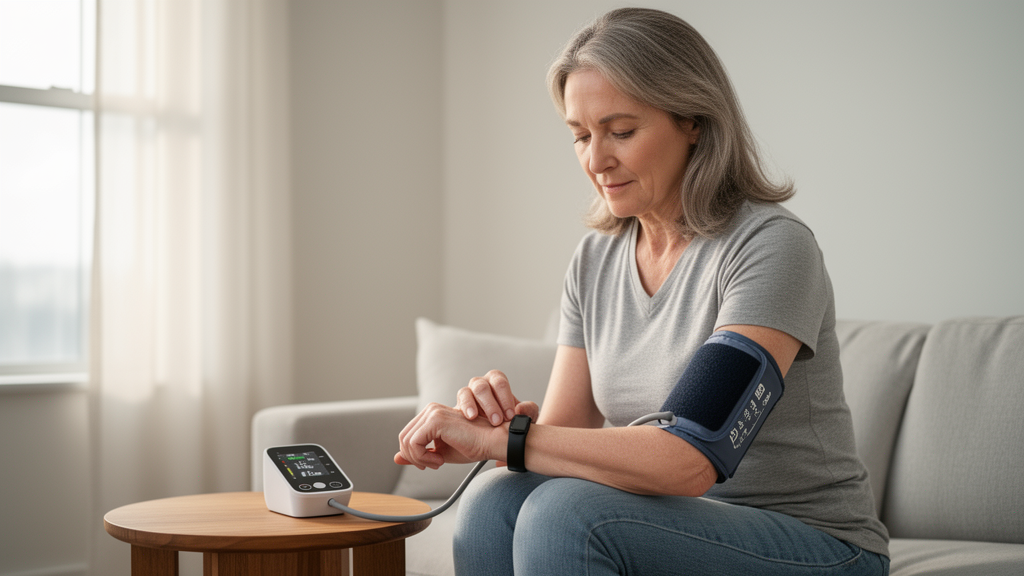
An observational analysis of 3,093 participants in the All of Us Research Program found that objective physical activity measured at baseline was associated with better performance on three cognitive tasks, while baseline systolic blood pressure was associated with lower performance on a delay-discounting test, according to the study abstract. The analysis examined associations between these measures and end-of-study cognitive performance; it does not establish that activity or blood pressure changes cause differences in cognition.
Physical activity was assessed using daily step counts recorded by Fitbit wearable devices. Baseline activity metrics were positively associated with the Gradual Onset Continuous Performance Task (Grad-CPT), Delay Discounting Task (DD-Task) and Flanker-Task. The reported regression coefficients were 0.31 for Grad-CPT (95% confidence interval [CI], 0.18 to 0.44), 0.05 for the DD-Task (95% CI, 0.04 to 0.07) and 0.26 for the Flanker-Task (95% CI, 0.17 to 0.35). The abstract did not report an association between baseline activity and the Multiracial Emotional Recognition Task.
Blood pressure measurements spanned 14 years, and baseline systolic blood pressure was negatively associated with DD-Task performance, with a regression coefficient of −0.01 (95% CI, −0.02 to −0.004). The abstract did not report corresponding results for diastolic blood pressure. A longitudinal k-means clustering analysis identified three activity groups with mean daily step counts of 5,108, 8,875 and 14,161. Participants in the two groups with more steps had higher scores than those in the lowest-step group on the DD-Task, Grad-CPT and Flanker-Task.
Cognition was assessed with the Grad-CPT, DD-Task, Multiracial Emotional Recognition Task and Flanker-Task. The available evidence is limited to the abstract, which does not provide full methodological details, participant characteristics, adjustment variables or model diagnostics. The findings therefore describe associations in this observational All of Us sample rather than causal effects or evidence that changing physical activity or blood pressure would improve cognitive performance.
Subject of Research: Observational associations of physical activity and blood pressure with cognitive performance in All of Us participants
Article Title: Physical activity and blood pressure as predictors of cognitive function in the all of us research program
Article References: Okusaga, O. O., Lin, Y.-S., & Atkinson, E. (2026). Physical activity and blood pressure as predictors of cognitive function in the all of us research program. Scientific Reports. https://doi.org/10.1038/s41598-026-74379-6
Image Credits: AI Generated
DOI: 10.1038/s41598-026-74379-6
Keywords: All of Us, physical activity, blood pressure, cognitive function, wearable step counts, Fitbit, observational study, k-means clustering, Physical, activity, blood, pressure
Cite Scienmag News
Denise Maddox. (October 20, 2026). Baseline activity and blood pressure associated with cognitive performance in 3,093 All of Us participants. Scienmag. https://scienmag.com/baseline-activity-and-blood-pressure-associated-with-cognitive-performance-in-3093-all-of-us-participants/
Denise Maddox. "Baseline activity and blood pressure associated with cognitive performance in 3,093 All of Us participants." Scienmag, 20 October 2026, https://scienmag.com/baseline-activity-and-blood-pressure-associated-with-cognitive-performance-in-3093-all-of-us-participants/. Accessed 20 October 2026.
Denise Maddox. "Baseline activity and blood pressure associated with cognitive performance in 3,093 All of Us participants." Scienmag. October 20, 2026. https://scienmag.com/baseline-activity-and-blood-pressure-associated-with-cognitive-performance-in-3093-all-of-us-participants/


