

Tuesday, October 20, 2026
Science
No Result
View All Result
  • Login
  • HOME
  • SCIENCE NEWS
  • CONTACT US
  • HOME
  • SCIENCE NEWS
  • CONTACT US
No Result
View All Result
Scienmag
No Result
View All Result
Home Science News Biology

Review maps molecular pathways and management strategies for low-risk HPV skin warts

October 20, 2026
in Biology
Kristina Jarvis
By Kristina Jarvis Scienmag Editorial Profile - Infectious Disease Medicine
Reading Time: 2 mins read
0
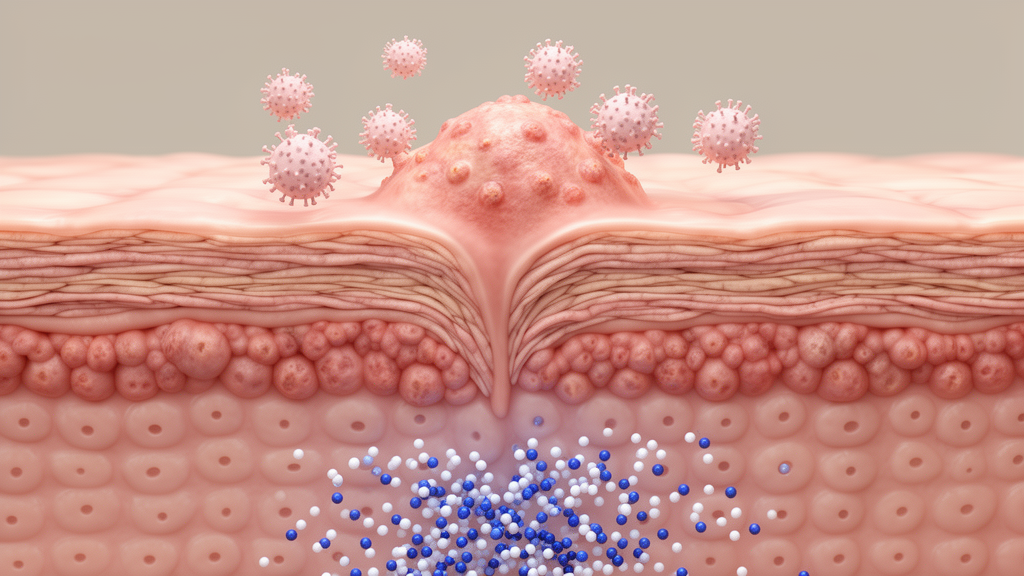
How Low-Risk HPV Builds Benign Skin Warts and What New Therapies May Finally Clear Them

How Low-Risk HPV Builds Benign Skin Warts and What New Therapies May Finally Clear Them

65
SHARES
587
VIEWS
Share on FacebookShare on Twitter
ADVERTISEMENT

A review in Molecular Biology Reports examines how low-risk human papillomavirus types are associated with benign skin warts and surveys the molecular pathways and clinical management strategies described for these lesions. The review focuses on cutaneous warts, distinguishing them from high-risk HPV types associated with malignancy, and synthesizes mechanistic and treatment evidence rather than reporting results from a new clinical trial.

The abstract states that low-risk HPV genomes remain in an episomal state while expressing E6 and E7 proteins. Compared with high-risk HPVs, these proteins have a reduced ability to degrade pRb and p53, which the review links to controlled epithelial hyperplasia rather than malignancy. It also describes activation of host signaling pathways that promote keratinocyte proliferation and wart formation, alongside innate and adaptive immune responses that can clear lesions.

Particular attention is given to the integrin–FAK–PI3K/AKT, Hippo–YAP/TAZ and MAPK–ERK pathways. The review presents these as molecular routes implicated in cutaneous benign wart formation, summarizing the existing literature on their involvement. The available evidence is limited to the published abstract and does not provide detailed methods, study populations, effect estimates or the quality assessments used to reach its conclusions.

For clinical management, the abstract identifies destructive approaches such as cryotherapy, keratolytics and excision; immunotherapies including imiquimod, interferon injections and intralesional antigen; and adjunctive approaches including photodynamic therapy and intralesional chemotherapeutics. It also discusses emerging HPV vaccination strategies. Intralesional Candida antigen and intralesional HPV vaccination are described as having encouraging clinical responses, but the review emphasizes that extensive controlled studies are needed to establish efficacy, clinical value and standardization. Because the supplied source is an abstract rather than the full review, the relative strength of evidence for individual treatments cannot be independently assessed here.

Subject of Research: Review of molecular pathways and clinical management of low-risk HPV-associated cutaneous warts

Article Title: Molecular insights and therapeutic innovations in low-risk human papillomavirus-associated cutaneous wart

Article References: Sarkar, A., Pan, S., Ghorai, T., Nayak, D., & Das, S. (2026). Molecular insights and therapeutic innovations in low-risk human papillomavirus-associated cutaneous wart. Molecular Biology Reports, 53(1), Article 1565. https://doi.org/10.1007/s11033-026-12746-2

Image Credits: AI Generated

DOI: 10.1007/s11033-026-12746-2

Keywords: low-risk HPV, cutaneous warts, viral molecular mechanisms, keratinocyte proliferation, immune response, destructive treatment, intralesional immunotherapy, Candida antigen, HPV vaccination, clinical evidence, Molecular, insights

Cite Scienmag News

Kristina Jarvis. (October 20, 2026). Review maps molecular pathways and management strategies for low-risk HPV skin warts. Scienmag. https://scienmag.com/review-maps-molecular-pathways-and-management-strategies-for-low-risk-hpv-skin-warts/


Kristina Jarvis. "Review maps molecular pathways and management strategies for low-risk HPV skin warts." Scienmag, 20 October 2026, https://scienmag.com/review-maps-molecular-pathways-and-management-strategies-for-low-risk-hpv-skin-warts/. Accessed 20 October 2026.

Kristina Jarvis. "Review maps molecular pathways and management strategies for low-risk HPV skin warts." Scienmag. October 20, 2026. https://scienmag.com/review-maps-molecular-pathways-and-management-strategies-for-low-risk-hpv-skin-warts/

Tags: benign skin lesionsCandida antigenclinical evidenceclinical management of skin wartscutaneous wartsdestructive treatmentHippo–YAP/TAZ pathwayHPV vaccinationHPV-associated epithelial hyperplasiahuman papillomavirusImmune responseimmune response to HPVInsightsintegrin–FAK–PI3K/AKT signalingintralesional immunotherapykeratinocyte proliferationlow-risk HPVlow-risk HPV typesMAPK/ERK pathwaymolecularmolecular pathways in wart formationskin wartsviral molecular mechanisms
Share26Tweet16
Previous Post

Uncontrolled retrospective study links structured sexual healthcare with improved sexual activity among women with gynaecological conditions

Next Post

Hybrid machine-learning model improves TiN thickness prediction with limited calibration data

Related Posts

Quercetin Shields Joints From Rheumatoid Arthritis Bone Loss by Silencing Wnt3a/β-Catenin
Biology

Quercetin improves bone measures in rats with collagen-induced arthritis alongside reduced Wnt3A and β-catenin expression

October 20, 2026
Neutrophil Enzyme Genes Surge in Advanced Diabetic Kidney Disease, Flagging Albuminuria Risk
Biology

MPO and NE mRNA associated with severe albuminuric diabetic kidney disease in 70-patient study

October 20, 2026
Protein Duo SERPINB5 and FBXO32 Drive Deadly Pancreatic Cancer Spread
Biology

SERPINB5 promotes pancreatic adenocarcinoma progression through FBXO32-mediated regulation of epithelial-mesenchymal transition

October 20, 2026
Omp33-36 loop mutations alter porin dynamics in resistant A. baumannii
Biology

Omp33-36 loop mutations alter porin dynamics in resistant A. baumannii

October 20, 2026
The Lipid Receptor LPA₃ Emerges as a Switchboard for Cancer, Metabolism and Neuroinflammation
Biology

LPA₃ signaling and biological functions: from physiological regulation to disease-targeted therapy

October 20, 2026
CRISPR-Cas Tools Take Aim at Drug-Resistant Pseudomonas aeruginosa
Biology

The application of the CRISPR-Cas system in Pseudomonas aeruginosa infections

October 20, 2026
Next Post
AI Learns to Predict Titanium Nitride Coating Thickness from Just a Handful of Experiments

Hybrid machine-learning model improves TiN thickness prediction with limited calibration data

  • Mothers who receive childcare support from maternal grandparents show more optimized

    Mothers who receive childcare support from maternal grandparents show more parental warmth, finds NTU Singapore study

    27656 shares
    Share 11059 Tweet 6912
  • University of Seville Breaks 120-Year-Old Mystery, Revises a Key Einstein Concept

    1061 shares
    Share 424 Tweet 265
  • Bee body mass, pathogens and local climate influence heat tolerance

    682 shares
    Share 273 Tweet 171
  • Researchers record first-ever images and data of a shark experiencing a boat strike

    546 shares
    Share 218 Tweet 137
  • Groundbreaking Clinical Trial Reveals Lubiprostone Enhances Kidney Function

    531 shares
    Share 212 Tweet 133
Science

Embark on a thrilling journey of discovery with Scienmag.com—your ultimate source for cutting-edge breakthroughs. Immerse yourself in a world where curiosity knows no limits and tomorrow’s possibilities become today’s reality!

RECENT NEWS

  • Longitudinal study links evaluative fears, ego depletion and abnormal eating behavior
  • Experimental multi-omics study links low-phosphorus tolerance in TY2 oat to coordinated metabolic responses
  • Hybrid machine-learning model improves TiN thickness prediction with limited calibration data
  • Review maps molecular pathways and management strategies for low-risk HPV skin warts

Categories

  • Agriculture
  • Anthropology
  • Archaeology
  • Athmospheric
  • Biology
  • Biotechnology
  • Blog
  • Bussines
  • Cancer
  • Chemistry
  • Climate
  • Earth Science
  • Editorial Policy
  • Marine
  • Mathematics
  • Medicine
  • Pediatry
  • Policy
  • Psychology & Psychiatry
  • Science Education
  • Science News
  • Social Science
  • Space
  • Technology and Engineering

Subscribe to Blog via Email

Enter your email address to subscribe to this blog and receive notifications of new posts by email.

Join 5,150 other subscribers

© 2025 Scienmag - Science Magazine

Welcome Back!

Login to your account below

Forgotten Password?

Retrieve your password

Please enter your username or email address to reset your password.

Log In
No Result
View All Result
  • HOME
  • SCIENCE NEWS
  • CONTACT US

© 2025 Scienmag - Science Magazine

Discover more from Science

Subscribe now to keep reading and get access to the full archive.

Continue reading