

Tuesday, October 20, 2026
Science
No Result
View All Result
  • Login
  • HOME
  • SCIENCE NEWS
  • CONTACT US
  • HOME
  • SCIENCE NEWS
  • CONTACT US
No Result
View All Result
Scienmag
No Result
View All Result
Home Science News Technology and Engineering

Review identifies shrinkage-control measures and prediction models for geopolymer composites

October 20, 2026
in Technology and Engineering
Denise Maddox
By Denise Maddox Scienmag Editorial Profile - Mechanical Engineering
Reading Time: 2 mins read
0
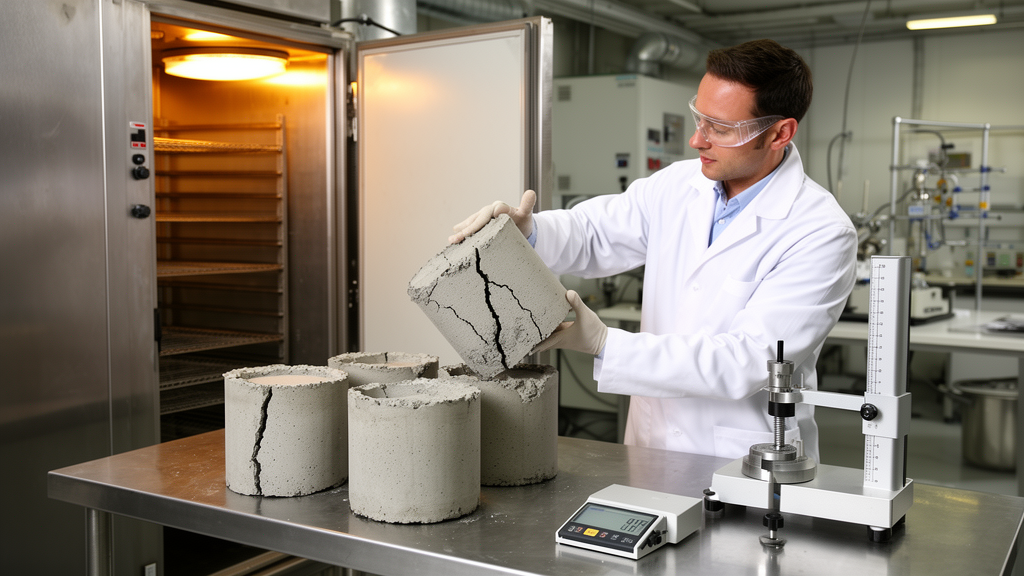
Why Geopolymer Concrete Shrinks and How Scientists Are Learning to Stop It

Why Geopolymer Concrete Shrinks and How Scientists Are Learning to Stop It

65
SHARES
587
VIEWS
Share on FacebookShare on Twitter
ADVERTISEMENT

A review of geopolymer composites reports that fibers, shrinkage-reducing agents, expansive agents, nanoparticles and suitable curing methods can restrain shrinkage, with rational and economical use of these measures reducing shrinkage by up to 60%. The review also identifies the most accurate of the assessed models for predicting drying and autogenous shrinkage, based on R² values of 0.985 and 0.963, respectively.

The review, published in the Journal of Materials Science, focuses on the mechanisms and characteristics of three types of shrinkage in geopolymer composites. Its abstract says the paper systematically analyzes these shrinkage types, clarifies the main factors influencing shrinkage, summarizes corresponding restraining measures, discusses shrinkage prediction models and identifies future directions for model development. Geopolymer is presented as a promising low-carbon and green alternative to ordinary Portland cement, although high shrinkage is described as a limitation on its further development and application.

According to the abstract, fibers, shrinkage-reducing agents, expansive agents, nanoparticles and appropriate curing methods are all reported as effective approaches for restraining shrinkage. The reported maximum reduction of 60% applies to rational and economical application of these measures, rather than to any single intervention. The review also identifies a boundary for nanoparticle use: an excessive content above 0.4% can aggravate shrinkage in geopolymer composites.

Among the prediction models discussed, the Migunthanna model is reported to provide the most accurate prediction of drying shrinkage, with an R² of 0.985. For autogenous shrinkage, the Li model is reported as the most accurate, with an R² of 0.963. These are model-performance results reported in the review’s abstract, not direct measurements from a new experimental program.

The available evidence is limited to the publisher’s abstract and bibliographic information for this review article; the full review is presented behind a subscription preview. As a result, the specific three shrinkage types, the underlying mechanisms, model equations and the broader evidence base for the reported comparisons are not available for independent assessment here. The review states that it can provide a theoretical basis for reduction design and engineering application of geopolymer composites, but the abstract does not establish performance for a particular structural application.

Subject of Research: Review of shrinkage mechanisms, restraining measures and prediction models for geopolymer composites

Article Title: Shrinkage mechanism, restraining measures and prediction models of shrinkage for geopolymer composites: a review

Article References: Zhang, P., Jiang, X., Gao, Z., & Ding, Y. (2026). Shrinkage mechanism, restraining measures and prediction models of shrinkage for geopolymer composites: a review. Journal of Materials Science, 61(42), 32434-32462. https://doi.org/10.1007/s10853-026-13697-6

Image Credits: AI Generated

DOI: 10.1007/s10853-026-13697-6

Keywords: geopolymer composites, shrinkage, drying shrinkage, autogenous shrinkage, shrinkage prediction models, fibers, nanoparticles, curing methods, construction materials, mechanism, restraining, measures

Cite Scienmag News

Denise Maddox. (October 20, 2026). Review identifies shrinkage-control measures and prediction models for geopolymer composites. Scienmag. https://scienmag.com/review-identifies-shrinkage-control-measures-and-prediction-models-for-geopolymer-composites/


Denise Maddox. "Review identifies shrinkage-control measures and prediction models for geopolymer composites." Scienmag, 20 October 2026, https://scienmag.com/review-identifies-shrinkage-control-measures-and-prediction-models-for-geopolymer-composites/. Accessed 20 October 2026.

Denise Maddox. "Review identifies shrinkage-control measures and prediction models for geopolymer composites." Scienmag. October 20, 2026. https://scienmag.com/review-identifies-shrinkage-control-measures-and-prediction-models-for-geopolymer-composites/

Tags: autogenous shrinkagechallenges and solutions for high shrinkage in geopolyconstruction materialscuring methodscuring methods for geopolymer compositesdrying and autogenous shrinkage prediction modelsdrying shrinkageenvironmental benefits of geopolymer compositesfibersfibers and nanoparticles in geopolymerfuture directions in geopolymer shrinkage researchgeopolymer compositesGeopolymer composites shrinkage controllow-carbon geopolymer materialsmeasuresmechanismmechanisms of shrinkage in geopolymermodeling accuracy in geopolymer shrinkage predictionnanoparticlesrestrainingshrinkageshrinkage prediction modelsshrinkage-reducing and expansive agentssustainable construction materials
Share26Tweet16
Previous Post

Qualitative systematic review identifies social-capital themes in healthcare AI implementation

Next Post

Observational survey analysis finds declining unmet home-visiting needs among disabled older adults in China

Related Posts

Sulfur-vacancy SnS2–MXene prototype reaches 58.33 Wh kg−1
Technology and Engineering

Sulfur-vacancy SnS2–MXene prototype reaches 58.33 Wh kg−1

October 20, 2026
Metal Stretches to More Than 100 Times Its Length in Record-Breaking Superplasticity Feat
Technology and Engineering

Pb-Sn alloy reaches 10,180% superplastic elongation after tube high-pressure shearing

October 20, 2026
Slimmer AI Spots Steel Defects Faster and More Accurately Than Ever
Technology and Engineering

Lightweight EDGI-YOLO improves steel surface defect detection in image-based benchmark study

October 20, 2026
New 26-Item Questionnaire Captures Postpartum Sexual and Reproductive Health in Iranian Mothers
Technology and Engineering

Mixed-method study finds preliminary validity for 26-item postpartum health questionnaire in Iranian women

October 20, 2026
Solar storm measurements reveal variable aviation radiation risks
Technology and Engineering

Solar storm measurements reveal variable aviation radiation risks

October 20, 2026
Anesthesia Drug Turned Drug of Abuse Leaves a Detectable Signature in the Brain
Technology and Engineering

Cross-sectional study links etomidate use disorder with impulsivity and altered EEG microstates

October 20, 2026
Next Post
China’s Disabled Elderly Still Miss Out on Home Care as Wealth Shapes Who Gets Help

Observational survey analysis finds declining unmet home-visiting needs among disabled older adults in China

  • Mothers who receive childcare support from maternal grandparents show more optimized

    Mothers who receive childcare support from maternal grandparents show more parental warmth, finds NTU Singapore study

    27656 shares
    Share 11059 Tweet 6912
  • University of Seville Breaks 120-Year-Old Mystery, Revises a Key Einstein Concept

    1061 shares
    Share 424 Tweet 265
  • Bee body mass, pathogens and local climate influence heat tolerance

    682 shares
    Share 273 Tweet 171
  • Researchers record first-ever images and data of a shark experiencing a boat strike

    546 shares
    Share 218 Tweet 137
  • Groundbreaking Clinical Trial Reveals Lubiprostone Enhances Kidney Function

    531 shares
    Share 212 Tweet 133
Science

Embark on a thrilling journey of discovery with Scienmag.com—your ultimate source for cutting-edge breakthroughs. Immerse yourself in a world where curiosity knows no limits and tomorrow’s possibilities become today’s reality!

RECENT NEWS

  • Work-life balance and wellbeing among teachers in Bangladesh: a reflexive thematic analysis of stress, coping, and institutional support
  • Observational survey analysis finds declining unmet home-visiting needs among disabled older adults in China
  • Review identifies shrinkage-control measures and prediction models for geopolymer composites
  • Qualitative systematic review identifies social-capital themes in healthcare AI implementation

Categories

  • Agriculture
  • Anthropology
  • Archaeology
  • Athmospheric
  • Biology
  • Biotechnology
  • Blog
  • Bussines
  • Cancer
  • Chemistry
  • Climate
  • Earth Science
  • Editorial Policy
  • Marine
  • Mathematics
  • Medicine
  • Pediatry
  • Policy
  • Psychology & Psychiatry
  • Science Education
  • Science News
  • Social Science
  • Space
  • Technology and Engineering

Subscribe to Blog via Email

Success! An email was just sent to confirm your subscription. Please find the email now and click 'Confirm Follow' to start subscribing.

Join 5,150 other subscribers

© 2025 Scienmag - Science Magazine

Welcome Back!

Login to your account below

Forgotten Password?

Retrieve your password

Please enter your username or email address to reset your password.

Log In
No Result
View All Result
  • HOME
  • SCIENCE NEWS
  • CONTACT US

© 2025 Scienmag - Science Magazine