


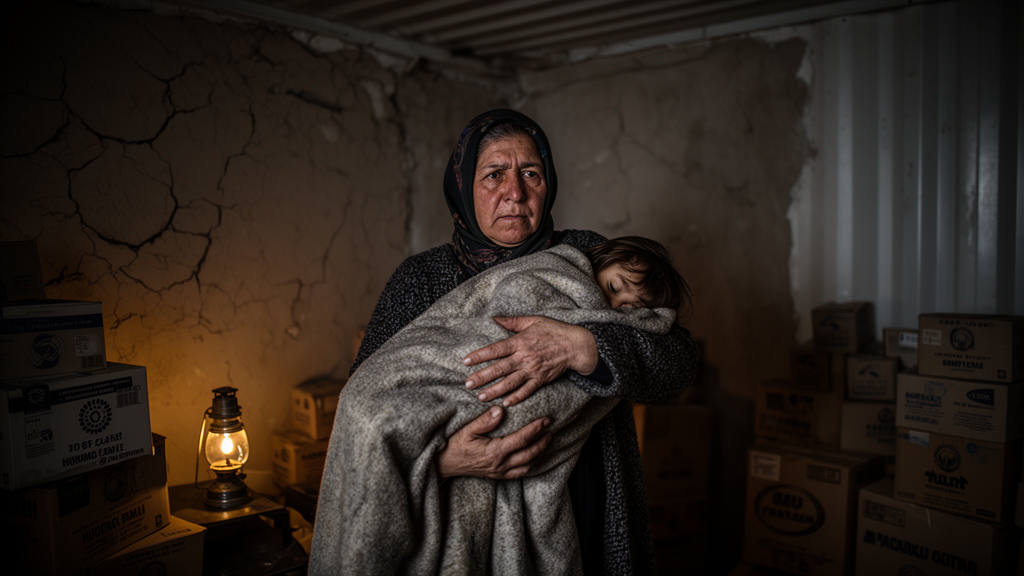
A mixed-method study of mothers living in earthquake-affected areas of Türkiye found that reported intimate partner violence was associated with higher hopelessness and intolerance of uncertainty, while scores for violence, hopelessness, and uncertainty varied with earthquake experiences, coping, shelter, and family support. The study assessed 512 mothers in 11 affected provinces approximately one year after the February 6, 2023, earthquakes and followed the survey with interviews of 20 mothers to explore the reported experiences in greater detail.
The researchers used an explanatory sequential design. The quantitative phase included mothers with children aged 0 to 18 in Kahramanmaraş, Hatay, Adıyaman, Osmaniye, Gaziantep, Şanlıurfa, Malatya, Diyarbakır, Adana, Kilis, and Elazığ. Data were collected online from March 20 to April 16, 2024, through email and social media because post-disaster logistics made face-to-face recruitment infeasible. Instruments measured intimate partner violence, hopelessness, intolerance of uncertainty, and sensitivity to violence against children.
Most participants had directly experienced the disaster: 97.3% said they were in the earthquake zone when it occurred, 56.6% reported financial losses, and 46.9% reported losing a relative. Fear or anxiety was the most frequently described emotional response, at 33.8%. At the time of the survey, 60.2% said they lived at home, while others reported staying in tents, container homes, prefabricated houses, or other shelters. In the introductory questionnaire, 71.3% reported hope for the future and 86.9% reported intolerance of uncertainty; the source does not provide a threshold that would justify classifying the latter group as having high intolerance of uncertainty.
Scores on the violence, hopelessness, and uncertainty measures differed according to several reported post-earthquake experiences. Mothers who described the earthquake as producing helplessness had higher intimate partner violence scores than those who described it as pain or sadness, unknown or meaninglessness, or loss or an ending. Mothers who described the earthquake as loss or an ending had higher hopelessness scores than those describing pain or sadness or shock. Intolerance-of-uncertainty scores were higher among mothers who characterized the earthquake in terms of fear or anxiety, loss or an ending, and helplessness than among those describing pain or sadness.
Living arrangements were also associated with the measured outcomes. Mothers in container homes had higher violence scores than those in tents and other shelters, while those in prefabricated houses also had higher violence scores than mothers in other shelters. Hopelessness scores were higher among mothers living in tents and container homes than among those in other shelters. Container-home residents also had higher intolerance-of-uncertainty scores than mothers in other shelters. These observational associations do not establish that a particular shelter type caused the differences.
Family support was associated with lower hopelessness: mothers who reported receiving it had lower scores than those who said they could not cope, used prayer, or cried. Mothers reporting violence before and after the earthquake also had higher violence, hopelessness, and intolerance-of-uncertainty scores than mothers reporting no exposure. The quantitative analysis found no significant differences in sensitivity to violence against children across the reported post-earthquake experiences, with all reported p-values greater than 0.05.
The qualitative phase comprised private, in-depth interviews with 20 mothers selected from the four provinces with the largest quantitative participation: Hatay, Kahramanmaraş, Malatya, and Adıyaman. Five mothers were interviewed in each province between April 23 and May 2, 2024. Thematic analysis produced six themes: sex inequality, failure to grieve, unpreventable violence, violence against children after the earthquake, nurses’ potential roles and limits in responding to violence, and hopelessness and intolerance concerning the future.
Interviewees linked post-earthquake violence with economic hardship, gender inequality, disrupted grieving, and uncertainty about the future. Some connected reduced income and unemployment with strain within families. Mothers described prayer, avoiding confrontation, and suppressing emotions as coping strategies that did not always prevent violence. Their accounts also addressed concern about children’s emotional and social responses to family violence, including helplessness, reduced confidence, and depression. Some said post-earthquake stress made parents more impatient and increased violence toward children, while others used “violence” metaphorically for the destructive and traumatizing effects of the earthquake itself. Because children’s direct exposure to violence and their own experiences were not assessed, these accounts represent mothers’ perceptions rather than measurements of child maltreatment.
The findings have important limitations. Online recruitment may have underrepresented mothers with limited internet access, lower digital literacy, severe trauma, or ongoing violence, while voluntary participation and social-desirability or response biases may have reduced disclosure of sensitive experiences. The qualitative sample was drawn from the survey participants and may therefore reflect the same selection limitations. Only mothers in earthquake-affected provinces were included, so the study could not compare them with mothers elsewhere or determine whether intimate partner violence was specific to affected regions. Men were not included, preventing examination of their experiences or possible contributors to violent behavior. The authors concluded that post-disaster care should include sustained psychosocial support and coordinated efforts to identify and refer violence-related concerns rather than relying only on emergency-phase assistance.
Subject of Research: Post-earthquake intimate partner violence, hopelessness, uncertainty, and perceptions of violence against children among mothers in Türkiye
Article Title: Determining mothers’ exposure to intimate partner violence, levels of hopelessness, intolerance of uncertainty, and their attitudes toward child violence in earthquake zones in Türkiye
Article References: Turk Delibalta, R., Kerimoğlu Yıldız, G., Turhan Coktay, Z., & Tuzcu, K. (2026). Determining mothers’ exposure to intimate partner violence, levels of hopelessness, intolerance of uncertainty, and their attitudes toward child violence in earthquake zones in Türkiye. BMC Psychology, 14(1), Article 1372. https://doi.org/10.1186/s40359-026-05645-5
Image Credits: AI Generated
DOI: 10.1186/s40359-026-05645-5
Keywords: intimate partner violence, earthquake aftermath, mothers, hopelessness, intolerance of uncertainty, child violence, social support, mixed-methods study, Türkiye, Determining, exposure, intimate
Cite Scienmag News
Violet Maxwell. (October 20, 2026). Mixed-method study links earthquake-related experiences with violence and psychological distress among mothers in Türkiye. Scienmag. https://scienmag.com/mixed-method-study-links-earthquake-related-experiences-with-violence-and-psychological-distress-among-mothers-in-turkiye/
Violet Maxwell. "Mixed-method study links earthquake-related experiences with violence and psychological distress among mothers in Türkiye." Scienmag, 20 October 2026, https://scienmag.com/mixed-method-study-links-earthquake-related-experiences-with-violence-and-psychological-distress-among-mothers-in-turkiye/. Accessed 20 October 2026.
Violet Maxwell. "Mixed-method study links earthquake-related experiences with violence and psychological distress among mothers in Türkiye." Scienmag. October 20, 2026. https://scienmag.com/mixed-method-study-links-earthquake-related-experiences-with-violence-and-psychological-distress-among-mothers-in-turkiye/


