


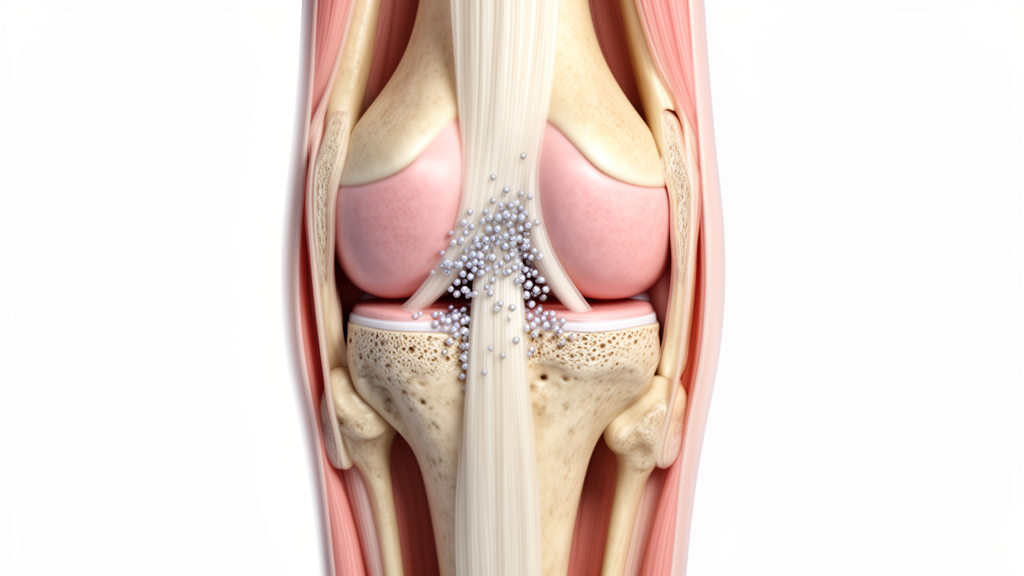
Stem cell-based interventions improved tendon-bone healing after anterior cruciate ligament reconstruction in a systematic review and meta-analysis of 16 controlled animal studies involving 550 rats and rabbits. Across pooled comparisons, the treatments increased ultimate failure load and stiffness, raised bone volume fraction measured by micro-computed tomography, and improved histological integration at the graft-bone interface. The largest effects were generally observed four to six weeks after surgery. The authors emphasize that these findings provide preclinical evidence, not proof of clinical benefit in people undergoing ACL reconstruction.
The synthesis included 275 animals receiving stem cell-based interventions and 275 controls, each assigned within the included studies. Eleven experiments used rabbits and five used rats. Cell products varied substantially, encompassing bone marrow-derived mesenchymal stem cells, adipose-derived stem cells, tendon-derived stem cells, synovium-derived mesenchymal stem cells and human umbilical cord blood-derived mesenchymal stem cells. Other interventions included mesenchymal stem cell-derived extracellular vesicles and exosomes. Delivery methods included direct injection, graft wrapping, cell sheets, fibrin glue, alginate gel, scaffold-based systems and three-dimensional bio-printed sleeves.
Control animals underwent the same type of ACL reconstruction as the corresponding intervention group but did not receive a cellular treatment. Depending on the experiment, controls received PBS, vehicle, fibrin glue, alginate gel, a scaffold without cells or another non-cellular intervention. Sham-operated animals and animals without ACL reconstruction were excluded from the quantitative analysis. This design meant that the pooled comparisons primarily addressed the added value of stem cell-related treatments in reconstructed knees rather than differences between reconstructed and unreconstructed animals.
The researchers searched PubMed, Embase, Scopus, SPORTDiscus and the Cochrane Library from each database’s inception through December 2025. They also screened reference lists from included studies and relevant reviews. Following PRISMA 2020 guidance, two reviewers independently screened records, assessed full texts, extracted data and evaluated risk of bias with SYRCLE’s animal-study tool. The protocol was prospectively registered in PROSPERO as CRD420251137985. The search returned 4,528 records; after 2,130 duplicates were removed, 2,398 records were screened and 132 full-text reports were assessed. Sixteen studies met all inclusion criteria.
Continuous outcomes were combined in random-effects models, with standardized mean differences used when studies employed different measurement scales. Statistical heterogeneity was evaluated with the chi-square test and the I² statistic. The analysis estimated 61% to 76% heterogeneity for the principal pooled outcomes, indicating substantial variation among studies. Follow-up duration was examined in subgroup analyses. Publication-bias assessments included inspection of funnel plots and Egger’s regression tests, although the small number of studies available for each outcome limited the reliability of those tests.
Ultimate failure load showed the largest pooled biomechanical association. Fourteen studies contributed 280 animals per group, yielding a standardized mean difference of 1.34, a 95% confidence interval of 0.93 to 1.75 and P below 0.00001. Heterogeneity for this outcome was high at I² = 75%. Thirteen studies, each contributing 264 animals per group, were available for stiffness. Their pooled standardized mean difference was 0.96, with a 95% confidence interval of 0.64 to 1.27 and P below 0.00001; heterogeneity was 61%. The stiffness result was not statistically significant at two weeks, when the standardized mean difference was 0.60 and the confidence interval ran from minus 0.31 to 1.50, but was significant across the reported later follow-up period from four to 12 weeks.
Micro-computed tomography results also favored the interventions. Seven studies, with 144 animals in each group, contributed to the bone volume fraction analysis. The pooled standardized mean difference was 1.03, the 95% confidence interval was 0.75 to 1.31 and P was below 0.00001. Heterogeneity was high at I² = 76%. Histological evaluation drew on only two studies, with 36 animals in the intervention arms and 36 in the control arms. The pooled standardized mean difference for graft-bone integration was 0.86, with a 95% confidence interval of 0.59 to 1.13 and P below 0.00001. That estimate had high heterogeneity of I² = 72%, and its basis in two studies makes it less secure than the broader biomechanical and imaging results.
Timing varied across the outcomes. The ultimate failure load effect was greatest at four weeks, with a subgroup standardized mean difference of 2.09, and declined at later observations. Stiffness reached a standardized mean difference of 1.49 at six weeks, followed by estimates of 0.85 at eight weeks and 1.02 at 12 weeks or later. Bone volume fraction was highest at four weeks, at 1.61, and fell to 0.68 at eight weeks. The histological estimate decreased from 1.05 at four weeks to 0.59 at 12 weeks or later. These subgroup estimates indicate that the measured differences were most pronounced during early healing, but they do not establish why the effects varied over time.
Several biological processes could plausibly be relevant, but the pooled comparisons did not directly test them. Mesenchymal stem cells have multipotent differentiation potential and may generate bone-like and fibrocartilage-forming tissue at the graft-bone interface. Their immunomodulatory and paracrine activities may also influence inflammation, blood-vessel formation, collagen organization and mineral deposition. Extracellular vesicles and exosomes were investigated as cell-derived products, while scaffolds and bio-printed constructs may improve local cell retention and viability. Because the included studies used different cell sources, doses, graft materials, animal species and delivery systems, the review could not reliably attribute the pooled effects to a particular mechanism, cell type or implantation method.
Risk of bias was judged moderate overall. Most studies were rated low risk for sequence generation, baseline comparability, incomplete outcome data and selective outcome reporting. By contrast, allocation concealment, random housing, blinding of caregivers and random outcome assessment were frequently unclear, and only a small number of studies adequately reported blinding of outcome assessors. Small samples, inconsistent dose reporting, varied timing of administration and short follow-up further restricted the analysis. The evidence did not permit dose-response analysis or the identification of an optimal therapeutic window, and the studies could not assess long-term graft durability, joint stability or possible post-traumatic osteoarthritis.
Funnel plots for ultimate failure load, stiffness and bone volume fraction showed no obvious asymmetry, while Egger’s regression tests were not statistically significant, with all P values above 0.05. These results did not provide strong evidence of publication bias, but they remain limited by the small number of studies contributing to each outcome. Null or negative findings may also be underrepresented in the broader mesenchymal stem cell literature. The meta-analysis therefore indicates that stem cell-based strategies can improve measured tendon-bone healing in preclinical ACL reconstruction models, especially during early integration, but standardized animal protocols, longer follow-up and adequately randomized and blinded studies are needed before clinical trials can test whether those laboratory gains translate into durable patient benefit.
Subject of Research: Preclinical evidence on stem cell therapies for tendon-bone healing after ACL reconstruction
Article Title: Effect of stem cell therapies on tendon-bone healing after anterior cruciate ligament reconstruction in animal models: a systematic review and meta-analysis
Article References: Sun, X., Zhao, S., & Wang, C. (2026). Effect of stem cell therapies on tendon-bone healing after anterior cruciate ligament reconstruction in animal models: a systematic review and meta-analysis. Frontiers in Bioengineering and Biotechnology, 14, Article 1869863. https://doi.org/10.3389/fbioe.2026.1869863
Image Credits: AI Generated
DOI: 10.3389/fbioe.2026.1869863
Keywords: ACL reconstruction, animal studies, stem cell therapy, mesenchymal stem cells, tendon-bone healing, graft integration, meta-analysis, biomechanics, micro-CT, regenerative medicine, Effect, stem
Cite Scienmag News
Drew Townsend. (October 20, 2026). Stem cell therapies improve tendon-bone healing in ACL animal models. Scienmag. https://scienmag.com/stem-cell-therapies-improve-tendon-bone-healing-in-acl-animal-models/
Drew Townsend. "Stem cell therapies improve tendon-bone healing in ACL animal models." Scienmag, 20 October 2026, https://scienmag.com/stem-cell-therapies-improve-tendon-bone-healing-in-acl-animal-models/. Accessed 20 October 2026.
Drew Townsend. "Stem cell therapies improve tendon-bone healing in ACL animal models." Scienmag. October 20, 2026. https://scienmag.com/stem-cell-therapies-improve-tendon-bone-healing-in-acl-animal-models/


