


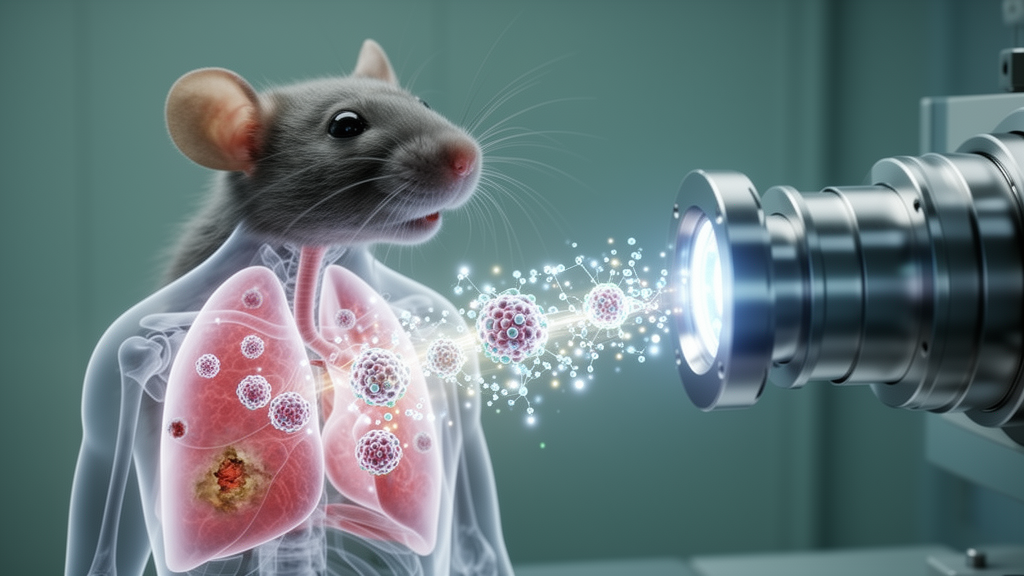
A preclinical study led by City of Hope researchers found that radiation can reprogram immune cells in a way that contributes to lung injury. In mice, irradiation increased the signaling protein interferon-beta, shifted lung-protective innate lymphoid cells from an ILC2 state toward an inflammatory ILC1 state, and promoted inflammation, tissue damage and fibrosis. When researchers disrupted interferon-beta signaling during radiation treatment, inflammation and lung injury decreased, while fibrosis was reduced.
The findings suggest that targeting this pathway could help limit damage to healthy lung tissue during cancer radiotherapy, although the approach has not been tested as a treatment in patients. The study appeared in Nature Communications on October 20, 2026, under the title “Type I IFN promotes ILC2-to-ILC1 plasticity in pre-clinical radiation-induced lung injury.” Radiation can be lifesaving in cancer treatment, but healthy lung tissue exposed during radiotherapy may develop severe and lasting damage.
City of Hope reported that as many as 70% of people diagnosed with lung cancer undergo radiation at some point in their treatment. Following injury, as many as 20% of patients may experience debilitating breathing difficulties and reduced quality of life, with some becoming dependent on supplemental oxygen. The new study does not establish that blocking interferon-beta can prevent these outcomes in people.
Instead, it identifies a cellular and molecular mechanism in a mouse model of radiation-induced lung injury and shows that interrupting the pathway can lessen pulmonary damage in experimental animals. Corresponding author Heather McGee, M.D., Ph.D., an assistant professor in City of Hope’s departments of radiation oncology and immuno-oncology, led the investigation with first author Jaeho Kim, M.D., Ph.D., a radiation oncology postdoctoral fellow. The team developed a mouse model of radiation injury to the lung and used immune-cell tracking methods to examine how radiation changed innate lymphoid cells, or ILCs.
These comparatively rare immune cells were the focus because the researchers wanted to determine whether they changed identity or function after irradiation. The experiments addressed three linked questions: whether radiation altered the ILC population, which signal drove the alteration, and whether blocking that signal could reduce lung damage. The first result was a pronounced transformation within the innate lymphoid cell population.
ILC2 cells normally help protect the lung from damage, whereas ILC1 cells promote inflammation that can injure healthy tissue. After radiation exposure, the investigators observed ILC2 cells adopt characteristics associated with the inflammatory ILC1 state. They described this transition as ILC2-to-ILC1 plasticity, meaning that the cells did not simply remain in one functional identity but changed their state in response to radiation.
The altered cells were linked to harmful inflammation in the lung. This result extends the study’s focus beyond better-known immune cells, including T cells, and points to a specific population through which radiation can affect lung tissue. The second finding identified interferon-beta as the molecular signal driving the transition.
Radiation increased levels of this type I interferon signaling protein, while experimental disruption of its pathway reduced the shift of ILC2 cells toward the inflammatory ILC1 state. McGee described the mechanism as comparable to a player switching teams: radiation-induced interferon-beta could move innate lymphoid cells away from a protective role and toward one that promotes inflammation. The finding provides a mechanistic link rather than only an association.
In the experimental system, a defined signaling event was connected to a change in cellular identity and function, and that function was connected to damage in healthy lung tissue. The researchers also examined human innate lymphoid cells to determine whether the biological changes seen in the mouse model had a counterpart in human cells. Those experiments produced similar changes, indicating that the reprogramming mechanism was not confined to the mouse cells used for the lung-injury experiments.
Human-cell findings support biological relevance, but they do not demonstrate that modifying interferon-beta signaling will be safe or effective in patients receiving radiation. The source described the pathway intervention as a potential strategy, and no human treatment trial or clinical efficacy result was reported. Its effects on radiation-related lung injury therefore remain a preclinical possibility rather than an established clinical application.
For the third set of experiments, the team tested whether blocking interferon-beta signaling during radiation could protect the lungs. In mice, disrupting the pathway reduced inflammation, limited lung injury and decreased fibrosis, the scarring process that can permanently damage healthy lung tissue. These outcomes were measured in an experimental model of radiation-induced pulmonary injury, not among people with cancer.
The result nevertheless identifies a focused point of intervention. That distinction is central to the study’s proposal: the biological pathway associated with lung harm was interrupted while radiation was being delivered. The clinical importance of the work lies in the potentially persistent consequences of radiation injury.
Healthy lung tissue exposed during radiotherapy can become inflamed and scarred, leading to breathing difficulty, reduced quality of life and limits on future cancer treatment options. City of Hope noted that some affected patients become tethered to heavy oxygen tanks. Kim said the findings suggest that high levels of interferon-beta contribute to radiation-induced lung damage and that blocking the signaling pathway could offer a potential way to reduce this side effect.
If the approach proves effective in people, it could protect lung tissue and perhaps expand radiation options for people with chronic lung conditions such as chronic obstructive pulmonary disease, or allow more aggressive radiation treatment when needed. Those possibilities remain conditional and untested. The researchers did not merely document inflammation and lung damage after irradiation.
They showed that innate lymphoid cells changed state, identified increased interferon-beta signaling as the driver of that change, observed related biological changes in human ILCs, and found that disrupting the pathway reduced inflammation, injury and fibrosis in mice. The design supports the conclusion that interferon-beta signaling contributes causally to radiation-associated lung damage within the experimental model. It does not establish how the same pathway behaves in the full complexity of a person receiving cancer treatment, nor whether targeted blockade could produce benefits without other immune effects.
City of Hope, which described the work as a potential route to new treatments that protect healthy lung tissue, is part of a broader cancer research and treatment organization. The project was funded by grants from the National Cancer Institute, the National Institutes of Health and the Veterans Affairs Office of Research and Development. The release stated that its content was solely the responsibility of the authors and did not necessarily represent the official views of the NIH.
Because the investigation is preclinical, the result should not be interpreted as evidence of a clinical therapy. What it establishes is a testable mechanism: radiation-induced interferon-beta signaling appears to convert lung-protective ILC2 cells into inflammatory ILC1 cells, and interrupting that pathway reduced radiation-related lung harm in mice. Whether the same selective strategy can safely and effectively translate to human radiotherapy remains to be established.
Subject of Research: Preclinical research on interferon-beta-driven immune-cell reprogramming in radiation-induced lung injury
Article Title: New study identifies immune trigger behind radiation-related lung damage
Article References: New study identifies immune trigger behind radiation-related lung damage. Original publication (Bibliographic details unavailable.)
Image Credits: AI Generated
DOI: Not provided
Keywords: radiation-induced lung injury, interferon-beta, innate lymphoid cells, ILC2-to-ILC1 plasticity, pulmonary fibrosis, radiotherapy, lung inflammation, cancer treatment, identifies, immune, trigger, behind
Cite Scienmag News
Nathaniel Bowman. (October 20, 2026). Interferon-beta signaling drives radiation lung injury in mice. Scienmag. https://scienmag.com/interferon-beta-signaling-drives-radiation-lung-injury-in-mice/
Nathaniel Bowman. "Interferon-beta signaling drives radiation lung injury in mice." Scienmag, 20 October 2026, https://scienmag.com/interferon-beta-signaling-drives-radiation-lung-injury-in-mice/. Accessed 20 October 2026.
Nathaniel Bowman. "Interferon-beta signaling drives radiation lung injury in mice." Scienmag. October 20, 2026. https://scienmag.com/interferon-beta-signaling-drives-radiation-lung-injury-in-mice/


