


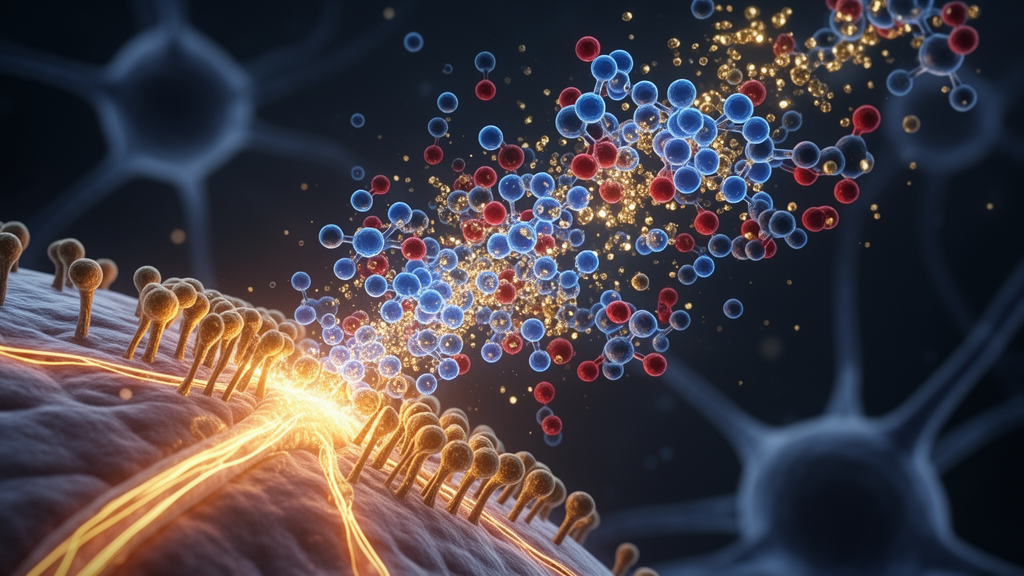
Combining methamphetamine with fentanyl may amplify the drugs’ rewarding, reinforcing and relapse-related effects, according to a review of neurobiological and behavioral studies. The most direct evidence comes from rodent experiments in which the two drugs were administered together or made available at the same time: individual doses that did not produce conditioned place preference could do so in combination, and cues linked to one drug could later restore seeking of the other. The authors caution that direct research on this specific pairing remains limited, with much of the proposed mechanism inferred from studies of each drug alone or from methamphetamine combined with other opioids.
The convergence is occurring against a widening public-health backdrop. The review reports that an estimated 2.4 million people aged 12 or older in the United States reported past-year methamphetamine use in 2024, while self-reported concurrent methamphetamine and fentanyl use nearly doubled between 2011 and 2017. Fentanyl positivity among methamphetamine-positive urine samples rose from 0.9% to 7.9% between 2013 and 2018. Because methamphetamine is sometimes intentionally mixed with fentanyl, people who believe they are using only a stimulant may be exposed to a potent opioid without knowing it, increasing the danger of overdose and other adverse outcomes.
Methamphetamine and fentanyl act through distinct but overlapping systems. The stimulant is highly lipophilic, enters the brain rapidly and has a substantially longer half-life than cocaine—about 12 hours in the cited pharmacological literature. It acts at trace amine-associated receptor 1 and disrupts vesicular monoamine transporter 2, producing marked increases in extracellular dopamine, noradrenaline and serotonin. These changes in mesocorticolimbic circuitry support reinforcement, cue learning and incentive salience. Repeated exposure can also sensitize behavioral responses, meaning that a fixed dose produces progressively stronger locomotor effects, and can alter brain systems associated with reward seeking and anxiety-like states.
Fentanyl, meanwhile, is a highly lipid-soluble opioid that binds with high efficacy to μ-opioid receptors. These Gi/o-coupled receptors reduce neuronal excitability and neurotransmitter release when activated. In the ventral tegmental area, where dopamine neurons project toward the nucleus accumbens and other reward-related regions, μ-opioid receptor activation on inhibitory GABAergic neurons can disinhibit dopamine cells. Acute fentanyl exposure therefore increases dopaminergic activity in circuits that participate in reward. Its high potency, rapid onset and relatively long half-life—three to seven hours—help explain why it can support both powerful reinforcement and substantial dependence.
Rodent studies show that both drugs readily become highly reinforcing. Methamphetamine-taking animals escalate their intake over repeated sessions, develop persistent preference for drug-paired environments and reinstate drug seeking after exposure to drug cues, stressors or a priming injection. Chronic exposure also produces withdrawal-related reductions in motivation for natural rewards and increases in anxiety-like behavior. Fentanyl produces a similar broad addiction profile: rodents rapidly acquire conditioned preference for fentanyl-paired locations, self-administer escalating amounts and reinstate seeking after extinction. Withdrawal from either drug can include stress, agitation, anxiety-like symptoms, anhedonia and reduced motivation, potentially supporting continued use through negative reinforcement as well as positive reinforcement.
The direct evidence for combined exposure points to a behavioral interaction rather than merely the sum of two separate drug effects. In one conditioned place-preference experiment in adult male rats, doses of methamphetamine and fentanyl that were ineffective when given separately successfully produced preference and reinstatement when administered together. In concurrent-access studies, rats adjusted their responses according to the relative reinforcing value of methamphetamine and fentanyl, showing that the drugs could function as substitutes under some conditions. Another study found that rats did not reduce their inter-infusion interval as fentanyl doses increased during combined self-administration to the same degree seen with fentanyl alone, resulting in greater overall intake. These findings indicate changes in reinforcement, but their magnitude depends on dose and experimental schedule.
Combined exposure may also join the motivational pathways associated with the two drugs. Rats trained to self-administer methamphetamine and fentanyl through concurrent access later showed cross-reinstatement after extinction: fentanyl-associated cues or fentanyl priming injections restored methamphetamine seeking, while methamphetamine-associated cues or priming injections restored fentanyl seeking. The result suggests that repeated co-exposure can create overlapping associations, allowing one substance or its cues to trigger pursuit of the other. The experiment was conducted in rats, and the finding cannot by itself establish how the same processes operate in human relapse.
Neurochemical findings are similarly intriguing but not yet conclusive. Methamphetamine-fentanyl self-administration produced significant reductions in dopamine release and reuptake in the nucleus accumbens, with a more pronounced hypodopaminergic state in males exposed to the combination than in animals receiving methamphetamine alone. Measurements were made roughly 22 hours after the final self-administration session, outside the acute drug effects, suggesting compensatory adaptations after repeated exposure rather than the immediate neurochemical response to intoxication. The contrast with evidence that acute μ-opioid receptor activation increases dopamine is not necessarily contradictory: intoxication and withdrawal-like states may involve different phases of mesolimbic signaling. A state that feels highly rewarding during exposure may therefore be followed by diminished responsiveness to ordinary rewards.
μ-opioid receptors are the leading candidate mechanism because they sit at the intersection of the two drugs’ reward circuitry. Blocking these receptors with naltrexone attenuates methamphetamine-induced conditioned place preference, behavioral sensitization and cue-induced craving in animal studies, while genetic deletion reduces methamphetamine sensitization in mice. Human studies likewise found that naltrexone reduced cue-induced craving and subjective hedonic responses to methamphetamine. Opioid antagonism also reduces methamphetamine-related drug seeking in some rodent paradigms. However, these experiments did not directly test fentanyl-methamphetamine combinations. Studies with morphine or heroin offer additional support for stimulant-opioid interactions, but their pharmacology differs from fentanyl, and sequential exposure cannot establish the consequences of simultaneous use.
Human reports add another dimension but remain limited by variable doses, routes and timing. People who use psychostimulants with opioids often describe the combination as balancing two drugs: the stimulant may counter opioid-related sedation, while the opioid may reduce stimulant-associated anxiety or restlessness. Such accounts suggest that both enhanced pleasure and relief from aversive states can motivate co-use. Clinical studies also associate stimulant-opioid use with more anxiety, depression, impulsivity, anhedonia and psychotic symptoms than stimulant use alone, but those findings do not prove that withdrawal from the combination is more severe than withdrawal from either constituent drug. Direct evidence on withdrawal after repeated methamphetamine-fentanyl exposure is particularly sparse.
The review’s central conclusion is therefore both promising and restrained: existing evidence supports a synergistic addiction potential for concurrent methamphetamine and fentanyl use, but the specific mechanism and full behavioral consequences remain under-examined. The most important research gaps are systematic dose-response comparisons, experiments separating simultaneous from sequential exposure, direct characterization of spontaneous and precipitated withdrawal, and studies that manipulate μ-opioid signaling during combined exposure. Measuring neural activity alongside dopamine release would also help distinguish changes in ventral tegmental circuit function from downstream alterations in the nucleus accumbens. Until those studies fill the gaps, the evidence supports concern about the combination, not a complete causal map of how it alters the human brain or whether every dose and pattern of use produces the same effect.
Subject of Research: Behavioral and neurobiological consequences of concurrent methamphetamine and fentanyl use
Article Title: Separate and concurrent use of methamphetamine and fentanyl: behavioral and neurobiological consequences
Article References: Madden, J. T., Clark, B. J., Hamilton, D. A., & Pentkowski, N. S. (2026). Separate and concurrent use of methamphetamine and fentanyl: behavioral and neurobiological consequences. Frontiers in Behavioral Neuroscience, 20, Article 1966221. https://doi.org/10.3389/fnbeh.2026.1966221
Image Credits: AI Generated
DOI: 10.3389/fnbeh.2026.1966221
Keywords: methamphetamine, fentanyl, polydrug use, addiction, dopamine signaling, μ-opioid receptors, conditioned reward, drug seeking, rodent studies, withdrawal, Separate, concurrent
Cite Scienmag News
Ophelia Keating. (October 20, 2026). Methamphetamine and fentanyl together may amplify addiction-related effects. Scienmag. https://scienmag.com/methamphetamine-and-fentanyl-together-may-amplify-addiction-related-effects/
Ophelia Keating. "Methamphetamine and fentanyl together may amplify addiction-related effects." Scienmag, 20 October 2026, https://scienmag.com/methamphetamine-and-fentanyl-together-may-amplify-addiction-related-effects/. Accessed 20 October 2026.
Ophelia Keating. "Methamphetamine and fentanyl together may amplify addiction-related effects." Scienmag. October 20, 2026. https://scienmag.com/methamphetamine-and-fentanyl-together-may-amplify-addiction-related-effects/


