

Tuesday, October 20, 2026
Science
No Result
View All Result
  • Login
  • HOME
  • SCIENCE NEWS
  • CONTACT US
  • HOME
  • SCIENCE NEWS
  • CONTACT US
No Result
View All Result
Scienmag
No Result
View All Result
Home Science News

Lab study finds permethrin-resistant Kenyan mosquitoes remain competent for dengue-2

October 20, 2026
in Science News
Kristina Jarvis
By Kristina Jarvis Scienmag Editorial Profile - Infectious Disease Medicine
Reading Time: 2 mins read
0
Lab study finds permethrin-resistant Kenyan mosquitoes remain competent for dengue-2

Lab study finds permethrin-resistant Kenyan mosquitoes remain competent for dengue-2

65
SHARES
587
VIEWS
Share on FacebookShare on Twitter
ADVERTISEMENT

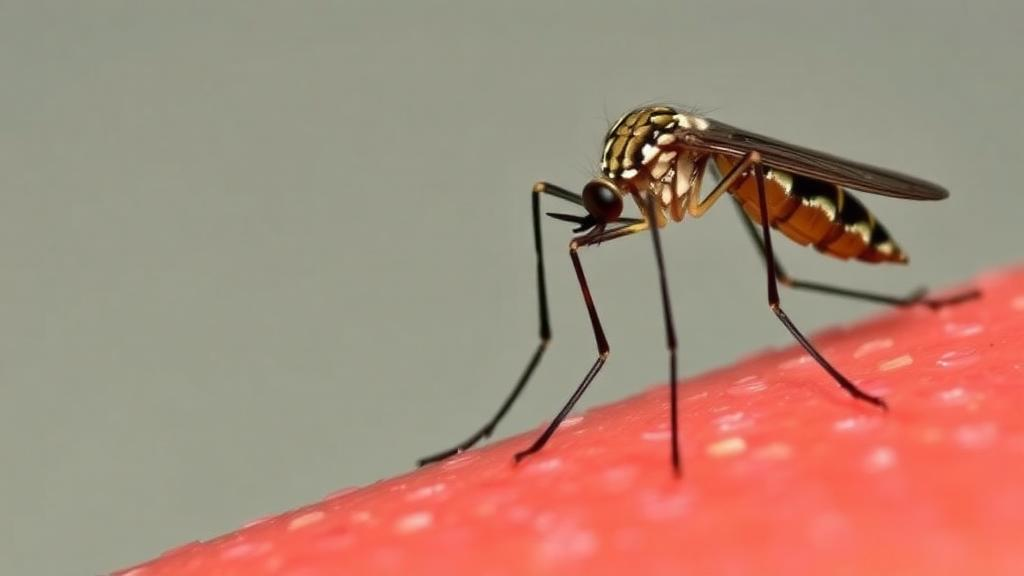
A laboratory study of Aedes aegypti mosquitoes collected from three selected sites in Kenya’s Lamu County found that permethrin-resistant subpopulations at Hindi and Mokowe remained capable of becoming infected with dengue-2 virus and developing disseminated infections. Mosquitoes from Shela were susceptible to permethrin, while samples from all three sites showed evidence of dengue-2 infection and dissemination after infectious blood meals.

Researchers collected Ae. aegypti mosquitoes from Shela, Hindi and Mokowe using traps and assessed permethrin susceptibility through World Health Organization insecticide-resistance assays. Mortality in the Shela population exceeded 98%, indicating susceptibility. By contrast, mortality was 47% in Hindi and 37.6% in Mokowe, leading the investigators to classify those populations as resistant. These results document a geographic contrast among the sampled sites rather than a change over time across Lamu County.

To test vectorial competence, second-generation mosquitoes were exposed to blood meals containing infectious dengue-2 virus. Fully engorged mosquitoes were then incubated for up to 21 days and tested by plaque assay for infection and dissemination. Among mosquitoes examined from Hindi, 14 of 60, or 23%, had midgut infections, while 12 of 60, or 20%, had disseminated infections. In Mokowe, 24 of 90 mosquitoes, or 27%, had midgut infections and 11 of 90, or 12%, had disseminated infections. At Shela, 40 of 130 mosquitoes, or 31%, had midgut infections and 21 of 130, or 16%, had disseminated infections. Shela therefore had the highest observed proportion of midgut infection, while Hindi had the highest proportion of disseminated infection. The measured proportions did not show that permethrin resistance prevented competence, but the study does not establish whether the mosquitoes would transmit dengue-2 to people at the same rates in the field.

The investigators separately examined genetic variation in 31 female mosquitoes by extracting genomic DNA from their legs, amplifying a mitochondrial DNA target with the HCO2198 and LCO1490 primers, and analyzing the amplicons through Sanger sequencing. All samples were identified as members of the Ae. aegypti formosus sub-species. Haplotype diversity was 1.0, while nucleotide diversity was 0.01184, indicating the presence of many haplotypes alongside comparatively low nucleotide-level variation. Together, the findings show that the selected Lamu County populations differed in permethrin susceptibility while retaining genetic characteristics consistent with Ae. aegypti formosus. Because the study covered three sites and assessed dengue-2 competence under laboratory conditions, its results should not be generalized to every mosquito population or to human dengue transmission in the county.

Subject of Research: Permethrin resistance, genetic diversity and dengue-2 vector competence of Aedes aegypti mosquitoes in Lamu County, Kenya

Article Title: Vector competence for dengue-2 virus of permethrin resistant/ susceptible Aedes aegypti sub-populations from selected sites in Lamu County, Kenya

Article References: Qureish, K. S., Mulwa, F., Odinga, R., Yalwala, S., Lutomiah, J., Bargul, J. L., Kellar, G. G., Eads, J., & Eyase, F. (2026). Vector competence for dengue-2 virus of permethrin resistant/ susceptible Aedes aegypti sub-populations from selected sites in Lamu County, Kenya. PLOS One, 21(10), e0359810. https://doi.org/10.1371/journal.pone.0359810

Image Credits: AI Generated

DOI: 10.1371/journal.pone.0359810

Keywords: Aedes aegypti, dengue-2 virus, vector competence, permethrin resistance, insecticide susceptibility, viral dissemination, mitochondrial DNA, Lamu County, Kenya, Vector, competence, dengue-2

Cite Scienmag News

Kristina Jarvis. (October 20, 2026). Lab study finds permethrin-resistant Kenyan mosquitoes remain competent for dengue-2. Scienmag. https://scienmag.com/lab-study-finds-permethrin-resistant-kenyan-mosquitoes-remain-competent-for-dengue-2/


Kristina Jarvis. "Lab study finds permethrin-resistant Kenyan mosquitoes remain competent for dengue-2." Scienmag, 20 October 2026, https://scienmag.com/lab-study-finds-permethrin-resistant-kenyan-mosquitoes-remain-competent-for-dengue-2/. Accessed 20 October 2026.

Kristina Jarvis. "Lab study finds permethrin-resistant Kenyan mosquitoes remain competent for dengue-2." Scienmag. October 20, 2026. https://scienmag.com/lab-study-finds-permethrin-resistant-kenyan-mosquitoes-remain-competent-for-dengue-2/

Tags: Aedes aegyptiAedes aegypti insecticide resistancecompetencedengue virus infection in resistant mosquito populationsdengue-2dengue-2 virusdengue-2 virus transmissiongeographic variation in mosquito resistanceimpact of insecticide resistance on disease spreadinsecticide susceptibilityinsecticide susceptibility testingKenyaLamu Countymitochondrial DNAmosquito control strategies in Kenyamosquito infection and dissemination ratesmosquito vector competencepermethrin resistancepermethrin-resistant mosquitoespublic health implications of insecticide resistanceresistance assays using WHO protocolsvectorvector competenceviral dissemination
Share26Tweet16
Previous Post

Galleri trial evidence supports earlier cancer detection despite unmet primary endpoint

Next Post

Research report: KLF: a high-recall learned filter for kNN search

Related Posts

Captive jaguar pair study links infertility to severe sperm defects
Biology

Captive jaguar pair study links infertility to severe sperm defects

October 20, 2026
Research report: KLF: a high-recall learned filter for kNN search
Technology and Engineering

Research report: KLF: a high-recall learned filter for kNN search

October 20, 2026
Galleri trial evidence supports earlier cancer detection despite unmet primary endpoint
Medicine

Galleri trial evidence supports earlier cancer detection despite unmet primary endpoint

October 20, 2026
Review maps 107 pelagic copepod taxa across the Arabian Gulf
Earth Science

Review maps 107 pelagic copepod taxa across the Arabian Gulf

October 20, 2026
Experiments reveal boron threshold for hydrothermal tourmaline growth
Chemistry

Experiments reveal boron threshold for hydrothermal tourmaline growth

October 20, 2026
Alpine Fleas Carry Multiple Tick-Associated Pathogens in China
Biology

Alpine Fleas Carry Multiple Tick-Associated Pathogens in China

October 20, 2026
Next Post
Research report: KLF: a high-recall learned filter for kNN search

Research report: KLF: a high-recall learned filter for kNN search

  • Mothers who receive childcare support from maternal grandparents show more optimized

    Mothers who receive childcare support from maternal grandparents show more parental warmth, finds NTU Singapore study

    27656 shares
    Share 11059 Tweet 6912
  • University of Seville Breaks 120-Year-Old Mystery, Revises a Key Einstein Concept

    1061 shares
    Share 424 Tweet 265
  • Bee body mass, pathogens and local climate influence heat tolerance

    682 shares
    Share 273 Tweet 171
  • Researchers record first-ever images and data of a shark experiencing a boat strike

    546 shares
    Share 218 Tweet 137
  • Groundbreaking Clinical Trial Reveals Lubiprostone Enhances Kidney Function

    531 shares
    Share 212 Tweet 133
Science

Embark on a thrilling journey of discovery with Scienmag.com—your ultimate source for cutting-edge breakthroughs. Immerse yourself in a world where curiosity knows no limits and tomorrow’s possibilities become today’s reality!

RECENT NEWS

  • Captive jaguar pair study links infertility to severe sperm defects
  • Research report: KLF: a high-recall learned filter for kNN search
  • Lab study finds permethrin-resistant Kenyan mosquitoes remain competent for dengue-2
  • Galleri trial evidence supports earlier cancer detection despite unmet primary endpoint

Categories

  • Agriculture
  • Anthropology
  • Archaeology
  • Athmospheric
  • Biology
  • Biotechnology
  • Blog
  • Bussines
  • Cancer
  • Chemistry
  • Climate
  • Earth Science
  • Editorial Policy
  • Marine
  • Mathematics
  • Medicine
  • Pediatry
  • Policy
  • Psychology & Psychiatry
  • Science Education
  • Science News
  • Social Science
  • Space
  • Technology and Engineering

Subscribe to Blog via Email

Enter your email address to subscribe to this blog and receive notifications of new posts by email.

Join 5,150 other subscribers

© 2025 Scienmag - Science Magazine

Welcome Back!

Login to your account below

Forgotten Password?

Retrieve your password

Please enter your username or email address to reset your password.

Log In
No Result
View All Result
  • HOME
  • SCIENCE NEWS
  • CONTACT US

© 2025 Scienmag - Science Magazine

Discover more from Science

Subscribe now to keep reading and get access to the full archive.

Continue reading