


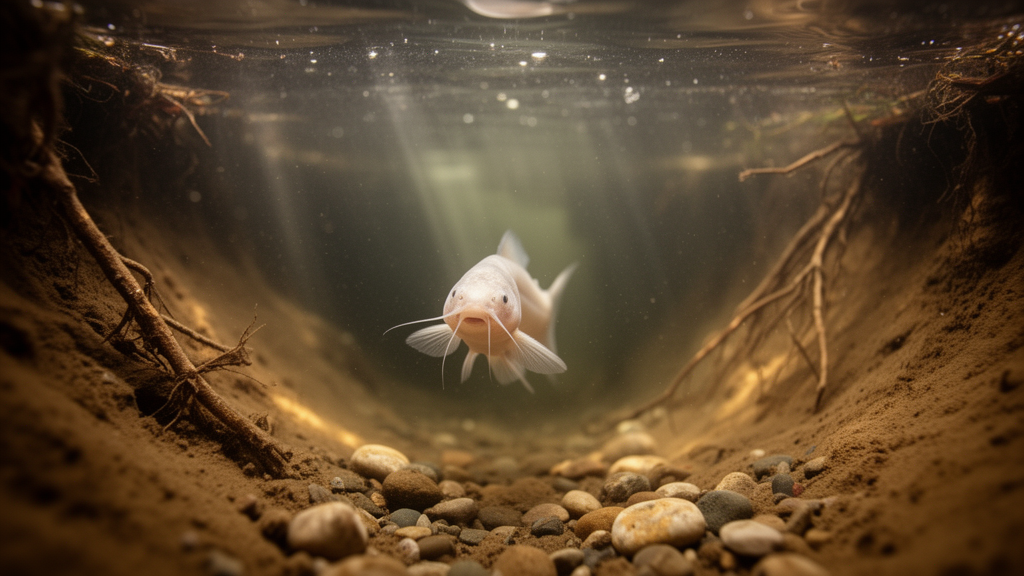
A tiny, pale fish recovered from borewells in Bihar, India, has been described as a new genus and species of subterranean earthworm eel. Researchers named it Gangaichthys indonepalicus after genetic sequencing, anatomical comparisons and high-resolution micro-CT imaging showed that it represents the first stygobitic member of the family Chaudhuriidae. The finding also documents the first subterranean fish known from Indian alluvial aquifer systems and the Indo-Gangetic Plain.
Only three specimens were collected, and just one was intact and alive when recovered. A fish photographed in Nepal was assigned to the same species, but it was not collected as a specimen. The investigation began after a 2024 social-media video from the India–Nepal border showed an apparently blind, lightly pigmented fish emerging from a borewell.
A borewell is a machine-drilled shaft used to access groundwater. The researchers sampled more than 15 wells in Bihar by hand-pumping for approximately one week. Three specimens were obtained from two borewells in Balgangwa village, Pashchim Champaran District.
The intact fish was photographed alive and measured 40.6 mm in standard length; a damaged paratype measured 36.5 mm, while the third specimen was fragmentary. Specimens were deposited at the museum and research collection facility of the National Centre for Biological Sciences in Bengaluru. The authors withheld precise coordinates to reduce the risk of illegal collection.
The intact fish and one damaged specimen were recovered from the same well after approximately 2,000–2,500 litres had been pumped out. A third, severely damaged individual came from another hand pump about 900 metres to the north. Nearby wells and ponds yielded no additional fish.
All collected specimens came from borewells reaching as deep as approximately 10 metres below the surface, and the authors describe the species as apparently exclusively subterranean. A photographic record from Triveni in Nawalparasi District, Lumbini Province, Nepal, lies within an 11-kilometre straight-line distance of the two Bihar collection sites. Because the Nepal animal was documented photographically rather than collected, its anatomical and genetic characteristics could not be examined directly.
Gangaichthys belongs to Chaudhuriidae, a family of diminutive freshwater fishes whose members generally reach less than 90 mm in total length and live among aquatic vegetation, debris and mud in streams, swamps, ponds and lakes. Gangaichthys is the fifth monotypic genus recognized in the family and the first member known to inhabit subterranean water. Its discovery extends the known range of Chaudhuriidae by approximately 500 km westward and makes it the northernmost representative of the group.
The living animal was very pale and translucent in places. Its head, body and fins lacked visible pigmentation, the fin membranes were translucent and the fin rays were whitish. Pink, blood-vascularised patches were visible around the gills and near the anus, and the vertebral column appeared as a pink line through the transparent tail.
After preservation in formaldehyde and transfer to ethanol, the body became off-white and slightly more opaque. The eyes were reduced and covered by skin. Its body was elongate and eel-like, with a cylindrical head, a terminal mouth and a short, rounded snout.
Scales and lateral-line canals were absent, although muscle segments could be seen under magnification. The dorsal, anal and caudal fins were connected by membranes, and the pelvic fins were absent. Molecular analyses placed Gangaichthys within Chaudhuriidae.
The researchers extracted DNA from the intact fish and one damaged specimen and sequenced fragments of the mitochondrial cytochrome oxidase 1 gene, CO1, and the nuclear RAG1 gene. The two specimens had identical sequences for both markers. Maximum-likelihood and Bayesian analyses recovered the new species as the well-supported sister taxon of Chaudhuria caudata, while those two species were sister to Pillaia indica.
CO1 divergence averaged 20.7% from C. caudata and 22.2% from P. indica; corresponding RAG1 divergence averaged 12.7% and 13.5%. These analyses also supported a sister relationship between Chaudhuriidae and Mastacembelidae, although that relationship had only moderate Bayesian support and low maximum-likelihood support. Even so, the available molecular comparison has limitations.
Only two previously described chaudhuriid species had CO1 sequences in the dataset, and no comparative nuclear RAG1 sequences were available for the family. The authors therefore could not resolve interrelationships among all chaudhuriid genera or establish the exact position of the new genus within the family. They note that Gangaichthys could conceivably be accommodated in an expanded Chaudhuria, but regard this as unlikely because of its long phylogenetic branch and the number of morphological differences separating it from existing Chaudhuria species.
Additional genetic sampling of the family will be necessary to test the generic recognition of the new taxon. Micro-CT imaging of the intact holotype revealed the skeletal characters used to diagnose the fish and distinguish it from all known chaudhuriid genera. Gangaichthys has 64 vertebrae, comprising 28 abdominal and 36 caudal vertebrae, along with 37 dorsal fin rays, 35 anal fin rays, six caudal fin rays and a single pectoral fin ray.
Its neural spines are narrow laterally, taper to a point and point posteriorly or posterodorsally. The neural arches lack the anterior spinelike projection found in Chaudhuria, Chendol and Pillaia. The metapterygoid is elongated, the preorbital extension of the ectopterygoid does not extend beyond the coronoid process of the dentary, and the premaxilla and maxilla are fused.
The skeleton also has one hypural rather than the paired condition in Pillaia, Pillaiabrachia and Chaudhuria, and the anterior process of the prootic is evident and free from the autosphenotic. The fish also displays reductive features associated with underground life: complete loss of visible body pigmentation, reduced eyes and apparent absence of ossified ribs. Such traits occur repeatedly in distantly related subterranean fishes and do not by themselves establish close evolutionary relationship.
The new genus remains distinguishable from other chaudhuriids after cave-associated traits are set aside, particularly through its vertebral counts, fin-ray counts and detailed osteology. The apparent absence of ribs requires caution because the CT scan was performed without contrast agents, which may have prevented detection of weakly ossified or chondrified structures. Only one specimen was intact, so further scans could not be performed.
A limited comparison with the damaged paratype also showed variation in head length, snout length and pectoral-fin length, although the small and incomplete sample prevents firm conclusions about population-level variation. The genus name combines the Sanskrit “Ganga,” referring to the Ganga or Ganges River, with the Greek word for fish. The specific epithet indonepalicus refers to the India–Nepal border region, and the suggested English common name is the Indonepalese blind earthworm eel.
The formal description is based on the three Bihar specimens, with the Nepal occurrence supported by a photograph. Important aspects of the animal’s biology remain unknown: the extent of its distribution, population size, diet, reproduction, preferred groundwater conditions and the depth at which it lives within the aquifer have not been established. The study therefore identifies a distinctive new lineage while also demonstrating how little is known about fish inhabiting the alluvial groundwater systems of northern India.
Subject of Research: Description of a new subterranean earthworm-eel genus and species from Bihar alluvial aquifers
Article Title: Gangaichthys indonepalicus , a new genus and species of miniature stygobitic earthworm eel ( Synbranchiformes , Chaudhuriidae ) from alluvial aquifers in the Indo-Gangetic Plain, Bihar, northern India
Article References: Khandekar, A., Thackeray, T., He, Y., Mohapatra, A., & Agarwal, I. (2026). Gangaichthys indonepalicus, a new genus and species of miniature stygobitic earthworm eel (Synbranchiformes, Chaudhuriidae) from alluvial aquifers in the Indo-Gangetic Plain, Bihar, northern India. ZooKeys, 1289, 185-202. https://doi.org/10.3897/zookeys.1289.188089
Image Credits: AI Generated
DOI: 10.3897/zookeys.1289.188089
Keywords: Gangaichthys indonepalicus, subterranean fish, stygobitic fish, Bihar, Nepal, Indo-Gangetic Plain, groundwater aquifers, Chaudhuriidae, micro-CT imaging, taxonomic discovery, Gangaichthys, indonepalicus
Cite Scienmag News
Margaret Porter. (October 20, 2026). Blind subterranean fish found in Bihar alluvial aquifers. Scienmag. https://scienmag.com/blind-subterranean-fish-found-in-bihar-alluvial-aquifers/
Margaret Porter. "Blind subterranean fish found in Bihar alluvial aquifers." Scienmag, 20 October 2026, https://scienmag.com/blind-subterranean-fish-found-in-bihar-alluvial-aquifers/. Accessed 20 October 2026.
Margaret Porter. "Blind subterranean fish found in Bihar alluvial aquifers." Scienmag. October 20, 2026. https://scienmag.com/blind-subterranean-fish-found-in-bihar-alluvial-aquifers/


