

Tuesday, October 20, 2026
Science
No Result
View All Result
  • Login
  • HOME
  • SCIENCE NEWS
  • CONTACT US
  • HOME
  • SCIENCE NEWS
  • CONTACT US
No Result
View All Result
Scienmag
No Result
View All Result
Home Science News Biology

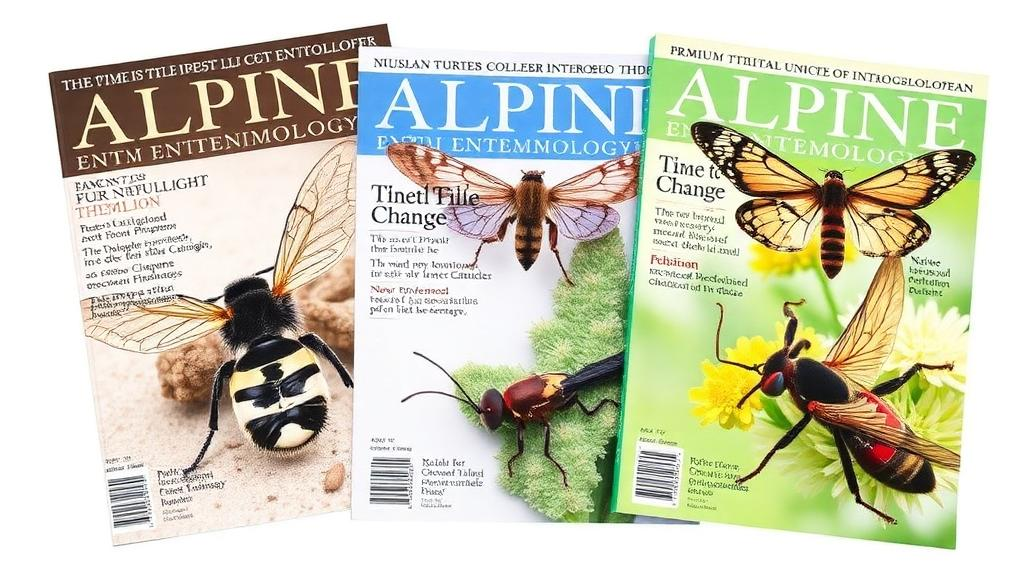
Time to change after six issues of Alpine Entomology

October 20, 2026
in Biology, Science News
Drew Townsend
By Drew Townsend Scienmag Editorial Profile - Cell Biology
Reading Time: 2 mins read
0
Time to change after six issues of Alpine Entomology

Time to change after six issues of Alpine Entomology

65
SHARES
587
VIEWS
Share on FacebookShare on Twitter
ADVERTISEMENT

After six issues, Alpine Entomology is preparing for an editorial transition, with a successor to the editor-in-chief selected and scheduled for formal election at the Swiss Entomological Society’s next general meeting in March 2023. The journal, published for the Swiss Entomological Society by Pensoft, has published almost 100 articles since its launch at the end of 2017. Its outgoing editor, who had led the publication throughout those six years, said the next phase should consolidate its scientific and international orientation and encourage more submissions.

Alpine Entomology was created in spring 2017, when then-SEG president Hannes Baur approached the founding editor-in-chief to lead a journal with a newly defined scope and an agreement with Pensoft. It replaced the society’s traditional “Mitteilungen der Schweizerischen Entomologischen Gesellschaft/Bulletin de la Société Entomologique Suisse” with an online, open-access publication. The first issue was planned for release before Christmas in 2017, after which publication generally followed an end-of-year schedule, except in 2020 and in the year of the sixth issue. The fixed schedule became less important once accepted articles were available online as soon as their final versions were ready.

Although its name suggests a regional focus, the journal was established as an international venue for research on insects and other arthropods associated with mountainous environments. It was not restricted to work from the Alps, and submissions were also considered from other mountainous regions when the connection to mountains was sufficiently strong. The editor-in-chief screened manuscripts before forwarding them to subject editors, who assisted with decisions in doubtful cases. This arrangement allowed the journal to retain a recognizable mountain focus while accepting relevant research from beyond the Alps.

Indexing was a central objective from the beginning. The journal was indexed by Scopus in 2020, and the editor reported that it would receive its first impact factor from Clarivate Analytics in 2023. Its output has included scientific papers, the society’s annual report and reference resources such as checklists for Switzerland. Individual articles have received more than 3,000 unique views on the journal website, which the editor presented as evidence that the online, open-access format reaches entomologists both within Switzerland and internationally.

The leadership change follows a decision made after the publication of the fifth volume to step down once a suitable successor could be found. A candidate has been selected, although the successor’s identity and formal election were still pending at the time of the announcement. Two recently launched topical collections, one on aquatic arthropods and another on alien insects, were identified as possible supports for increasing interest in submissions. The outgoing editor also credited the subject editors and editorial board for the journal’s development and expressed the hope that broader indexing, new leadership and the collections would help consolidate Alpine Entomology’s position within the international entomological community.

Subject of Research: The six-year development and planned leadership transition of the open-access entomology journal Alpine Entomology.

Article Title: Time to change after six issues of Alpine Entomology

Article References: Lachat, T. (2022). Time to change after six issues of Alpine Entomology. Alpine Entomology, 6, 159-160. https://doi.org/10.3897/alpento.6.98667

Image Credits: AI Generated

DOI: 10.3897/alpento.6.98667

Keywords: Alpine Entomology, entomology, arthropods, Swiss Entomological Society, open-access publishing, scientific journals, editorial transition, journal indexing, aquatic arthropods, alien insects, Time, change

Cite Scienmag News

Drew Townsend. (October 20, 2026). Time to change after six issues of Alpine Entomology. Scienmag. https://scienmag.com/time-to-change-after-six-issues-of-alpine-entomology/

Drew Townsend. "Time to change after six issues of Alpine Entomology." Scienmag, 20 October 2026, https://scienmag.com/time-to-change-after-six-issues-of-alpine-entomology/. Accessed 20 October 2026.

Drew Townsend. "Time to change after six issues of Alpine Entomology." Scienmag. October 20, 2026. https://scienmag.com/time-to-change-after-six-issues-of-alpine-entomology/


Tags: alien insectsAlpine EntomologyAlpine Entomology journal transitionaquatic arthropodsarthropodschangeeditorial transitionentomologyfuture directions for Alpine Entomologyhistory of Alpine Entomologyimpact of digital publication on research disseminationinternational scope of entomology journalsjournal indexingonline publication schedule for scientific journalsopen access publishingopen-access entomological researchregional vs. global focus in entomology journalsrole of Pensoft in scientific publishingscientific journal editorial changesscientific journalssubmission trends in scientific publicationsSwiss Entomological SocietySwiss Entomological Society publicationstime
Share26Tweet16
Previous Post

KwaZulu-Natal ecosystem accounts reveal large unrecorded economic value

Next Post

Research report: Karyotype characteristics and gene COI sequences of Chironomus bonus Shilova et Dzhvarsheishvili, 1974 ( Diptera , Chironomidae ) from the South Caucasus (Republic of Georgia, Paravani river)

Related Posts

Research report: Karyotype characteristics and gene COI sequences of Chironomus bonus Shilova et Dzhvarsheishvili, 1974 ( Diptera , Chironomidae ) from the South Caucasus (Republic of Georgia, Paravani river)
Biology

Research report: Karyotype characteristics and gene COI sequences of Chironomus bonus Shilova et Dzhvarsheishvili, 1974 ( Diptera , Chironomidae ) from the South Caucasus (Republic of Georgia, Paravani river)

October 20, 2026
KwaZulu-Natal ecosystem accounts reveal large unrecorded economic value
Science News

KwaZulu-Natal ecosystem accounts reveal large unrecorded economic value

October 20, 2026
New records of three vent scale worms fill Central Indian Ridge gaps
Biology

New records of three vent scale worms fill Central Indian Ridge gaps

October 20, 2026
Aging tunes cryogenic strength in Fe-based medium-entropy alloy
Technology and Engineering

Aging tunes cryogenic strength in Fe-based medium-entropy alloy

October 20, 2026
Application of scanning river surface flow field monitoring system in monitoring complex flow regimes of waterways
Technology and Engineering

Application of scanning river surface flow field monitoring system in monitoring complex flow regimes of waterways

October 20, 2026
Inside Medicare’s Physician Payment Reform Illusion of Inaction
Medicine

Inside Medicare’s Physician Payment Reform Illusion of Inaction

October 20, 2026
Next Post
Research report: Karyotype characteristics and gene COI sequences of Chironomus bonus Shilova et Dzhvarsheishvili, 1974 ( Diptera , Chironomidae ) from the South Caucasus (Republic of Georgia, Paravani river)

Research report: Karyotype characteristics and gene COI sequences of Chironomus bonus Shilova et Dzhvarsheishvili, 1974 ( Diptera , Chironomidae ) from the South Caucasus (Republic of Georgia, Paravani river)

  • Mothers who receive childcare support from maternal grandparents show more optimized

    Mothers who receive childcare support from maternal grandparents show more parental warmth, finds NTU Singapore study

    27656 shares
    Share 11059 Tweet 6912
  • University of Seville Breaks 120-Year-Old Mystery, Revises a Key Einstein Concept

    1061 shares
    Share 424 Tweet 265
  • Bee body mass, pathogens and local climate influence heat tolerance

    682 shares
    Share 273 Tweet 171
  • Researchers record first-ever images and data of a shark experiencing a boat strike

    546 shares
    Share 218 Tweet 137
  • Groundbreaking Clinical Trial Reveals Lubiprostone Enhances Kidney Function

    531 shares
    Share 212 Tweet 133
Science

Embark on a thrilling journey of discovery with Scienmag.com—your ultimate source for cutting-edge breakthroughs. Immerse yourself in a world where curiosity knows no limits and tomorrow’s possibilities become today’s reality!

RECENT NEWS

  • Research report: Karyotype characteristics and gene COI sequences of Chironomus bonus Shilova et Dzhvarsheishvili, 1974 ( Diptera , Chironomidae ) from the South Caucasus (Republic of Georgia, Paravani river)
  • Time to change after six issues of Alpine Entomology
  • KwaZulu-Natal ecosystem accounts reveal large unrecorded economic value
  • New records of three vent scale worms fill Central Indian Ridge gaps

Categories

  • Agriculture
  • Anthropology
  • Archaeology
  • Athmospheric
  • Biology
  • Biotechnology
  • Blog
  • Bussines
  • Cancer
  • Chemistry
  • Climate
  • Earth Science
  • Editorial Policy
  • Marine
  • Mathematics
  • Medicine
  • Pediatry
  • Policy
  • Psychology & Psychiatry
  • Science Education
  • Science News
  • Social Science
  • Space
  • Technology and Engineering

Subscribe to Blog via Email

Enter your email address to subscribe to this blog and receive notifications of new posts by email.

Join 5,149 other subscribers

© 2025 Scienmag - Science Magazine

Welcome Back!

Login to your account below

Forgotten Password?

Retrieve your password

Please enter your username or email address to reset your password.

Log In
No Result
View All Result
  • HOME
  • SCIENCE NEWS
  • CONTACT US

© 2025 Scienmag - Science Magazine

Discover more from Science

Subscribe now to keep reading and get access to the full archive.

Continue reading