


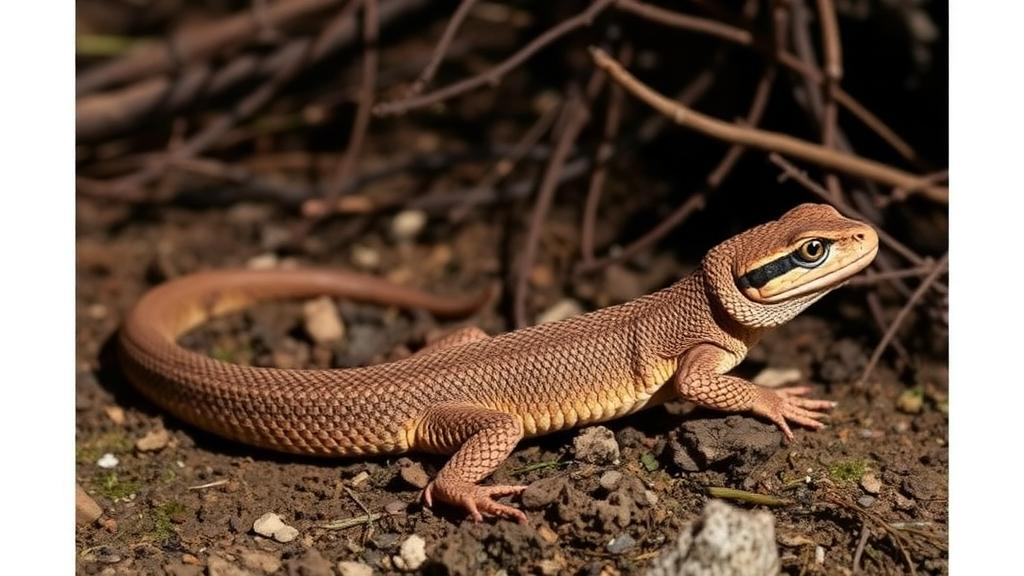
Fire killed more than a third of the reptiles detected in burned portions of the Sierra Morelos natural protected area north of Toluca, Mexico, according to a field study that documented animals alive and dead immediately after two dry-season fire seasons. Across the surveyed areas in 2021 and 2022, researchers found 69 fire-killed reptiles among 202 live or dead individuals. Seven of the 14 reptile species reported from the 1,255-hectare reserve were found dead, and some animals bore no visible burns, indicating that smoke or toxic gases may have killed reptiles sheltering underground. The results challenge the common assumption that planned burns pose little direct danger to reptiles, particularly in landscapes where slow-moving species depend on grass, leaf litter or shallow refuges that offer little protection during intense heat.
The study focused on direct mortality rather than inferred changes in population size. Researchers walked across burned areas in a zigzag pattern, generally within the first two weeks after a fire and in some cases as late as three weeks, recording every live or dead reptile they encountered. The 2021 survey covered 120.60 hectares during 18 field days and about 300 person-hours, while the 2022 effort surveyed 28.95 hectares over four days and 66 person-hours. Satellite imagery helped identify additional burned areas that could not be visited. Investigators used global positioning system measurements and a geographic information system to calculate areas and densities, while photographs documented animals and their locations. Carcasses were left in place because they can serve as food for predators and scavengers.
Fire affected 196.91 hectares of Sierra Morelos in 2021 and 63.33 hectares in 2022. Authorities reported 35.9 hectares of prescribed burning in 2021, compared with an annual average of 2.65 hectares between 2013 and 2020. The researchers surveyed 23.72 hectares of prescribed burns and 96.88 hectares of unplanned burns in 2021; in 2022, all 28.95 hectares surveyed were prescribed burns. The managed fires were intended to protect plantations of non-native trees, particularly Mexican pine and eucalyptus, which are highly flammable. Unplanned fires included illegal or accidental ignitions associated with agricultural and grazing activities, trash burning near informal settlements, abandoned campfires and discarded cigarettes.
Among the reptiles recorded in the 2021 burned areas, 58 were dead and 111 alive, meaning that 34% of the observed population had been killed. In 2022, 11 were dead and 22 alive, a mortality fraction of 33%. Overall carcass density across all sampled areas was 0.48 individuals per hectare in 2021 and 0.38 per hectare in 2022. The mean among individual sampling sites was considerably more variable, reaching 1.60 ± 2.99 individuals per hectare in 2021 and 0.31 ± 0.27 in 2022. One small prescribed firebreak produced the highest site-level density in 2021, with 12.26 carcasses per hectare, including three garter snakes. By contrast, a large 73.73-hectare site affected by an out-of-control stubble fire contained 20 carcasses, illustrating how total deaths and density can tell different stories.
Prescribed and unplanned burns produced no statistically detectable difference in carcass density in 2021, with a Mann–Whitney U result of W = 37.5 and p = 0.4383. In that year, 53% of reptiles found in prescribed-burn sites were dead, compared with 30% in unplanned-burn sites, but the number of sites and the high variation among them prevented the difference from reaching statistical significance. The researchers also found no relationship between carcass density and a simple measure of fire shape based on area divided by perimeter, which yielded R² = 0.0528 and p = 0.168. That measure did not account for rocks, agave plants, logs, burrows, wind, speed or severity, all of which could influence where animals survived.
The Mexican plateau horned lizard, Phrynosoma orbiculare, was the most frequently killed species and a particularly troubling casualty because it is threatened in Mexico. Twenty horned lizards were found dead in 2021 and four in 2022. The species shelters beneath bunchgrass or leaf litter when inactive and moves slowly, leaving it exposed when flames pass through its cover. Its carcass densities were 0.17 per hectare across the sampled area in 2021 and 0.14 per hectare in 2022. The torquate lizard, Sceloporus torquatus, was far more abundant but had a much lower death rate: nine of 70 observed individuals died in 2021 and three of eight in 2022. Its ability to climb rocks, shrubs, agave plants and fallen logs likely gave it access to more effective refuges. Researchers also noted that three horned lizards were intercepted and moved away from an active fire.
Ground-dwelling snakes were another major casualty. Nineteen garter snakes of the genus Thamnophis were found dead in 2021 and two in 2022. Three of the carcasses showed no visible thermal damage despite lying on completely burned ground. Garter snakes can retreat into burrows and underground cavities, including hollows more than a meter deep, but such protection may not prevent death from smoke inhalation, toxic gases or oxygen depletion. Their presence as intact, apparently unburned bodies on burned surfaces suggests that some may have sheltered below ground during the flames and emerged only after the surrounding vegetation had been consumed. The transvolcanic alligator lizard, Barisia imbricata, was relatively uncommon but yielded 10 carcasses, reinforcing concern that other ground-dwelling species may also have been disproportionately affected.
The observed totals are likely conservative. Carcasses can be hidden beneath ash, fragmented beyond recognition or entirely calcined; one horned lizard was so completely burned that it fell apart when photographed. Predators and scavengers may remove bodies before surveys begin, and the investigators noted that one previous study documented a 20% decline in carcass counts during the second week after fire. Some injured survivors may also have died after the survey through burns, dehydration or indirect effects. Reptiles that survived may have moved away before investigators arrived, and animals dying underground may never have been detectable. Conversely, the researchers excluded likely roadkill or other non-fire deaths from the analysis, and live animals found during surveys were released near burned-area edges to help them escape short-term threats.
Most carcasses in 2021 lay on burned grass, which accounted for 84% of the total, followed by leaf litter, rocky surfaces and bare soil. All carcasses found in 2022 were on burned grass. Even burns conducted in January and February, when reptiles may be less active, occurred during the cold and dry season, but inactivity did not necessarily mean deep shelter. Sierra Morelos has pronounced daily temperature swings, with winter nights sometimes below freezing and daytime temperatures above 20°C. Horned lizards may remain beneath bunchgrass or leaf litter even during cooler periods, placing them directly in the path of burning vegetation. The findings therefore do not support the assumption that winter scheduling alone is sufficient protection in this high-elevation grassland environment.
For conservation, the authors call for changes to fire management in Sierra Morelos and similar regional grasslands. They recommend ending prescribed burns as part of the reserve’s management program while also reducing the larger annual area affected by unplanned fires, which collectively pose a cumulative threat. Suggested measures include maintaining a distributed network of bike paths as firebreaks, rotating small-scale livestock use to limit fuel accumulation without intensifying grazing, replacing flammable pine and eucalyptus plantations with native vegetation, and coordinating dry-season vigilance among nearby communities. Restoring landscape features such as agave plants could provide refuges, while rapid post-fire searches could identify survivors for cooling, relocation or other assistance. More systematic monitoring of live and dead reptiles before and after fire would permit more precise estimates of mortality and help determine which management practices protect vulnerable populations without reducing the frequency of unplanned ignition.
Subject of Research: Direct fire-induced mortality among reptiles in a Mexican natural protected area
Article Title: Direct fire-induced reptile mortality in the Sierra Morelos natural protected area (Mexico)
Article References: González-Fernández, A., Couturier, S., Dotor-Diego, R., Martínez-Díaz-González, R., & Sunny, A. (2024). Direct fire-induced reptile mortality in the Sierra Morelos natural protected area (Mexico). Herpetozoa, 37, 213-226. https://doi.org/10.3897/herpetozoa.37.e116376
Image Credits: AI Generated
DOI: 10.3897/herpetozoa.37.e116376
Keywords: reptile mortality, wildfire, prescribed burning, Sierra Morelos, Mexico, hornied lizards, garter snakes, fire ecology, protected areas, anthropogenic fire, Direct, fire-induced
Cite Scienmag News
Margaret Porter. (October 19, 2026). Fire Kills a Third of Reptiles in Mexico’s Sierra Morelos. Scienmag. https://scienmag.com/fire-kills-a-third-of-reptiles-in-mexicos-sierra-morelos/
Margaret Porter. "Fire Kills a Third of Reptiles in Mexico’s Sierra Morelos." Scienmag, 19 October 2026, https://scienmag.com/fire-kills-a-third-of-reptiles-in-mexicos-sierra-morelos/. Accessed 19 October 2026.
Margaret Porter. "Fire Kills a Third of Reptiles in Mexico’s Sierra Morelos." Scienmag. October 19, 2026. https://scienmag.com/fire-kills-a-third-of-reptiles-in-mexicos-sierra-morelos/


