


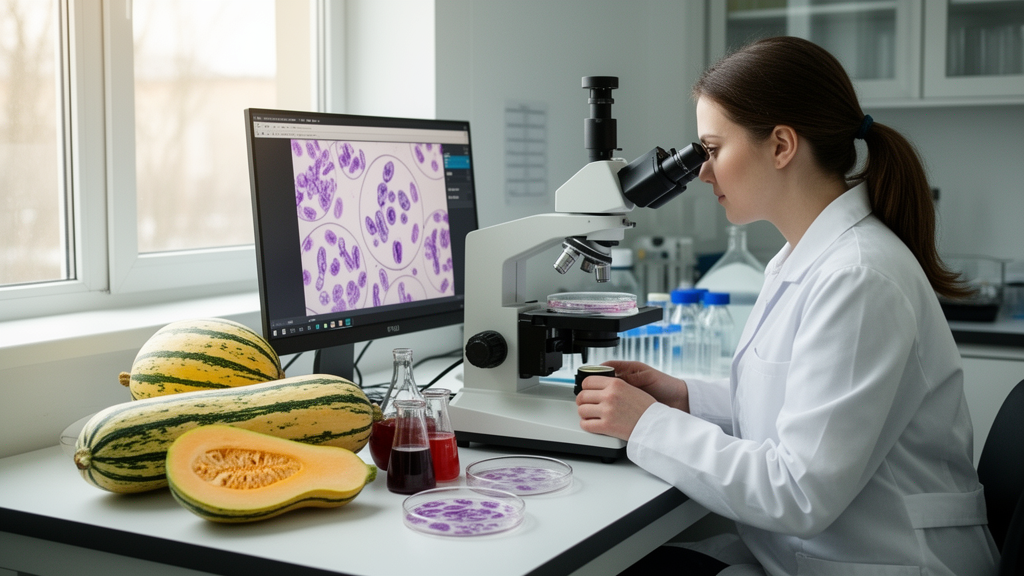
The gourd family, Cucurbitaceae, encompasses roughly 1,000 species distributed across 96 genera and ranks among the most economically significant vegetable-yielding plant families in the world. Despite its agricultural importance, the cytogenetic relationships within this family have remained fragmented across decades of scattered literature. A new critical review published in Comparative Cytogenetics now collates global cytogenetic reports on Cucurbitaceae and integrates fresh chromosome analyses of seven agriculturally important Indian cucurbit species, presenting a unified resource that supersedes the scope of general chromosome databases and opens new avenues for genome researchers, taxonomists, and plant breeders alike.
The review addresses three central questions: the trend of chromosome evolution in specific tribes and species based on available information, the correlation between chromosome numbers and ploidy or genome size in studied taxa, and the requirement of an exclusive cytogenetic catalogue for the cucurbit research community. Data were compiled following the classification of Schaefer and Renner (2011) after consultation of books, chromosome atlases, research articles, and public resources including the Chromosome Counts Database, the Index to Plant Chromosome Numbers, and the Plant DNA C-values database. This foundational approach ensures that the collated information reflects the most comprehensive cytogenetic picture currently available for the family.
Chromosome counts are currently available for 188 species, approximately 19 percent of the total, belonging to about 44 genera, roughly 46 percent, spread across 15 tribes. Within the understudied tribes, chromosome counts exist for only 42 species out of nearly 310, belonging to 17 genera out of approximately 44. The basal number ranges from x = 5 in Thladiantha to x = 15 in Zanonia. The most prevalent base number x = 12 is considered ancestral, followed by x = 11, 13, 14, and 10. Polyploidy has been abundantly reported in Gomphogyneae, while the dibasic condition is noticed in Momordica with x = 11 and 14. In Bryonieae, the X-Y sex determination system has been analysed in Bryonia as the model along with its sister genus Ecballium. Polyploidy is frequent in Bryonia, and natural tetraploids are known in two species of Trichosanthes while the majority remain diploids.
Benincaseae, the second largest tribe comprising 204 to 214 species in 24 genera, shows cytological reports in around 35 percent of species. The base number x = 12 is the prevalent condition, with dual base numbers noted in the widely studied Cucumis at x = 7 and 12. Molecular cytogenetics of Cucumis sativus has demonstrated the evolution of x = 7 from x = 12 within Benincaseae, a finding strongly corroborated by rDNA hybridization data and substantiated by genomic studies. The genus Cucumis is the largest in Benincaseae with 65 species, of which 39 have been studied cytogenetically. Among Cucumis species with x = 12, co-localization of 45S and 5S rDNA loci has been documented in 14 species including Cucumis melo, while the number of 45S sites is generally four, though it may extend to six or eight in some cases.
The review presents fresh karyotypes of seven agriculturally important Indian cucurbit species belonging to the tribes Benincaseae and Sicyoeae, generated through an enzymatic maceration and air-drying method followed by fluorochrome banding. Fresh and healthy roots from germinating seeds, seedlings, and underground root stocks were pretreated with 0.002 M hydroxyquinoline, fixed in 1:3 aceto-methanol solution, and digested in an enzyme mixture containing 1 percent Cellulase Onozuka RS, 0.75 percent Macerozyme R-10, and 0.15 percent Pectolyase Y-23 for 40 to 45 minutes at 37 degrees Celsius. Slides were stained with 2 percent Giemsa solution and subsequently with DAPI and CMA fluorochromes to reveal AT-rich and GC-rich heterochromatin respectively. Chromosome plates were observed under a Zeiss Axioscop 2 fluorescence microscope with images captured using a ProgRes MFscan camera.
The Indian species analysed include ridged gourd (Luffa acutangula, 2n = 26), sponge gourd (Luffa aegyptiaca, 2n = 26), wild Luffa echinata (2n = 26), snake gourd (Trichosanthes cucumerina ssp. cucumerina Anguina, 2n = 22), pointed gourd (Trichosanthes dioica, 2n = 22), ash gourd (Benincasa hispida, 2n = 24), and ivy gourd (Coccinia grandis, 2n = 24). Fluorochrome banding patterns facilitated comparative analysis across these species. The cultivated ridged gourd showed three CMA-positive satellite-bearing pairs, as in the wild Luffa echinata, while the sponge gourd has two satellited pairs. Luffa acutangula and Luffa echinata also showed distal DAPI bands, absent in Luffa aegyptiaca. The 11th, 12th, and 13th pairs are marker chromosomes in Luffa, while the 10th and 11th pairs are conserved CMA-positive satellited pairs in Trichosanthes.
Genome size information is available for 49 species, nearly 5 percent of the total, belonging to 15 genera. Among the species studied, genome sizes show 5.84-fold differences, while chromosome counts show nearly three-fold differences across the family. In the Indian Momordica species, significant interspecific genome size differences have been reported, with species differing 5.19-fold in their 2C values ranging from 0.72 to 3.74 picograms. Interestingly, the species with the lowest chromosome number, Momordica cymbalaria at 2n = 18, contained the highest nuclear DNA content among the four Momordica species examined. In Bryonieae, flow cytometric genome size of Bryonia shows a 2.2-fold increase over Ecballium. In Sicyoeae, 2C DNA content ranges from 1.49 to 2.32 picograms, indicating 1.55-fold differences. The highest 2C nuclear genome in Benincaseae is known in Benincasa hispida at 1.97 picograms, while the lowest is in Cucumis melo var. inodorus at 0.64 picograms.
Statistical regression analyses for 41 taxa, including 16 Indian taxa, revealed significant linear correlations between 2n chromosome number and total haploid chromosome length, between ploidy and genome size, and between ploidy and haploid chromosome length. An increase in ploidy or 2n number is linked with an increase in haploid chromosome length. However, there was no significant correlation between 2C genome size and chromosome numbers, suggesting that these foundational cytogenetic parameters may not reflect residual evidence of whole genome duplication events in Cucurbitaceae at present.
At the molecular cytogenetic level, the review identifies three types of nucleolus organizer regions based on rDNA hybridization patterns. Type I includes chromosomes with only non-colocalized 45S and 5S rDNA sites, found in seven species of Benincaseae, one species each from Cucurbiteae and Momordiceae, and two species of Sicyoeae. Type II shows colocalized 45S and 5S rDNA loci, either adjacent or distant but always on the same chromosome, found in one species each of Benincaseae, Sicyoeae, and Actinostemmateae. Type III is characterized by chromosomes with both non-colocalized and colocalized 45S and 5S rDNA loci, as in 14 species of Benincaseae and one species each of Sicyoeae and Thladiantheae. Distinct 45S rDNA sites are higher in number than 5S rDNA sites across the family, with distal 45S rDNA loci serving as conserved genomic landmarks while 5S rDNA loci remain relatively diverse.
The dramatic evolution of the Y chromosome was validated in karyotypes of Coccinia grandis, where the 45S rDNA sites enabled confirmation of nucleolus organizer regions in the 8th and 12th chromosome pairs containing distal GC-rich CMA-positive signals. Three closely related dioecious species of Coccinia accumulated Y chromosome repeats and displayed sex chromosome turnover. Strong centromeric CMA bands were observed in Coccinia grandis except on the Y chromosome, presenting the possibility that a specific centromeric satellite is a feature of centromeres in dioecious Coccinia species. The review concludes that attention to chromosome number and genome size information in the basal clades should be prioritized to infer ancient base numbers, and that fundamental and molecular cytogenetic parameters remain inevitable for genomic interpretation and for spotting genetic resources and relationships with wild relatives. The offline resource serves as an exclusive toolkit for research and breeding communities across the globe and opens scope for the future establishment of a web-based database on Cucurbitaceae cytogenetics.
Subject of Research: A critical review on cytogenetics of Cucurbitaceae with updates on Indian taxa
Article Title: A critical review on cytogenetics of Cucurbitaceae with updates on Indian taxa
Article References: Bhowmick, B. K., & Jha, S. (2022). A critical review on cytogenetics of Cucurbitaceae with updates on Indian taxa. Comparative Cytogenetics, 16(2), 93-125. https://doi.org/10.3897/compcytogen.v16.i2.79033
Image Credits: AI Generated
DOI: 10.3897/compcytogen.v16.i2.79033
Keywords: Cucurbitaceae, cytogenetics, chromosome evolution, genome size, karyotype, India, critical, review, updates, Indian, taxa, scientific research
Cite Scienmag News
Gavin Prescott. (October 19, 2026). Cytogenetics of Cucurbitaceae: new review maps chromosome evolution in gourds. Scienmag. https://scienmag.com/cytogenetics-of-cucurbitaceae-new-review-maps-chromosome-evolution-in-gourds/
Gavin Prescott. "Cytogenetics of Cucurbitaceae: new review maps chromosome evolution in gourds." Scienmag, 19 October 2026, https://scienmag.com/cytogenetics-of-cucurbitaceae-new-review-maps-chromosome-evolution-in-gourds/. Accessed 19 October 2026.
Gavin Prescott. "Cytogenetics of Cucurbitaceae: new review maps chromosome evolution in gourds." Scienmag. October 19, 2026. https://scienmag.com/cytogenetics-of-cucurbitaceae-new-review-maps-chromosome-evolution-in-gourds/


