


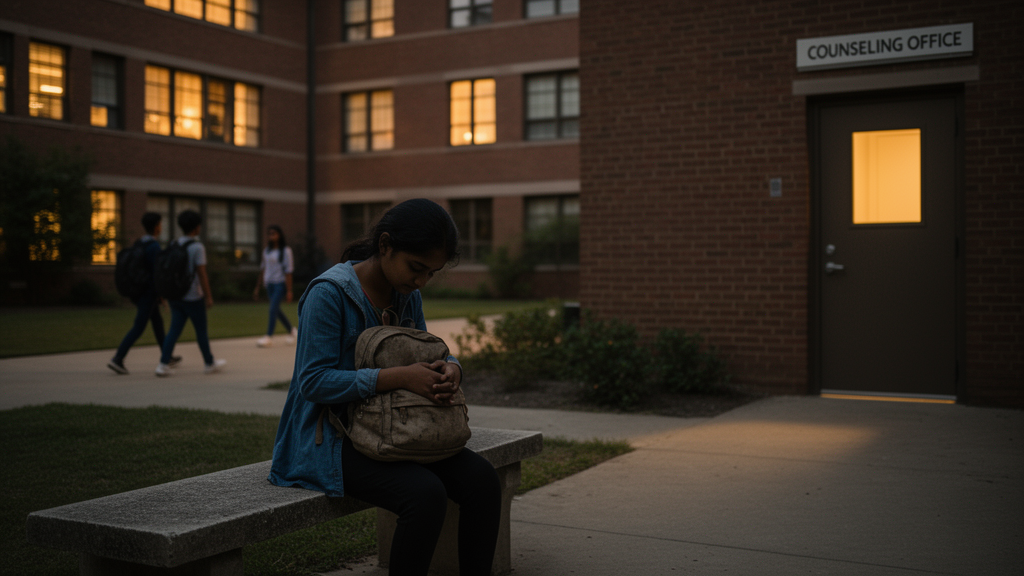
University students in Bangladesh are carrying an invisible burden. Rates of depression, anxiety, and psychological distress among undergraduates in the country are high, yet the counseling services designed to help them remain strikingly underused. A new qualitative study published in SN Social Sciences by Md. Sipon Mia of Bangladesh University of Professionals set out to answer a deceptively simple question: if students are struggling, why are they not seeking help? The answer, drawn from in-depth interviews with fifteen undergraduates across four universities, is not a story of individual reluctance. It is a story of overlapping pressures, cultural silence, and institutions that students have learned not to trust.
The research is grounded in the theory of planned behavior, a widely used psychological framework that explains human action through three ingredients: attitudes toward the behavior, perceived social pressure from important others, and perceived control over performing the behavior. Applied to help-seeking, the framework asks whether a student believes counseling works, whether family and friends would approve of going, and whether the student feels capable of actually accessing a service. What the interviews revealed is that all three ingredients are systematically undermined in the Bangladeshi university context, producing what the study calls a pattern of student silence that is structural rather than personal.
Mia conducted semi-structured interviews with fifteen students drawn from four universities and analyzed the transcripts using reflexive thematic analysis, a method in which the researcher actively interrogates their own assumptions while identifying recurring patterns across accounts. Five themes emerged with striking consistency: academic and existential pressure, negative attitudes toward help-seeking, stigma and cultural silence, institutional distrust, and reliance on self-regulation and peer support. Together, the themes sketch a portrait of young people who are acutely aware of their distress but have almost no socially sanctioned route to professional care.
The first theme, academic and existential pressure, describes the sheer weight of expectation that Bangladeshi students carry. In a competitive higher education system where examination results can determine an entire life trajectory, students described chronic anxiety about grades, delayed graduations, and futures that feel precarious. The COVID-19 pandemic intensified these dynamics; earlier studies cited in the paper documented associations between online education, fear of academic delay, and psychological distress among Bangladeshi students, as well as links between mental health and disrupted sleep quality during the pandemic. The new study adds a qualitative dimension to that quantitative picture, showing how students experience these pressures not as discrete stressors but as a continuous, existential strain that colors daily life.
Yet even under that strain, most students did not view counseling as a legitimate solution. The second theme, negative attitudes toward help-seeking, reflects a widespread belief that psychological problems should be handled privately, that talking to a stranger about personal matters is uncomfortable or pointless, and that professional help is a last resort for people who have already failed to cope on their own. This attitude is not unique to Bangladesh; international research, including studies of South Asian and other culturally conservative student populations, has documented similar patterns. But the interviews show how these attitudes interact with local norms in ways that make the barrier particularly durable.
That durability comes from the third theme: stigma and cultural silence. In many Bangladeshi families and communities, mental illness remains a topic that is simply not discussed. Students described fears that seeking counseling would mark them as weak or unstable, that word could spread to family members, and that admitting distress would bring shame upon households. The concept of family honor looms large in these accounts, transforming a private decision about personal health into a potential social liability. This cultural silence also operates inside students’ own heads as self-stigma, the internalized belief that needing help is itself a personal failing. Research on Asian American students has shown that self-stigma can mediate and weaken the link between social norms and help-seeking intentions, and the Bangladeshi data suggest a parallel mechanism at work.
The fourth theme, institutional distrust, shifts the focus from culture to the universities themselves. Students expressed skepticism about whether campus counseling services were genuinely confidential, adequately staffed, or professionally competent. Some doubted that counselors could understand the specific academic and family pressures students face; others worried that disclosures might not remain private in an institutional environment where personal information can travel. This distrust matters because it attacks the perceived behavioral control component of the theory of planned behavior: even a student who wants help and faces no social objection may conclude that the service itself is not a safe or effective option. Distrust, in other words, converts an available service into a functionally absent one.
In the vacuum left by formal services, students fall back on the fifth theme: self-regulation and peer support. Interviewees described managing distress through personal routines such as prayer, exercise, distraction, and solitary reflection, and through confiding in trusted friends who share the same pressures. Peer support is genuinely valuable, and global evidence consistently shows that social connection protects student mental health. But the study’s framing makes clear that when informal coping becomes the primary strategy, it is a symptom of system failure rather than a sign of resilience. Friends cannot treat clinical depression, and self-regulation techniques cannot substitute for professional care when distress reaches clinical levels.
The policy implications that follow from these findings are concrete. The study calls for counseling services that are accessible, visibly confidential, and staffed well enough to be credible to skeptical students. It argues that mental health discussions need to be normalized beyond campus walls, explicitly involving families, because a student whose parents understand and accept counseling faces a fundamentally different decision than one who must hide it. And it urges institutional policy reforms that prioritize student well-being, embedding mental health into university governance rather than treating it as an optional add-on. Each recommendation maps onto one of the barriers the study identified: accessibility targets perceived control, family engagement targets social norms, and credible reform targets both attitudes and trust.
The broader significance of the research extends well beyond Bangladesh. University student mental health has become a global concern, with systematic reviews and national surveys from South Africa to Ireland to the United States documenting rising distress and persistent gaps between need and treatment. The Healthy Minds Study in the United States has tracked worsening trends in student mental health and help-seeking across more than a decade, and studies of medical students worldwide have catalogued the prevalence of psychological problems during and after the pandemic. What the Bangladeshi study contributes is a granular, culturally grounded account of why the treatment gap persists in a low- and middle-income setting, where mental health infrastructure is thin and stigma is deeply woven into family and community life. Its central insight, that silence is produced by the interaction of personal, social, and institutional forces rather than by individual choice, is a corrective to interventions that focus solely on persuading students to be braver about asking for help. If the system itself is part of the barrier, then the system must change. For the millions of students in Bangladesh and similar contexts who are struggling quietly, that distinction could determine whether help finally arrives.
Subject of Research: Barriers to mental health help-seeking among university students in Bangladesh
Article Title: Silent struggles: understanding mental health help-seeking among university students in Bangladesh
Article References: Mia, M. S. (2026). Silent struggles: understanding mental health help-seeking among university students in Bangladesh. SN Social Sciences, 6(9), Article 392. https://doi.org/10.1007/s43545-026-01651-x
Image Credits: AI Generated
DOI: 10.1007/s43545-026-01651-x
Keywords: mental health, university students, Bangladesh, help-seeking barriers, stigma, counseling services, theory of planned behavior, qualitative research, institutional distrust, peer support, academic stress, cultural silence
Cite Scienmag News
Glenn Wilkins. (October 19, 2026). Why Bangladeshi Students Suffer in Silence: The Hidden Barriers to Campus Mental Health Care. Scienmag. https://scienmag.com/why-bangladeshi-students-suffer-in-silence-the-hidden-barriers-to-campus-mental-health-care/
Glenn Wilkins. "Why Bangladeshi Students Suffer in Silence: The Hidden Barriers to Campus Mental Health Care." Scienmag, 19 October 2026, https://scienmag.com/why-bangladeshi-students-suffer-in-silence-the-hidden-barriers-to-campus-mental-health-care/. Accessed 19 October 2026.
Glenn Wilkins. "Why Bangladeshi Students Suffer in Silence: The Hidden Barriers to Campus Mental Health Care." Scienmag. October 19, 2026. https://scienmag.com/why-bangladeshi-students-suffer-in-silence-the-hidden-barriers-to-campus-mental-health-care/


