


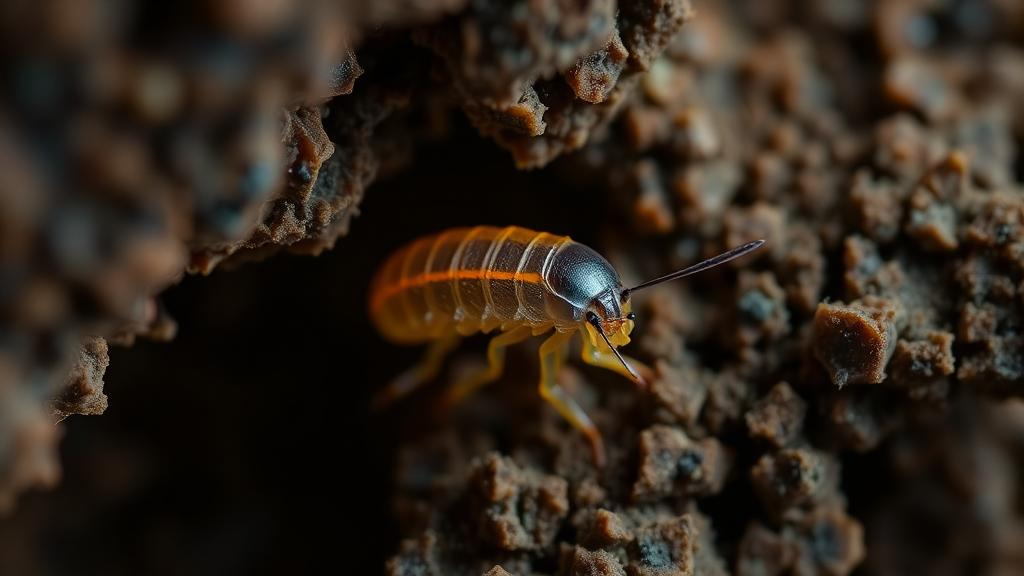
Deep inside a limestone cave in northeastern Thailand, swimming in a rimstone pool fed by water dripping from stalactites, lives a creature smaller than a grain of rice that has just rewritten part of the region’s underground biodiversity map. Researchers have described a new species of microscopic copepod, Siamcyclops isanus, from Maholarn Cave in Loei Province, making it only the second known member of a genus previously thought to be confined to central Thailand. The discovery, published in the journal Subterranean Biology, not only adds a name to the catalogue of life but also forces scientists to redraw the diagnosis of the entire genus and rethink how these tiny crustaceans have adapted to life in some of Earth’s most confined aquatic habitats.
The new species was found during copepod sampling in Maholarn Cave, a famous tourist cave located within the grounds of a local temple in Nonghin District. The cave itself is ancient, estimated to be at least 265 million years old, and stretches about 220 meters in a single passage that is 3 to 4 meters wide and 6 to 7 meters high. Near the entrance, a small pool on the rock is filled by dripping water from a stalactite and dries out during the dry season from March to early May. Deeper inside, a large rimstone pool receives heavy flows of dripping water during the rainy season, and a small opening in the cave roof allows outside water to flow in. The cave floods from its far end up to the middle of its length, and mud covers the floor throughout the passage, creating a mosaic of microhabitats for its hidden fauna.
Sampling was carried out using a bottle with a mesh size of just 60 micrometers, fine enough to capture animals barely half a millimeter long, and the specimens were immediately fixed in 70 percent ethanol. Adult males and females were sorted under a stereomicroscope, then dissected in a glycerol and ethanol mixture and mounted on slides sealed with transparent nail polish for examination at 1,000 times magnification under a compound microscope. Selected specimens were dehydrated through a graded ethanol series, dried in a critical point dryer, mounted on stubs, coated with gold, and photographed with a scanning electron microscope. Pencil drawings made with a drawing tube attached to the microscope were finalized using graphic software, and the type specimens were deposited at the Thailand Natural History Museum in Pathum Thani and at the Faculty of Science of Nakhon Phanom University.
The holotype, an adult female, measures just 550 micrometers in body length excluding caudal setae, with a prosome-to-urosome ratio of 1.5. Her body is cyclopiform, widest at the cephalothorax, and ornamented with refractile points on the surface. The nauplius eye is indiscernible, a common trait among cave-dwelling species that live in perpetual darkness. The genital double-somite is enlarged laterally and slightly wider than long, bearing a pair of sclerotised semi-rounded structures and the reduced sixth legs dorsolaterally. The anal operculum is semicircular with a smooth free margin, a feature that immediately distinguishes the new species from its only congener. Each egg sac carries just two large eggs of about 70 micrometers in diameter, and the spermatophore is three-dimensional and C-shaped, another diagnostic difference from the L-shaped spermatophore of Siamcyclops cavernicolus.
The male, designated as the allotype, is slightly smaller at 540 micrometers and resembles the female in general segmentation and ornamentation except for the genital somite and antennules. His antennules are 15-segmented and geniculate, compared with the female’s 11-segmented appendages. The most striking male-specific feature lies on the third swimming leg, where the second endopodal segment carries a transformed apical spine bent inward with a rounded tip bent outward, serrated by two rows of spinules on its distal half, alongside an inner subterminal seta transformed into a strong, spine-like seta with a blunt tip. Such sexually transformed structures are important taxonomic characters in copepods, and their precise configuration helped the researchers confirm that the Maholarn Cave animals represent a species distinct from Siamcyclops cavernicolus, which was originally described from Ratchaburi and Prachuap Khiri Khan provinces in central Thailand.
The differential diagnosis rests on a suite of subtle but consistent differences. Beyond the smooth anal operculum, the new species has four elements on the second endopod of the first leg in females rather than five, six elements on the male third leg endopod rather than five, four setae on the second exopod of the fourth leg rather than five, and the distinctive C-shaped spermatophore. The species epithet isanus honors Isan, the local name for northeastern Thailand, and all known specimens were collected by the first author on 5 July 2013 from the rimstone pool in the innermost zone of the cave. The species is currently known only from its type locality, a pattern typical of many stygobiotic copepods with extremely restricted ranges.
The discovery carries broader significance because it required an emended diagnosis of the genus Siamcyclops itself. With only one species previously known, the genus was defined by the traits of Siamcyclops cavernicolus, including a well-developed anal operculum with a serrated free margin. The new species breaks that mold, showing that the genus encompasses variation in operculum shape, leg armature, and spermatophore form. The authors also compared Siamcyclops with its closest relatives, the genera Palaeocyclops, Thalamocyclops, and Bryocyclops, documenting morphological differences in mandibular palp structure, the size of exopodal versus endopodal segments on the swimming legs, spine and setal formulas, the shape of the fourth leg intercoxal sclerite, and the degree of reduction of the fifth leg.
That comparison revealed a fascinating evolutionary gradient. Scanning electron microscope photographs of the fifth leg show that in Siamcyclops the distal segment is reduced to a small lobe on the fifth pedigerous somite, while in Bryocyclops it is reduced even further, represented only by a small prominent knob. The researchers classified the fifth leg of the Bryocyclops group into three shapes based on the degree of reduction of the distal segment, with Thalamocyclops retaining the largest vestigial segment, Siamcyclops showing an intermediate small lobe, and Bryocyclops and Palaeocyclops showing the most extreme reduction. Interestingly, this means that among closely related genera, Siamcyclops actually shows the least reduced, more ancestral form in several characters, such as the mandibular palp bearing three setae, subequal exopodal and endopodal segments, and the presence of coxal setae on the second and third legs.
The authors caution that characters shaped by strong evolutionary selection should be used carefully in taxonomy because they may arise through parallel evolution or convergence. Subterranean cyclopine copepods share a suite of traits associated with life in semiterrestrial and underground habitats: tiny bodies usually less than 550 micrometers, short antennules of 10 or 11 segments, greatly reduced mandibular palps reduced to one to three setae, and reduced swimming legs with fewer, shorter, and stronger setae, sometimes transformed into spiniform structures that are advantageous in the confined spaces of the epikarst, the thin, water-filled zone of cracks and crevices at the boundary between soil and rock. The presence of a pseudosegment anterior to the genital double-somite in Siamcyclops and Bryocyclops, but not in the good-swimming Thalamocyclops, further reflects adaptation to cramped spaces.
Years of observation at Maholarn Cave add an ecological dimension to the taxonomic story. Bryocyclops maholarnensis, the first stygobiont ever recorded from northeastern Thailand, was collected only in the small pool near the cave entrance, while the new species was found in the large pool at multiple points in the inner section. Adults rather than juveniles are typically collected, suggesting these animals accidentally drop from the cave ceiling, especially during the rainy season, and live primarily in the epikarst above. With 14 stygobiotic and stygophilic copepods now recorded from caves in northeastern Thailand, including two calanoids, three cyclopoids, and nine harpacticoids, and roughly 6,000 caves across the country, about 90 percent of them in limestone, Thailand’s karst underworld continues to yield surprises. The genus Siamcyclops now appears endemic to the country, with its two species occupying well-separated ranges in the central and northeastern regions, a living reminder of how much remains undiscovered beneath the surface of Southeast Asia’s limestone landscapes.
Subject of Research: Taxonomic description of a new cave-dwelling cyclopoid copepod species from northeastern Thailand
Article Title: Siamcyclops isanus sp. nov. ( Copepoda , Cyclopoida , Cyclopidae ), a new cave-dwelling species from northeastern Thailand
Article References: Watiroyram, S., & Koompoot, K. (2024). Siamcyclops isanus sp. nov. (Copepoda, Cyclopoida, Cyclopidae), a new cave-dwelling species from northeastern Thailand. Subterranean Biology, 49, 185-200. https://doi.org/10.3897/subtbiol.49.135303
Image Credits: AI Generated
DOI: 10.3897/subtbiol.49.135303
Keywords: copepoda, cyclopoida, new species, cave fauna, stygobiont, Thailand, limestone karst, taxonomy, epikarst, Subterranean Biology, Loei Province, crustaceans
Cite Scienmag News
Gavin Prescott. (October 19, 2026). Tiny New Cave Copepod from Thailand Rewrites the Story of an Ancient Underground Lineage. Scienmag. https://scienmag.com/tiny-new-cave-copepod-from-thailand-rewrites-the-story-of-an-ancient-underground-lineage/
Gavin Prescott. "Tiny New Cave Copepod from Thailand Rewrites the Story of an Ancient Underground Lineage." Scienmag, 19 October 2026, https://scienmag.com/tiny-new-cave-copepod-from-thailand-rewrites-the-story-of-an-ancient-underground-lineage/. Accessed 19 October 2026.
Gavin Prescott. "Tiny New Cave Copepod from Thailand Rewrites the Story of an Ancient Underground Lineage." Scienmag. October 19, 2026. https://scienmag.com/tiny-new-cave-copepod-from-thailand-rewrites-the-story-of-an-ancient-underground-lineage/


