


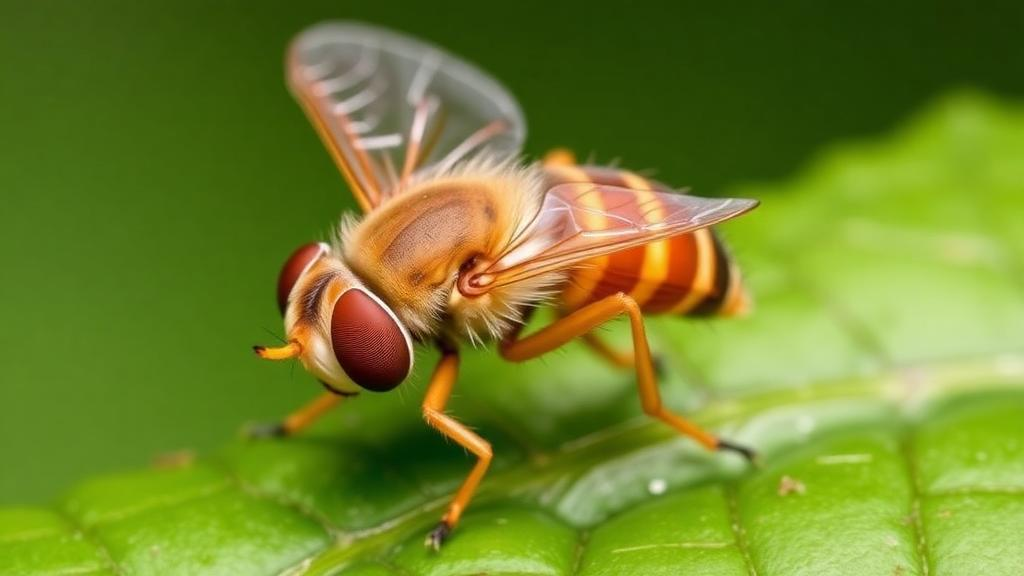
A nationwide sweep of Georgia’s orchards and vineyards has more than doubled what scientists know about the tiny vinegar flies buzzing through the country’s farmland. A survey conducted across five agricultural regions in 2021 has recorded four genera and twelve species of drosophilid flies, including two genera and four species never before documented in the South Caucasus nation. The findings, published in the journal Caucasiana, also confirm that one of the world’s most feared fruit pests, the spotted wing drosophila, has now spread to every major agricultural region of the country.
Drosophilidae, the family that includes the famous laboratory fruit fly Drosophila melanogaster, comprises roughly 100 genera and more than 4,400 described species worldwide. Despite their global importance to genetics, ecology, and agriculture, these flies remain remarkably poorly studied in the Caucasus, a region recognized as one of the planet’s most important biodiversity hotspots. Before this survey, a 2019 review of the Diptera of Georgia and Azerbaijan could confirm only eight drosophilid species in Georgia, belonging to five genera. The new study, led by researchers at the Agricultural University of Georgia, pushes that total to fifteen species and adds the genera Amiota and Gitona to the national checklist for the first time.
The survey was not originally designed as a biodiversity expedition. Its driving concern was agricultural: Drosophila suzukii, the spotted wing drosophila, or SWD, an invasive species first detected in Georgia in 2017. Unlike most vinegar flies, which lay their eggs only in rotting or overripe fruit, the female SWD possesses a serrated ovipositor that lets her slice into healthy, ripening fruit, making her a devastating pest of soft-skinned crops. In 2022, a countrywide monitoring project was launched by the USAID Georgian Agriculture program together with the National Food Agency of Georgia to map the pest’s distribution, and the traps set for that purpose ended up capturing a much wider cast of drosophilid characters.
The monitoring network covered the regions of Adjara and Guria, Samegrelo, Imereti, Kartli, and Kakheti, chosen to span the key production zones for crops vulnerable to SWD, including blueberries, strawberries, cherries, and grapes. In each region, four monitoring sites of two hectares each were established, with a minimum separation of five kilometers between sites. The sites ranged from blueberry plantations near the Black Sea coast in Samegrelo and Adjara-Guria to vineyards in the Imereti and Kakheti wine heartlands and cherry orchards in Kartli, giving the team a broad cross-section of Georgia’s fruit-growing landscapes.
At every site, the researchers deployed five commercial PHEROCON SWD traps fitted with broad-spectrum lures, following the manufacturer’s prescribed layout: four traps around the field edges and one in the center, spaced roughly 130 meters apart. The traps were hung in shaded areas of the host plant canopy and checked weekly from May through November 2021. Captured flies were gently removed with a fine paintbrush and preserved in 95 percent alcohol, while the lures were replaced monthly. Back in the laboratory, specimens were examined under stereomicroscopes and identified using established taxonomic keys, with difficult material cross-checked against the Diptera collection of the Hungarian Natural History Museum. Voucher specimens were deposited at the Agricultural University of Georgia, and student helpers collected much of the material in the field.
The haul was richer than anyone expected. Twelve species in four genera turned up during the monitoring season. Four of them, Amiota subtusradiata, Drosophila busckii, Drosophila kuntzei, and Gitona distigma, represent new records for the fauna of Georgia, and the genera Amiota and Gitona are themselves new to the national list. Amiota subtusradiata, a Palaearctic species, was found at Narazeni in Samegrelo, while the cosmopolitan Drosophila busckii appeared at sites in Imereti and Kartli. Drosophila kuntzei, another Palaearctic species, was recovered from Imereti and Kakheti, and Gitona distigma, also Palaearctic, was captured at Apnisi in Kartli. Each record extends the known distribution of these species eastward into a region where their presence had never been formally documented.
The remaining species tell their own stories. Drosophila melanogaster, the iconic laboratory organism, was recorded at five sites across the country, notable because earlier entries in the Georgian biodiversity database had been flagged as unverified by experts. Drosophila phalerata, a European species, was also newly recorded, appearing at sites in Imereti and Kakheti. Familiar cosmopolitan species such as Drosophila immigrans and Drosophila simulans were confirmed at multiple locations, matching earlier records from western Georgia, while Drosophila subobscura, previously listed with uncertain verification, was now documented with fresh specimens. The Afrotropical and Mediterranean species Zaprionus tuberculatus, recognizable for its striped body, was recaptured in Adjara-Guria, consistent with its earlier detection in Imereti.
The most consequential finding, however, concerns the pest that started it all. Drosophila suzukii was recorded at every one of the nineteen monitoring sites, from coastal blueberry fields to mountain-fringed vineyards, confirming that the invasive fly has colonized all of Georgia’s major agricultural regions. Because SWD attacks intact, ripening fruit rather than damaged produce, its presence across blueberry, strawberry, cherry, and grape production areas poses a serious economic threat to Georgian growers, particularly the country’s expanding berry sector and its internationally celebrated wine industry. The monitoring data collected through the USAID-backed project will help plant protection authorities target management measures where they are needed most.
The study also carries a note of caution about historical records. Of the eight species previously reported from Georgia, the survey confirmed five, but failed to rediscover three taxa: Leucophenga maculata, Lordiphosa hexasticha, and Scaptomyza graminum, all documented by the 2019 review. Their absence from the 2021 sampling does not necessarily mean they are gone; different trap designs, seasonal timing, and habitat preferences could all explain the gap. But it underscores how thin the baseline data are for Caucasus drosophilids and how much basic inventory work remains to be done in a region where many insect groups are still essentially unmapped.
For a country sitting at the crossroads of Europe and Asia, with habitats ranging from humid Colchic lowland forests to arid semi-deserts, the new checklist is a reminder of how much hidden diversity can be revealed by a well-placed set of traps. Fifteen species now represent the confirmed drosophilid fauna of Georgia, up from eight, and the authors suggest that continued monitoring, especially beyond agricultural settings and into natural habitats, will likely push the number higher. In the meantime, the same traps that exposed Georgia’s hidden fly diversity will keep watch over its vineyards and berry fields, tracking the spread of a pest that has made itself at home from the Black Sea coast to the Kakheti wine country.
Subject of Research: Drosophilid fly diversity and new species records in Georgia, including the invasive spotted wing drosophila
Article Title: Drosophilid flies ( Diptera : Drosophilidae ) of Georgia (Sakartvelo) with new records for the country
Article References: Murvanidze, M., Japoshvili, G., Inasaridze, N., & Deutsch, F. (2022). Drosophilid flies (Diptera: Drosophilidae) of Georgia (Sakartvelo) with new records for the country. Caucasiana, 1, 25-27. https://doi.org/10.3897/caucasiana.1.e87258
Image Credits: AI Generated
DOI: 10.3897/caucasiana.1.e87258
Keywords: Drosophilidae, Drosophila suzukii, spotted wing drosophila, Georgia, new records, invasive species, agricultural pests, biodiversity survey, Caucasus, vineyards, entomology, fruit flies
Cite Scienmag News
Patricia Pace. (October 19, 2026). Fruit Fly Survey Uncovers New Species Records for Georgia’s Farms. Scienmag. https://scienmag.com/fruit-fly-survey-uncovers-new-species-records-for-georgias-farms/
Patricia Pace. "Fruit Fly Survey Uncovers New Species Records for Georgia’s Farms." Scienmag, 19 October 2026, https://scienmag.com/fruit-fly-survey-uncovers-new-species-records-for-georgias-farms/. Accessed 19 October 2026.
Patricia Pace. "Fruit Fly Survey Uncovers New Species Records for Georgia’s Farms." Scienmag. October 19, 2026. https://scienmag.com/fruit-fly-survey-uncovers-new-species-records-for-georgias-farms/


