


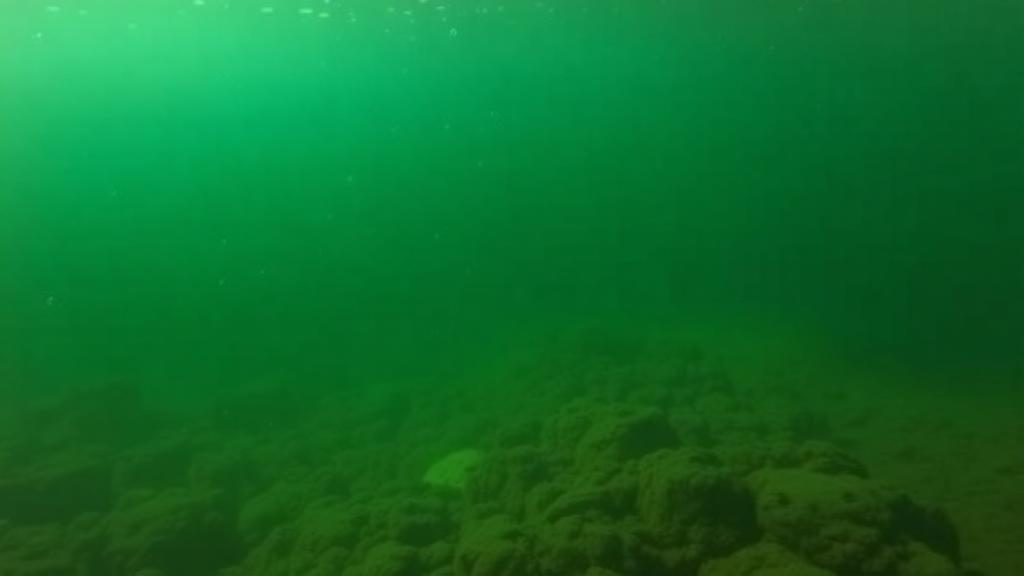
Underwater computer vision has long battled a stubborn enemy: physics. As light travels through seawater, certain wavelengths are absorbed faster than others, particles scatter what remains, and illumination falls off unevenly with depth. The result is imagery that is color-shifted, low-contrast, blurred, and locally darkened — exactly the conditions that cause object detection models trained on clear-water data to fail in the field. A new study published in Scientific Reports proposes a method, dubbed GDH-Det, that attacks this problem not by cleaning up underwater images, but by deliberately making training data worse.
The research team, led by Feng Wang of Guangzhou Xinhua University with collaborators including corresponding author Lixia Li of Guangzhou Huashang College, identified two structural weaknesses in how underwater detection datasets are typically built. First, public datasets cover only a narrow slice of the degradation spectrum — a limited range of water colors, turbidity levels, and blur intensities. Second, the common practice of extracting frames from continuous video floods datasets with near-identical backgrounds, leaving models underexposed to the genuine variability of objects in complex waters.
GDH-Det’s answer is a generative degradation pipeline built on a conditional diffusion network. Rather than relying on hand-tuned image corruption, the system extracts degradation conditions — water color, turbidity, and blur level — from real underwater photographs. These conditions are then combined with bounding-box masks to synthesize degraded versions of training images at continuously varying intensities. In effect, the model can be shown the same sea cucumber or fish as it would appear in crystal-clear shallows, in silty estuary water, and at every point in between.
Generation alone is not enough; synthetic data can mislead if it is implausible. The authors therefore filter candidate samples using structural constraints on object regions and detection-based credibility scores, keeping only generated images suitable for training. This quality gate matters because the degraded samples are not merely augmentation — they are actively prioritized during learning.
That prioritization is the second pillar of the method. During detector training, each sample’s difficulty is computed from three signals: classification uncertainty, localization deviation, and perturbation response. A sampling probability is then determined jointly by the generation credibility score and the training epoch, so that difficult but credible samples receive more training opportunities as learning progresses. Degradation conditions also feed directly into multi-scale feature computation, and a paired-feature loss preserves class-related information between object regions in real images and their generated counterparts.
The evaluation spanned four public benchmarks: URPC2020, DUO, UODD, and Brackish. GDH-Det achieved mAP@0.5 scores of 85.3%, 79.6%, 66.2%, and 84.7% respectively — competitive results across datasets that differ widely in object type, water conditions, and imaging equipment. More telling is how performance degrades under stress. As degradation severity increases, GDH-Det’s accuracy falls more slowly than comparison methods. At degradation level 5 on URPC2020, the method retains an mAP@0.5 of 74.8%, 6.7 percentage points higher than AGW-YOLOv8.
Ablation experiments reinforce the design choices. The complete method improves by 4.9 percentage points over a baseline trained only on real samples, indicating that the generative degradation simulation and hard-sample scheduling contribute measurably rather than cosmetically. The gains are attributed to the method’s behavior in turbid, low-light, dense small-object, and partially occluded scenes — the scenarios where underwater robotics most often breaks down.
Practicality is addressed as well. GDH-Det contains 31.8 million parameters and requires 18.7 milliseconds per image for inference, figures that keep it within reach of real-time deployment on underwater vehicles performing tasks such as aquaculture monitoring, marine debris tracking, and ecological surveys. The work was supported by several Guangdong Province research programs, including the Key Research Platforms and Projects of Regular Higher Education Institutions (No. 2025ZDZX3059).
The broader significance lies in the strategy: instead of waiting for datasets that exhaustively sample the ocean’s optical chaos, the method manufactures that variability on demand and teaches the detector to seek out its hardest lessons. If the approach generalizes beyond the four benchmarks tested, generative degradation simulation could become a standard ingredient for vision systems that must operate where light does not behave.
To appreciate why degradation simulation is an attractive strategy, it helps to consider the physics of underwater imaging in more detail. Water absorbs red light most strongly, followed by orange and yellow, which is why submerged scenes acquire the familiar blue-green cast that deepens with distance and depth. Suspended particulate matter compounds the problem by scattering light both before and after it reflects off a target, washing out contrast and softening edges. Because these effects vary with time of day, weather, season, and location, the same object can present radically different appearances across a single survey mission. A detector trained on one slice of this variability has no principled way to extrapolate to the rest, which is precisely the gap that a generative approach can fill by interpolating and extrapolating across degradation conditions extracted from real imagery.
The choice of a conditional diffusion network as the generative engine is also noteworthy. Diffusion models have become prominent in image synthesis because they learn to reverse a gradual noising process, giving them a reputation for stable training and high-fidelity, diverse outputs compared with earlier generative families. In the GDH-Det framework, conditioning on degradation parameters and bounding-box masks means the network is not simply dreaming up plausible seascapes; it is asked to preserve the identity and geometry of specific objects while altering the optical environment around them. The bounding-box masks serve as spatial anchors, ensuring that degradation is applied in a way that keeps annotated regions meaningful for detection training rather than distorting them into unrecognizable textures.
The credibility filtering stage addresses one of the most persistent objections to synthetic training data: that generative artifacts can teach a model to detect things that do not exist in reality. By imposing structural constraints on object regions and scoring candidates with detection-based credibility measures, the pipeline creates a feedback loop in which the detector itself helps judge whether a generated sample is faithful enough to be useful. Samples that survive this gate then enter a curriculum governed by difficulty. The three difficulty signals used here — classification uncertainty, localization deviation, and perturbation response — capture complementary failure modes: whether the model is unsure what an object is, unsure where its boundaries lie, and how fragile its prediction is when the input is slightly disturbed. Combining these with the generation credibility score and the training epoch produces a sampling schedule that evolves over the course of learning, a design that echoes the broader machine-learning insight that examples most valuable early in training are not necessarily the same ones most valuable later.
Hard-sample learning itself has a long lineage in computer vision, dating back to boosting algorithms that reweighted misclassified examples and continuing through modern focal-loss formulations that down-weight easy negatives. What is distinctive in this work is the fusion of that tradition with generative data synthesis. Rather than mining hard examples from a fixed dataset — which caps the diversity of difficulty the model can encounter — the method manufactures hard examples on demand, at controlled degradation intensities, and then schedules them according to both their difficulty and their trustworthiness. This coupling means the training distribution itself is adaptive, shifting toward the turbid, low-light, and blurred regimes where the detector is weakest, while the credibility score guards against wasting capacity on implausible synthetic failures.
The paired-feature loss adds another layer of discipline to the generative process. By requiring that class-related information be preserved between object regions in real images and their generated counterparts, the loss discourages the diffusion network from drifting into stylistic reinterpretations that would change what an object fundamentally looks like. This is a subtle but important constraint: degradation simulation is only useful if the underlying object remains semantically intact, so that the label attached to a synthetic image remains valid. In effect, the loss acts as a semantic regularizer on generation, complementing the structural and detection-based filters that operate after images are produced.
The four evaluation datasets were well chosen to stress different aspects of the problem. URPC2020 derives from a Chinese underwater robot competition and emphasizes small targets such as sea cucumbers, sea urchins, and scallops on cluttered seafloors. DUO is a widely used collection of sea cucumber, urchin, and scallop imagery with dense small-object scenes. UODD focuses on marine debris, a task where appearance varies enormously with trash type and water conditions, and where the reported 66.2% mAP@0.5 reflects the genuine difficulty of the domain. Brackish, drawn from estuarine environments, introduces water conditions and species distinct from the open-ocean datasets. Consistent gains across such heterogeneous benchmarks suggest the method is learning generalizable robustness rather than overfitting the quirks of any single collection.
The degradation-level experiment deserves particular attention because it probes robustness directly rather than average accuracy. A detector can post strong numbers on a test set whose degradation distribution matches its training data yet collapse when conditions worsen. The finding that GDH-Det retains an mAP@0.5 of 74.8% at degradation level 5 on URPC2020, exceeding AGW-YOLOv8 by 6.7 percentage points, indicates that training across continuously varying degradation intensities builds a smoother performance curve — the kind of graceful degradation that matters for autonomous vehicles that cannot simply stop working when the water turns murky.
Several open questions remain for future work. The degradation conditions extracted from real images define the space of what can be simulated; degradation regimes absent from the source imagery may still be poorly covered. The 31.8 million parameters and 18.7 milliseconds per image are practical for many embedded platforms, but the generative pipeline itself is an offline cost incurred before deployment. And while the benchmarks span competition, aquaculture, debris, and estuarine data, long-duration missions in extreme environments — deep sea, ice-covered waters, high-sediment rivers — would provide the ultimate test of whether manufactured degradation variability truly spans the ocean’s optical repertoire.
Subject of Research: Underwater object detection using generative degradation simulation and hard-sample learning
Article Title: An underwater object detection method based on generative degradation simulation and hard-sample learning
Article References: Wang, F., Zhan, B., Liu, S., Deng, F., & Li, L. (2026). An underwater object detection method based on generative degradation simulation and hard-sample learning. Scientific Reports. https://doi.org/10.1038/s41598-026-76673-9
Image Credits: AI Generated
DOI: 10.1038/s41598-026-76673-9
Keywords: underwater object detection, conditional diffusion model, degradation simulation, hard-sample learning, small-object detection, GDH-Det, Scientific Reports, computer vision, data augmentation, marine robotics, underwater, object
Cite Scienmag News
Denise Maddox. (October 19, 2026). Diffusion-Generated Degraded Images Teach Underwater Detectors to See Through Murk. Scienmag. https://scienmag.com/diffusion-generated-degraded-images-teach-underwater-detectors-to-see-through-murk/
Denise Maddox. "Diffusion-Generated Degraded Images Teach Underwater Detectors to See Through Murk." Scienmag, 19 October 2026, https://scienmag.com/diffusion-generated-degraded-images-teach-underwater-detectors-to-see-through-murk/. Accessed 19 October 2026.
Denise Maddox. "Diffusion-Generated Degraded Images Teach Underwater Detectors to See Through Murk." Scienmag. October 19, 2026. https://scienmag.com/diffusion-generated-degraded-images-teach-underwater-detectors-to-see-through-murk/


