


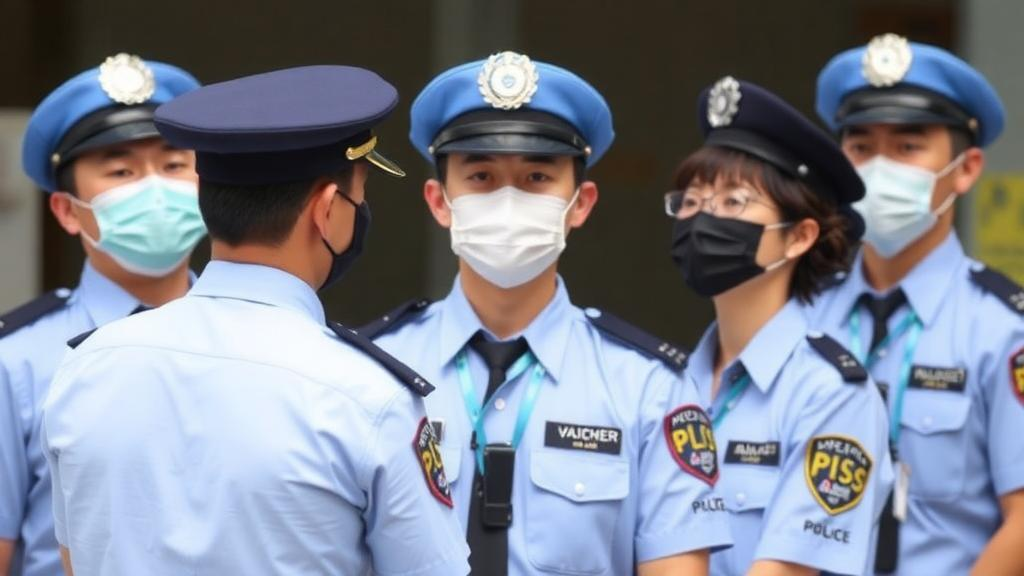
When a 911 call involves a person in psychiatric crisis, the first people to arrive are rarely psychiatrists. They are police officers, fire-based paramedics, nurses, and public health workers who must de-escalate a volatile situation with limited training and often under intense time pressure. A new city-wide study from Taiwan suggests that even a modest, four-hour interprofessional course can meaningfully raise these frontline responders’ confidence and knowledge about behavioral emergencies, although it also delivers a sobering reminder that changing deep-seated stigma is far harder than teaching skills.
The research, published in BMC Medical Education by a team led by Chiao-Yin Cheng and Liang-Han Wang of Far Eastern Memorial Hospital, evaluated a continuing education program delivered across nine sessions in New Taipei City between April 7 and June 20, 2026. The course brought together a workforce that rarely trains together: police, fire-based emergency medical services personnel, public health staff, nurses, and mental health outreach workers. This mixed frontline group is typically the first point of contact for people experiencing acute mental health crises, yet evidence about shared education for such a diverse audience has been scarce, particularly in Asian emergency-response systems.
The study used a single-group pre-post design, meaning every participant was assessed before and immediately after the training without a separate control group. Researchers measured four self-reported outcome domains: self-efficacy, cognition toward behavioral emergencies, stigma associated with behavioral emergencies, and stigma associated with substance use. The reliance on anonymous questionnaires posed a genuine analytical challenge. Because no direct identifier was collected, the team could not simply match each person’s before-and-after responses. Instead, the primary analysis was restricted to observed pre and post records linked through a strict demographic key that appeared exactly once in both datasets. No imputation and no timestamp-order matching were used, a conservative approach designed to prevent inflated or spurious pairings.
The numbers tell a clear story about reach and attrition. Of 750 attendees, 714 completed the pre-training questionnaire and 635 contributed complete post-training responses, but only 395 records could be paired under the strict uniqueness rule. Among those 395 matched participants, self-efficacy rose from a mean of 3.16 (with a standard deviation of 0.55) to 3.54 (0.58), a mean difference of 0.39 with a 95 percent confidence interval of 0.34 to 0.44 and a p value below 0.001. The standardized effect size, Cohen’s dz, was 0.76, which in behavioral research is considered a large immediate effect. In practical terms, respondents felt substantially more capable of handling psychiatric emergencies after just one short course.
Cognition, the second domain, also improved but more modestly. Mean scores climbed from 3.81 (0.59) to 3.95 (0.55), a difference of 0.14 (95 percent CI 0.09 to 0.19, p less than 0.001) and a dz of 0.29, a small-to-moderate effect. The pattern makes intuitive sense: a four-hour session can quickly reshape how confident people feel, but shifting factual understanding and mental models about mental illness across a heterogeneous audience is a slower process. Notably, the baseline cognition score was already relatively high, leaving less room for improvement, a ceiling effect that any brief educational intervention would struggle to overcome.
The stigma results are the study’s most thought-provoking finding. Behavioral-emergency stigma scores actually increased slightly after training, with a mean difference of 0.03 (95 percent CI 0.01 to 0.05), while substance-use stigma showed no significant change at all (p equal to 0.716). The small magnitude of the stigma shift may seem trivial, but the direction is worth noting. It is possible that exposure to realistic case discussions made participants more aware of their own implicit attitudes, or that certain training content inadvertently reinforced stereotyped perceptions. The authors are appropriately cautious: with study-specific, non-validated measures and an anonymous design, no firm explanation can be pinned down. What is clear is that a brief lecture-based course did not reduce stigma, challenging the common assumption that education automatically improves attitudes.
Satisfaction data, at least, were strongly positive. Among the 635 observed post-training respondents, agreement or strong agreement across satisfaction items ranged from 84.1 percent to 86.3 percent. That level of endorsement from a mixed audience of police officers, firefighters, nurses, and public health officials is itself notable, because interprofessional training often struggles to feel relevant across professional cultures. The New Taipei City Government Department of Health supported the sessions, and the study was funded by an intramural grant from Far Eastern Memorial Hospital, with the funder having no role in design, analysis, or reporting.
The research builds on a well-known international model, the Crisis Intervention Team approach, which originated in Memphis and has spread across many police departments as a way to improve responses to mental health calls. What distinguishes this Taiwanese study is its genuinely interprofessional scope and its city-wide scale. Rather than training one agency in isolation, it placed all the actors in a prehospital behavioral emergency in the same room, learning the same material. That design reflects a growing recognition in emergency care research that outcomes for people in psychiatric crisis depend on coordination among multiple agencies, and that shared training may build the informal networks and mutual understanding that formal protocols cannot.
Methodologically, the study deserves credit for transparency about its limitations, and the authors follow the TREND guidelines for reporting evaluations with nonrandomized designs. The strict linkage approach means the paired sample of 395 is only a fraction of the full 750 attendees, raising the possibility that those with complete, uniquely matchable demographics differ systematically from the rest, perhaps being more diligent or more distinctive in their demographic profiles. The trial was retrospectively registered with ISRCTN on July 9, 2026, and also listed on ClinicalTrials.gov under NCT07697326. The team explicitly frames the findings as immediate pre-post associations rather than causal evidence of training effectiveness, and they call for future evaluations using unique anonymous identifiers, validated measures, delayed follow-up, and observed performance or service-level outcomes such as actual field behavior and downstream use of coercion or emergency detention.
For policymakers, the message is twofold. On one hand, the large immediate gain in self-efficacy among nearly 400 paired respondents suggests that even brief, low-cost interprofessional courses can move a critical psychological lever: responders who feel confident are more likely to attempt verbal de-escalation rather than default to physical restraint or other coercive measures. On the other hand, the stubborn stigma scores indicate that attitude change requires more sustained, targeted, and ideally longitudinal interventions, possibly involving contact-based approaches, reflective supervision, and repeated exposure over months rather than a single afternoon. As cities worldwide grapple with how to handle a rising volume of mental health-related emergency calls, this Taiwanese experiment offers a pragmatic blueprint, and a candid warning, for the next generation of prehospital crisis training.
Subject of Research: Interprofessional continuing education for prehospital behavioral emergency response among police, EMS, and health personnel in Taiwan
Article Title: Interprofessional continuing education for prehospital behavioral emergency response: a city-wide pre-post study in Taiwan
Article References: Cheng, C.-Y., Wang, L.-H., Chen, Y.-L., Fu, Y.-K., Sun, J.-T., & Ho, H. (2026). Interprofessional continuing education for prehospital behavioral emergency response: a city-wide pre-post study in Taiwan. BMC Medical Education. https://doi.org/10.1186/s12909-026-10646-4
Image Credits: AI Generated
DOI: 10.1186/s12909-026-10646-4
Keywords: behavioral emergency, interprofessional education, continuing education, prehospital care, emergency medical services, de-escalation, mental health stigma, self-efficacy, Taiwan, crisis intervention, police training, medical education
Cite Scienmag News
Glenn Wilkins. (October 19, 2026). Four-Hour Course Boosts Confidence of Police and Paramedics Facing Mental Health Crises in Taiwan. Scienmag. https://scienmag.com/four-hour-course-boosts-confidence-of-police-and-paramedics-facing-mental-health-crises-in-taiwan/
Glenn Wilkins. "Four-Hour Course Boosts Confidence of Police and Paramedics Facing Mental Health Crises in Taiwan." Scienmag, 19 October 2026, https://scienmag.com/four-hour-course-boosts-confidence-of-police-and-paramedics-facing-mental-health-crises-in-taiwan/. Accessed 19 October 2026.
Glenn Wilkins. "Four-Hour Course Boosts Confidence of Police and Paramedics Facing Mental Health Crises in Taiwan." Scienmag. October 19, 2026. https://scienmag.com/four-hour-course-boosts-confidence-of-police-and-paramedics-facing-mental-health-crises-in-taiwan/


